A website dedicated to animation, awards, and everything in between.
Oscar-Nominated Animated Short The Girl Who Cried Pearls Directors Interview


Credit: The Girl Who Cried Pearls (National Film Board of Canada, Clyde Henry Productions)
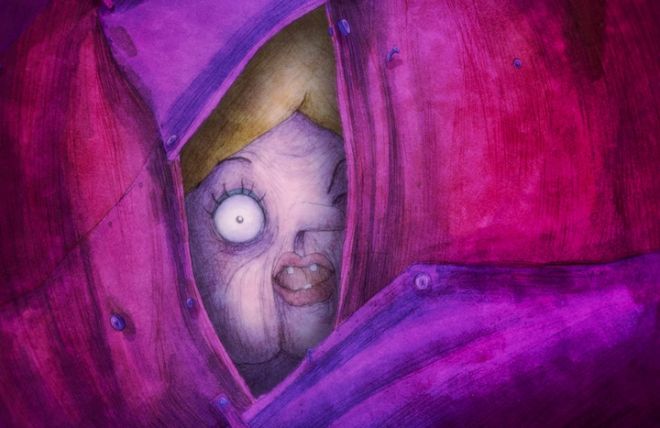
It’s been almost twenty years since Chris Lavis and Maciek Szczerbowski received their first Oscar nomination for the stop-motion animated short, Madame Tutli-Putli. Ironically, that film’s production got the ball rolling for their next Oscar-nominated short. Making Madame Tutli-Putli, a miniature pearl necklace came undone. This gave them the seed of an idea, which eventually became The Girl Who Cried Pearls. Distributed through the National Film Board of Canada, this fabled story centers on a mysterious girl whose tears become pearls, the young boy who loves her, and a greedy pawnbroker looking to take advantage of them. The tale is told from the perspective of an old man, although it’s unclear if his story is pure fantasy or autobiographical. Cartoon Contender spoke with the filmmakers about the film’s genesis, craft, and ambiguous ending.
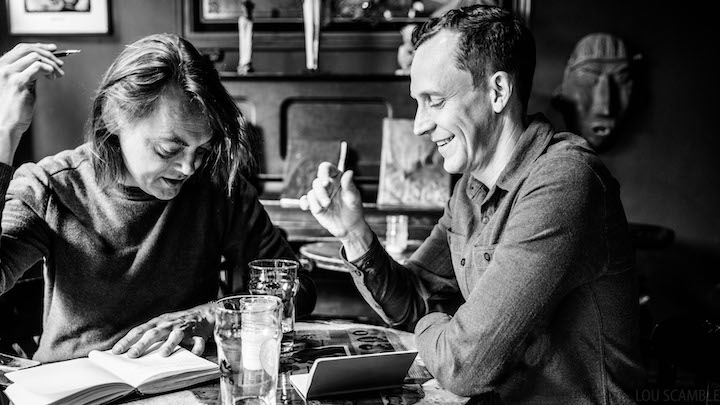
Credit: Maciek Szczerbowski and Chris Lavis
Q: Your first Oscar nomination was for the 2007 short, Madame Tutli-Putli. From what I understand, that short paved the way for The Girl Who Cried Pearls. While making Madame Tutli-Putli, a prop necklace broke with pearls going everywhere. How did the idea of The Girl Who Cried Pearls evolve from that happy accident to the finished film over a decade later?
A: When you get in the habit of writing stories, happy accidents occur every day. And the inverse is true, when you get out of the habit story ideas come, knock on the door, then move along to someone else when nobody answers. When you’re receptive, one image, one idea leads to the next, and hopefully after a while you have a story with enough meat on the bone that you can show it to a producer. If they’re interested and find the money then you’re off to the races. You’re solving a hundred problems a day for the next five years, until one day the producer says that’s enough, we’re out of money and we’re out of time. And if every detail has been satisfied, you let it go.
Q: I guess you could say that The Girl Who Cried Pearls was full of happy accidents. Due to budget constraints, mouth movements were restricted to about three minutes of animation. To some, this would be a detriment. You made it work wonderfully here, though, helping to separate the characters in the framing device from the ones in the central fable. Despite the lack of facial moments, the puppets themselves have a ton of personality. In retrospect, are you grateful the budget was limited?
A: Yes, we are grateful that the budget forced us to solve the problem of the mouths creatively. If you love movies, and the stories of how they’re made, you know happy accidents and budget solutions are a big part of the process. Like how in the original script of Back to the Future, Marty McFly travelled through time in a nuclear-powered refrigerator/time chamber, and came back to the present by putting the machine in an empty town that gets blown up by an atom bomb. Cuts to the budget inspired the DeLorean time machine and the lightning storm sequence instead of a bomb. Obviously, a better idea. So even though we are obsessed with doing things right and don’t really make life easier for ourselves, we embrace corner-cutting that leads to artistic revelations, even innovations.
Q: While the film had a limited budget, you wouldn’t guess that based on the production design. The sets here are so detailed, atmospheric, and seemingly vast, even if they’re technically miniatures. What was the hardest set piece to construct?
A: The dusty, muddy, detailed sets are challenging, but in some ways, they are more forgiving. A layer of mud and dust can make just about any prop look good on camera. The challenge was the Paris exterior of the old man’s house and the interior of his office. He’s very, very rich, meaning his mansion has clean walls and his floors and his bookshelves are spotless. But at the same time, his office can’t be so clean it looks like a Barbie house. Finding just the right level of patina, and then ensuring it didn’t get trashed while we animated, was a constant struggle.

Credit: The Girl Who Cried Pearls (National Film Board of Canada, Clyde Henry Productions)
Q: Watching the story unfold, I assumed it was based on a classic story that had somehow eluded me. I was surprised to learn the story was entirely original. At what point in development did the film start to take the shape of a timeless fable?
A: Early on, we imagined the story would have the structure of a fable in the mold of Hans Christian Anderson’s The Little Matchstick Girl. The premise leant itself to those eternal themes of longing, poverty, and tragedy. The trouble we had was how to create a modern version of those fables, which are wonderful, but rooted in the faith and worldview of the 19th century. Our solution was to set our tale at the very moment that worldview cracked, in the early 20th century, the period just before World War one. The story would be about that transition to a world without magic, maybe not even god; the edge of the cliff.
Q: The film ends with a character asking if the titular girl who cried pearls really existed. The narrator remains silent on the matter. Do either of you have an answer, or are you keeping your lips sealed?
A: The old man in our story refuses to answer the girl, so you can’t expect us to! In the script, we wrote that the old man responds to her question with “a Mona Lisa smile.” We decided even that was too much. Both Colm Feore and James Hyndman, the actors who voiced the old man in the English and French versions, both felt that the character should answer the girl with some sort of noise or exclamation, a kind of yes or no grunt or “Hmmhm” type of thing. But in the end, we decided that the final piece of music would be the answer, and that it would be an ambiguous one, now and forever. Our philosophy is leave ‘em wanting more, leave ‘em with a reason to watch again, leave ‘em with something to talk about.
The Girl Who Cried Pearls can currently be streamed on The Animation Showcase and will be playing in select theaters with this year's other Best Animated Short nominees starting February 20, 2026.
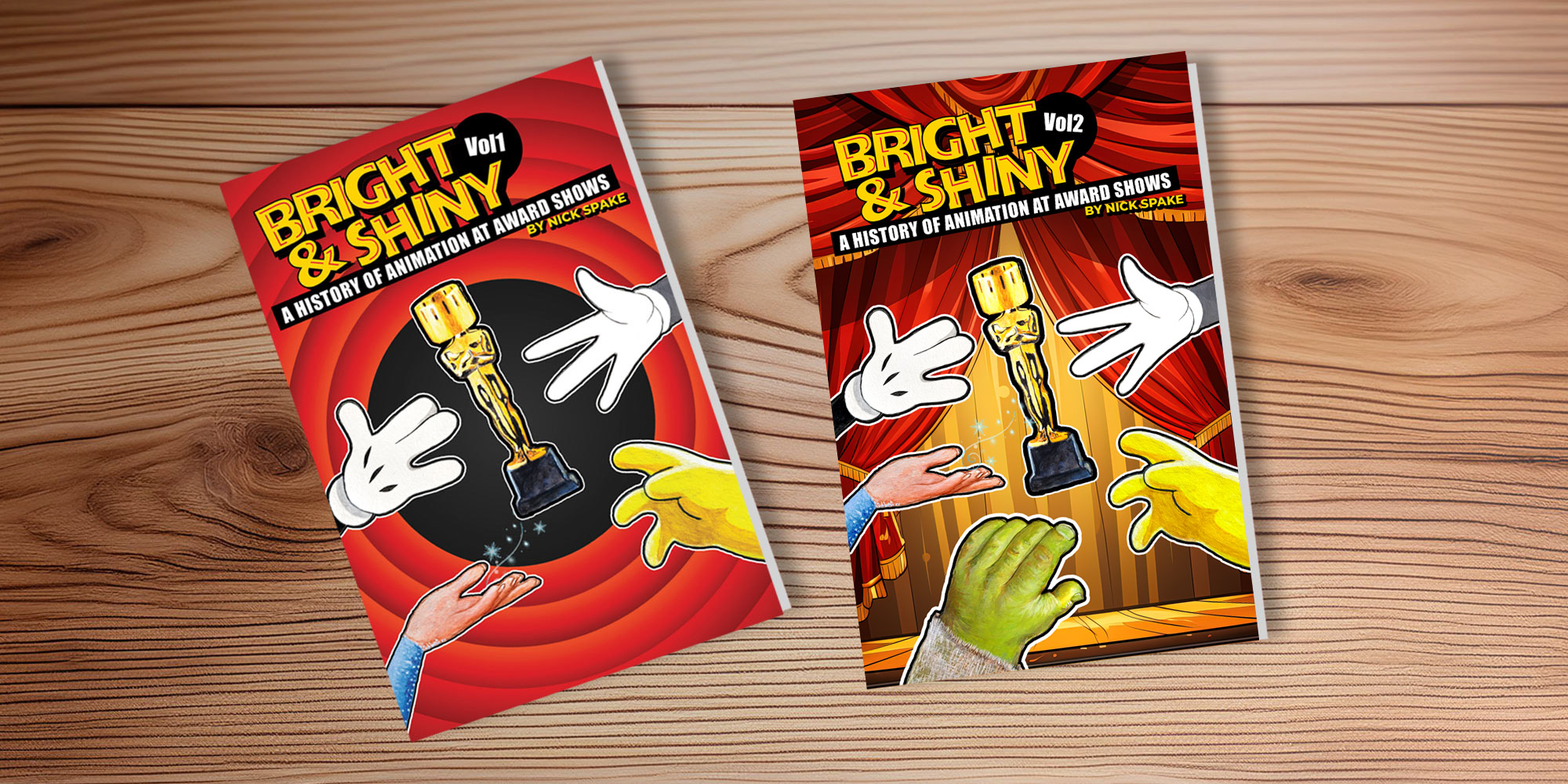
Nick Spake is the Author of Bright & Shiny: A History of Animation at Award Shows Volumes 1 and 2. Available Now!