A website dedicated to animation, awards, and everything in between.
We Are Aliens Director Kohei Kadowaki Interview

Credit: We Are Aliens (Nothing New, Miyu)
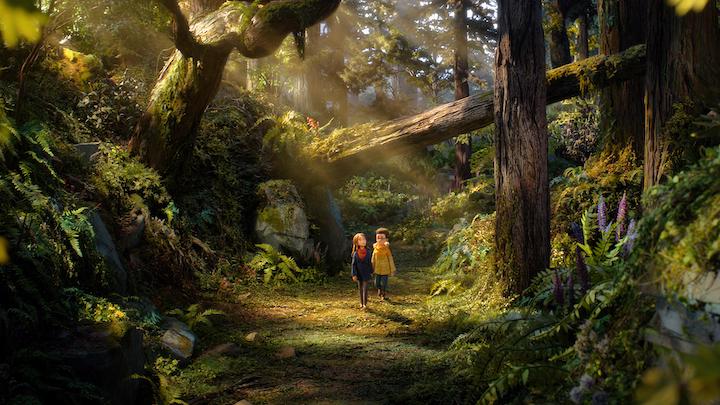
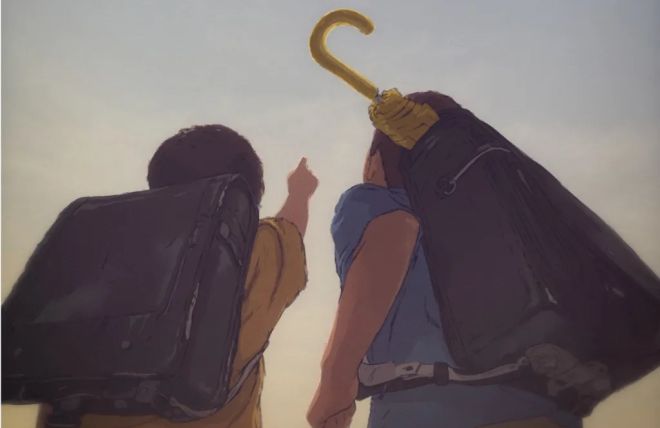
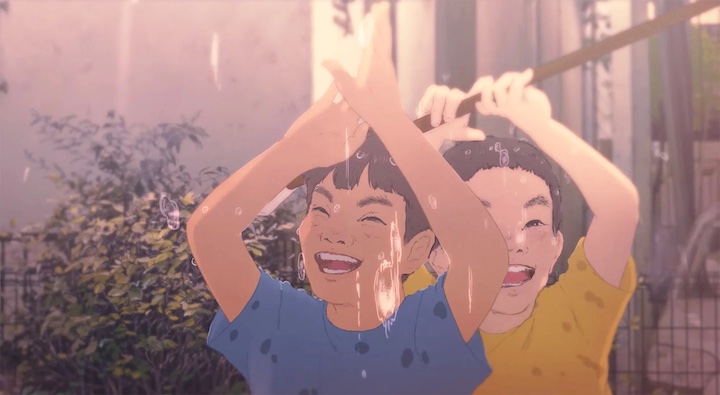
We Are Aliens, a co-production between Japanese studio Nothing New and the France-based Miyu, is making its premiere at the 2026 Cannes Film Festival as part of the Directors' Fortnight. In addition to being the first film from Nothing New, We Are Aliens marks Kohei Kadowaki's feature directorial debut. The story centers on Tsubasa and Gyotaro, who form a friendship in third grade, but grow apart over the years due to a misunderstanding. Cartoon Contender spoke with Kadowaki about the film's nostalgic inspirations, how crowdfunding elevated the animation quality, and making a first feature against the backdrop of a studio's formation.
Q: We Are Aliens is a collaborative project between Nothing New and Miyu, but if I understand it correctly, this project started before Nothing New was founded. I heard that when you met producer Kentaro Hayashi in 2022, you discussed your concept for a feature film and asked how feasible he thought it was. Then, he replied, “95%.” From the point on, Hayashi proceeded to launch Nothing New, and you began creating storyboards. What was it like to create the film side by side with the company's launch?
A: Hayashi and I decided to make an anime together, but neither of us had any experience producing animated films. Still, we found it tricky to outsource the work to existing studios in the process of shaping the project's direction. That’s why we decided to establish an animation studio within Nothing New and create the film ourselves, starting with hiring animators and art staff. After that, Hayashi and I, along with the production team, started by researching on our own or asking people around about everything from how to find our first animator to learning about data management practices and which software to use. When I think about it, this was likely the first and last time I’ll ever experience the entire process from conception to completion in the truest sense, so I consider it a truly invaluable experience.
Q: Did the story change significantly between your initial concept and the finished film?
A: The overall plot remained the same, but we gradually wove in unique elements of genre films here and there. As we went through repeated storyboard revisions, we added more of these elements to help keep the audience on the edge of their seats. For example, action scenes featuring the two main characters weren’t part of the original concept.
Q: How many animators do you estimate were involved throughout the entire production?
A: There were four main key animators, five in-studio assistants, and several more who provided support remotely on an irregular basis, so about twenty people were involved overall. I worked especially closely with those four because, together, the five of us were responsible for over 80% of the key animation. They truly stuck it out with me to the end.
Q: I heard that part of the production was supported by crowdfunding to achieve the ideal quality. What stage was the production of We Are Aliens at when you launched the crowdfunding campaign?
A: About 80% of the key animation was complete, but even those shots only covered the core story; elements like passersby or flying insects were missing. Crowdfunding allowed us to directly elevate the production quality, and knowing that so many people supported this project even during production was a huge source of encouragement.
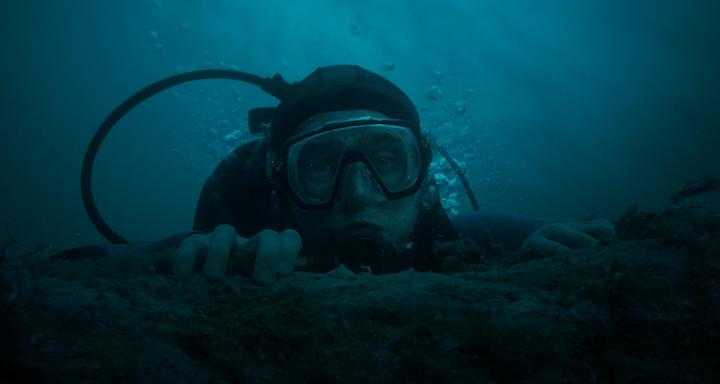
Q: For characters as children, you filmed child actors in almost every shot and turned their movements into the animation while observing them. On the other hand, for the characters as adults, you based the movements on your own and on the actors'. Were any scenes particularly memorable to film?
A: We held two filming sessions for the scene where the characters face off in the rain. The actors performed exactly according to the script right in front of me, and I was struck by a sense of tension and strong presence that went far beyond my expectations. Watching the way their suits got soaked and darkened, it reassured me that this scene speaks to the audience both visually and emotionally. It really conveys how cold and hard it is, so I was certain this rain scene had to be included.
Q: The character designs lean toward realism, yet they also feature a stylized quality that emphasizes not only internal emotions but also how those emotions manifest physically. How did you achieve this balance?
A: Every few shots, I’d stop and rethink about lines being too thin that potentially make the picture look weak from a distance. Other times, certain wrinkles appeared too pronounced, which can result in an unsettling rather than charming look, so I’d remove them. I went through this kind of trial and error over and over again. In the end, I realized that the optimal design was one where, up close, the character’s expressions are easy to read and necessary details are visible, while from a distance, the darker accents (such as the pupils, the area under the nose, and the shadows beneath the lower lip) are kept subtle and light. This way, the face still feels familiar, like the expressions you see in manga and anime.
Q: This is your feature-length directorial debut, but you previously directed the music video for YOASOBI’s “Comet.” That song also served as the ending theme for the second season of the anime Beastars. How did that experience contribute to the production of this feature film?
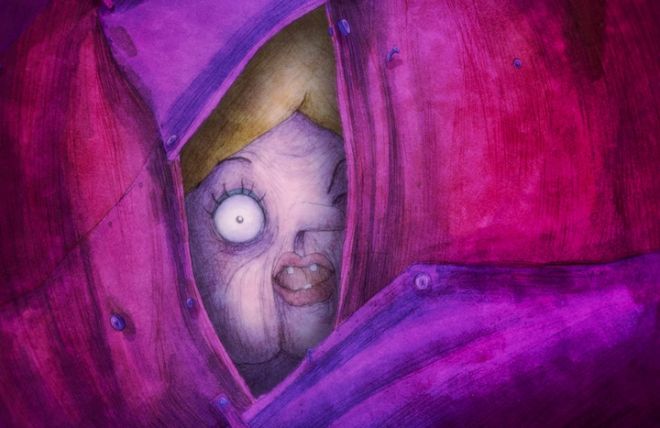
A: There were several watercolor scenes in that past music video, and the techniques I gained from that directly helped with this production. For example, I could estimate how many days it would take for a given number of people based on past experience, and I had to avoid certain ways of dividing the painting tasks because some approaches would make the colors look inconsistent from frame to frame. I believe that having this practical knowledge for painting such a large volume of watercolor art allowed us to complete the project even on a tight schedule.
Q: We Are Aliens is a film that makes you realize how “ordinary” moments from childhood can take on great significance later in life. Some memories are nostalgic, while some bring deep regret. Are there any childhood memories that particularly influenced the vision for this work?
A: Memories of my first love and feelings for friends I’ve lost touch with remain strong to this day, and they influenced the creation of this work to some extent. The memories associated with them are so vivid that I can still clearly recall the scenes from that time, so they naturally became the starting point for the project.
Q: At what stage of the project did you come up with the title We Are Aliens?
A: It suddenly came to me about halfway through, when the film was roughly 40% complete. The moment that title popped into my head, I had this strange conviction and confidence that nothing else would do. In fact, some scenes were created in a specific order to fit the title. For example, the clay model design (and scene) of an alien and a human holding hands came into being precisely because the title had been decided.
Q: You met Miyu at the 2024 Cannes International Film Festival, and now your film is set to screen at Cannes. How do you feel about how things have come full circle like this?
A: I wasn’t personally attending the 2024 Cannes International Film Festival, but it all started when the two producers brought a one-minute teaser there. When I think about how the encounters made from that moment have led to where we are now, I feel it’s such a dramatic story that it could be a movie in itself.

Nick Spake is the Author of Bright & Shiny: A History of Animation at Award Shows Volumes 1, 2, and 3. Available Now!