A website dedicated to animation, awards, and everything in between.
Tangles Review | 2026 Cannes Film Festival

Credit: Tangles (Giant Ant)
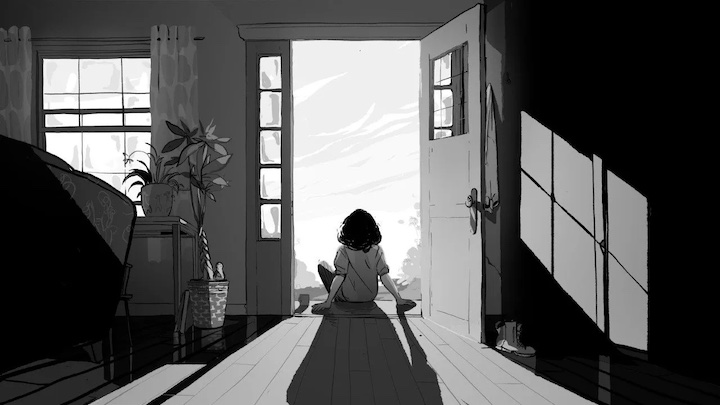
Tangles isn’t just one of the most authentic portrayals of Alzheimer's I’ve ever seen, but also one of the most believable family dramas. It conveys that honesty in a way only animation can, from the subtlest facial expressions to fantastical moments that let us peer inside the characters’ heads. The film effectively translates Sarah Leavitt’s autobiographical graphic novel to the screen with a seamless blend of memories, daydreams, and gut-wrenching reality. As heartbreaking as Tangles is, the film is about more than inner turmoil. It’s about those who see you through the heartache, putting you back together after breaking apart. Although not everything in this world can be repaired, Tangles is a therapeutic meditation on how to cope as a loved one slips away.
If the Screen Actors Guild seriously considered voice acting, the cast of Tangles would be nominated at the Actor Awards. Abbi Jacobson has voiced LGBTQ+ icons such as Katie Mitchell, Shira Schwooper, and Princess Bean. She gives her most nuanced performance to date as Sarah, who moved across the country to pursue her career as an artist. Despite her absence, Sarah’s mother Midge (Julia Louis-Dreyfus) has always been her hero. On her latest trip home, Sarah notices that her mother is going through changes. She forgets to turn the iron off, struggles to open doors, and clashes with her colleagues at work. Midge argues that it’s just menopause, but Sarah knows it’s something more serious. So does everyone else in the family, although they’re slower to accept it.
Bryan Cranston voices Sarah’s father Rob, who’s as loving and supportive as patriarchs come. Rob switches gears whenever Sarah presses the matter of Midge’s health, however. While the story is told from Sarah’s perspective, we’re given a sense of how Midge’s illness affects everyone in her family. Her dad is in denial, but he gradually comes to acknowledge what’s right in front of him. Sarah’s sister Hannah (Beanie Feldstein) is concerned for their mother, but she’s also trying to live her own life. Aunts Debbie (Pamela Adlon) and Sukey (Sarah Silverman) try to make the best of a bad situation, although they realize there’s no silver lining in what Midge is going through.
While Sarah idolizes her mother, Tangles avoids turning Midge into a saint. We see Midge’s flaws as she refuses to accept that something is wrong with her. To an extent, she’s more stubborn than Rob. Eventually, Midge must face her inevitable diagnosis. Once the doctor breaks the news, Sarah finds herself torn between her old life and the new one she’s built in California. She’s pursuing her passion and has found love with Samira Wiley’s Domino. Whenever Sarah is with Domino, though, it’s as if she’s only half there. Likewise, Sarah feels like her mother is only half there. As time passes, there’s even less of her left.
Spending more time at home, Sarah acts as if she’s the only one really taking care of Mom. There isn’t an antagonist in this family, however. There’s an especially effective scene where Hannah comes home with her boyfriend (Seth Rogen). They have happy news to share, although to Sarah, Hannah’s big announcement is selfish. With one line of dialogue, we see that Hannah is just as devastated as Sarah. She just has a different way of showing support and dealing with grief.
As fleshed out as the dialogue is, Tangles shines just as much in the visual storytelling. While director Leah Nelson draws from Leavitt’s source material, she brings new dimensions to the aesthetic. Tangles not only embraces the fact that it’s animated, but that its protagonist is an artist. There’s a surprising amount of humor in Tangles, mixing visual gags with personal tragedy. An especially funny running gag occurs whenever Sarah is on a plane, with PA announcements unpacking her specific anxieties. For every laugh, there are just as many tears.
Tangles is worthy of comparison to Marjane Satrapi’s Persepolis. Not just because both are based on graphic memoirs. Not just because both utilize black and white imagery. Not just because both premiered at Cannes. Above all else, both are films that expand the audience’s perception of what animation can be. Could Tangles have worked as a live-action adaptation? Sure, especially with this cast, but something would’ve been lost. The medium finds the perfect balance between the bleak reality of Alzheimer's and Sarah’s hyperactive mindset.
The film is about memory in more ways than one. As Midge loses her memory along with the rest of her mind, Sarah commits her recollections of her mother to pen and paper. Tangles commences with the text that other people in Sarah’s family may remember things differently. This doesn’t just apply to what the characters say and do. It speaks to how Sarah sees the world. To her, it’s one in drawings.
There’s little color to be found in Sarah’s world, an exception being during the opening scene. Sarah’s mother was the source of color in her life. Now that she’s gone, there are only memories. Even memories don’t always last, but film can preserve them forever. Tangles is one to remember, especially when Academy members are marking their ballots for Best Animated Feature, among other categories.

Nick Spake is the Author of Bright & Shiny: A History of Animation at Award Shows Volumes 1, 2, and 3. Available Now!