A website dedicated to animation, awards, and everything in between.
Blaise Review | 2026 Cannes Film Festival

Credit: Blaise (KG Productions)
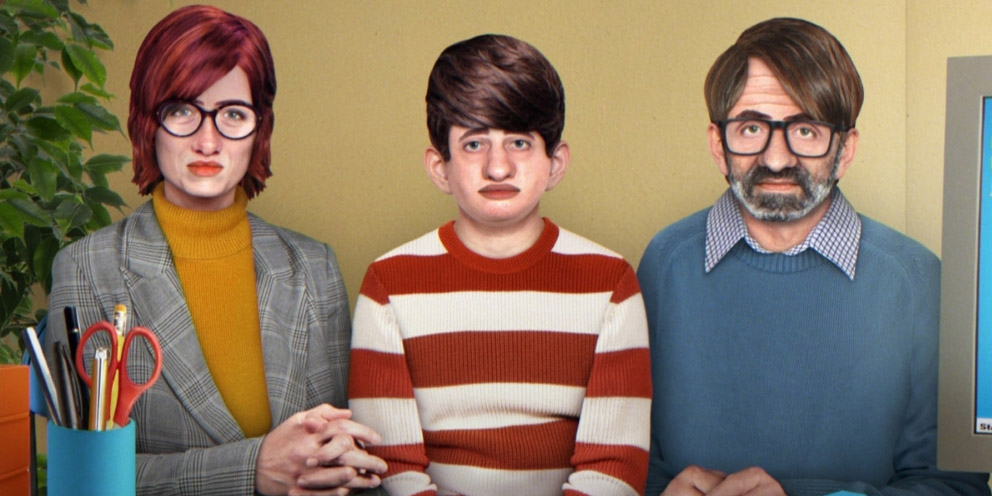
Blaise opens with the titular sixteen-year-old in the school psychologist’s office, sandwiched between his mother Carole (Léa Drucker) and father Jacques (Jacques Gamblin). Although they’re meeting to talk about Blaise, his parents may require therapy even more. Carole is desperate to please others at work, leading to a complicated relationship with one of her subordinates. Jacques is a magnet for misfortune, suffering from an oddly specific allergy and insecurities he’d gladly unpack if only someone would listen. By comparison, the introverted Blaise seems unremarkably average. Of course, the quiet types sometimes cause the most commotion.
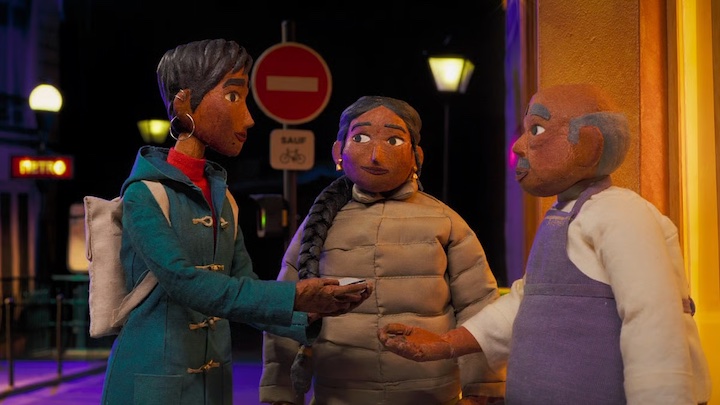
At a party he reluctantly attends, Blaise is drawn to a girl named Josephine. With thick glasses and an old-fashioned wardrobe, Josephine might not be the most conventionally attractive person in the room. Then again, nobody in Blaise fits that description. Directors Jean-Paul Guigue and Dimitri Planchon previously worked on the Blaise TV series, with the latter creating the original comic. Planchon’s designs combine elements of cutout animation and photomontage. His characters are a hodgepodge of bulbous noses, dopey ears, and gloomy eyes assembled from different photos that merge surprisingly seamlessly. The results fall somewhere between realism and caricatures, which suits Blaise’s bleakly offbeat tone.
Blaise’s existence seems painfully mundane until Josephine emerges as a wild card. Although Josephine comes from a privileged background, she’s compelled to rebel against the system. At first, this entails attending a protest with Blaise. Before Blaise knows it, though, Josephine is asking him if he wants to blow up a restaurant with a grenade. Blaise isn’t the violent type, but he also isn’t one to speak his mind either. Like his parents, Blaise has spent his life blending in with the scenery, doing his best to avoid confrontation. While one outcome is more explosive than the other, Blaise has an easier time going along with Josephine’s anarchy than saying no.
Blaise himself is a bit of a blank slate, with the film’s true strength lying in the supporting characters. Drucker and Gamblin, in particular, are hilarious as Blaise’s parents. In a way, Carole and Jacques’ relationship isn’t too different from Blaise and Josephine’s. The survival of these relationships depends on the elephant in the room not being addressed. Carole and Jacques maintain the status quo, despite not seeming especially happy together. Blaise isn’t sure if Josephine makes him happy, but he won’t know until the pin is pulled from the grenade that symbolizes their romance.
Compared to other coming-of-age stories, the film’s humor mixes the deadpan delivery of Daria, the subdued quirkiness of Ghost World, and the dark edge of The End of the F***ing World. There’s also a Seinfeld quality to the writing, as several plot points cleverly come together. This isn’t to say that everything is wrapped up in a tidy package. Blaise builds to a funny yet abrupt ending that left me wanting more, especially at just barely eighty minutes. Blaise himself never quite finds his identity, although maybe that’s the idea. In any case, I’d like to see more of these characters and this style. Be it in the comics, television, or another feature, Blaise’s world is worth further exploring.

Nick Spake is the Author of Bright & Shiny: A History of Animation at Award Shows Volumes 1, 2, and 3. Available Now!