A website dedicated to animation, awards, and everything in between.
Blaise Directors Dimitri Planchon and Jean-Paul Guigue Interview

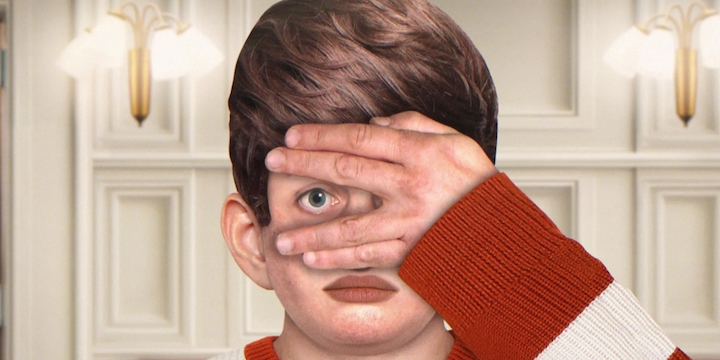
Credit: Blaise (KG Productions)
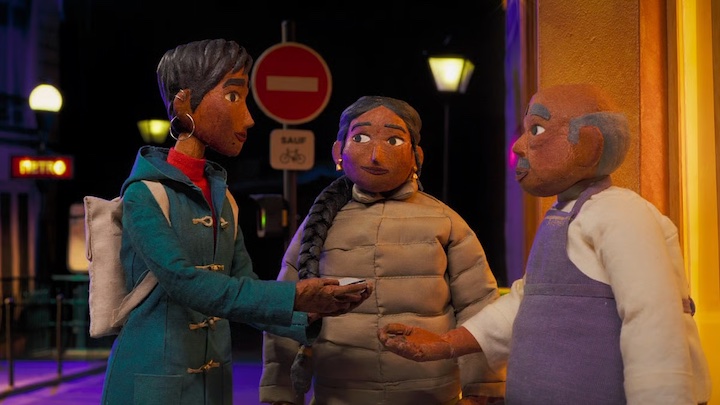
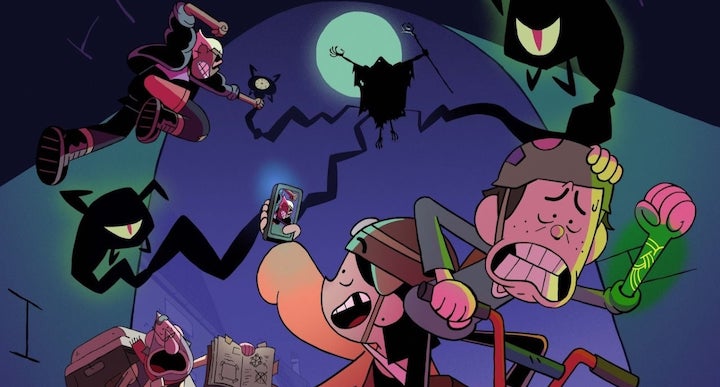
Blaise started as a comic created by Dimitri Planchon before becoming a TV series. Now, Planchon and co-director Jean-Paul Guigue have adapted Blaise into a feature film, which premiered as part of the ACID section at the 2026 Cannes Film Festival. The film is an offbeat comedy of errors centered on a family that tries blending into the scenery, only to find themselves in most unusual circumstances. The cutout animation style creates an uncanny sentiment that balances the film's offbeat charm with its downbeat characters. Cartoon Contender spoke with Planchon and Guigue about bringing the comic to life, evolving between mediums, and if we'll see more of Blaise in the future.
Q: Blaise started with Dimitri's original comics before being adapted into a TV series and now a feature film. How did the Blaise evolve between these three mediums?
DP: Moving from one medium to another was always an opportunity to start over with these characters. The animated series doesn’t really reference the comic books, which were more absurd in tone. In fact, it even contradicts certain aspects of them — they don’t belong to the same canon. The same goes for the film, which takes the same characters and pushes them somewhere else entirely, into a more psychoanalytical and burlesque kind of headlong rush. So the three works are completely independent from one another. It’s almost like a stylistic exercise: the same three characters placed in three different contexts, opening up just as many new directions.
Q: You two previously worked on the Blaise TV series. How would you describe your collaboration?
JG: We only had a small team of collaborators on the film, so Dimitri and I had to share several additional production roles ourselves! We really enjoyed that process — we worked side by side, each able to look over the other’s shoulder and give feedback. That’s how we moved forward, brick by brick. It also allowed us to maintain control over the entire creative process.
Q: Léa Drucker and Jacques Gamblin reprise their roles from the TV series. Was it always a given that they would come back, or were there talks of bringing in an entirely different cast?
DP: For us, it was always going to be them. I wrote the screenplay for the film with their voices in my head, without even knowing whether they would join us again. Thankfully, they accepted immediately. We would have been devastated otherwise!
JG: The rest of the cast, however, is entirely new, since the supporting characters are new as well — except for Blaise, of course. In the series, he was 8 years old and voiced by a young woman. In the film he’s 16, and he’s played by Timéo, a young actor and singer. We also paid special attention to the casting of Joséphine, who is more than just a supporting character. Nina Blanc-Francard got the role and, in a way, she takes charge of Blaise’s destiny.
Q: The film's visual aesthetic is quite unique, mixing elements of cut-out animation and photomontage. The result falls somewhere between realism and caricatures, which suits the tone of the film. What inspired the style of Blaise?
DP: My graphic work has always revolved around photomontage, even in my comics. Partly out of personal taste, but also because it compensated for a certain frustration I felt regarding my drawing abilities. Early on, my photomontages were rougher — the cuts were sharper, and the textures of the different overlapping papers were more visible. There was some influence from Dadaism, Constructivism, John Heartfield… Over time, I evolved toward something more painterly and realistic. But it’s a deliberately strange, unsettling, offbeat kind of realism. Since I’ve always written at the same time as I created my images, I suppose my visual style naturally came to harmonize with my writing style.
JG: We reused the animation technique we had developed for the TV series, but pushed it even further. We really wanted to emphasize the static quality of the bodies, along with the subtlety and realism of the facial expressions. That contributed greatly to the strange and uncanny feel of the film.
Q: The characters all feel oddly believable, despite some of the irregular circumstances they get themselves into. Are any of them based on people you personally know?
DP: Not directly — they’re all composites. They also each share some of my own neuroses. It’s funny to see how much people who watch the film seem to recognize themselves in them as well. It makes you feel a little less alone.
Q: Protest and dissent are important themes in the film, although some characters occasionally seem to cross a line. What do you think this says about today’s world, where people seem more inclined than ever to rebel?
DP: But Blaise and his family are actually the opposite of rebels. They’re obsessed with the idea of never upsetting anyone, always going along with what others want. Of course, “what others want” constantly changes. What interested us was the panic and confusion of these characters, who are incapable of functioning in such a divided and violent world.
Q: Without going into spoilers, the film ends on an open note while still feeling like it says everything it needs to say. Would you like to continue this story in another project, or do you think this is the natural conclusion to Blaise’s journey?
DP: In any case, we conceived this ending as a conclusion for these characters. As things stand, our next project will probably take us somewhere entirely different.

Nick Spake is the Author of Bright & Shiny: A History of Animation at Award Shows Volumes 1, 2, and 3. Available Now!