A website dedicated to animation, awards, and everything in between.
Bread Will Walk Director Alex Boya Interview | Oscar-Eligible Animated Short

Credit: Bread Will Walk (The National Film Board of Canada)
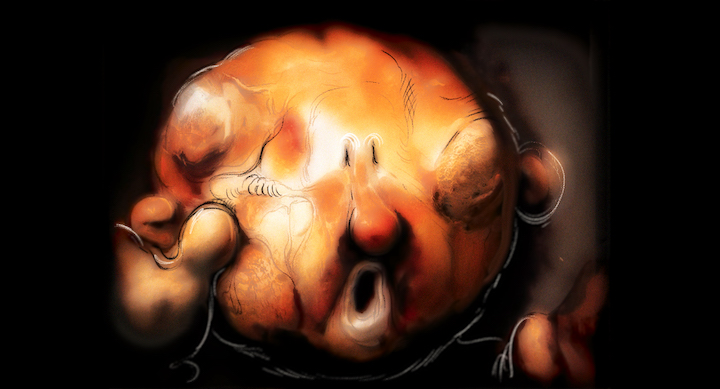
The National Film Board of Canada most recently pulled off a Best Animated Short win with The Girl Who Cried Pearls. Among their potential Oscar contenders this year is Alex Boya’s Bread Will Walk. It’s a mad world where people are turned into bread-like zombies, contributing to the world hunger crisis rather than solving it. Against a backdrop of propaganda and consumerism is a touching story of siblings as a sister protects her bread-turned brother from a hungry mob. Of course, her own hunger is also tested. Cartoon Contender spoke with Boya about finding the right animation style, working with actor Jay Baruchel, and crafting bread characters who are as disturbing as they are delicious-looking.
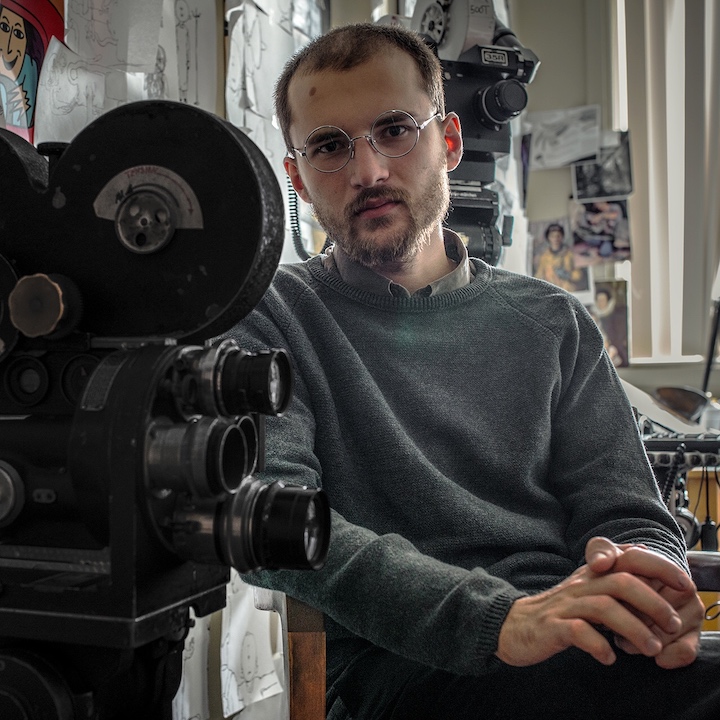
Credit: Alex Boya
Q: Zombie apocalypse and gluten… what inspired this connection?
AB: Bread is such an unlikely monster. We feed it to children, share it at the table, and depend on it to get through the day. Put that familiarity inside a zombie story and something very strange happens: the food is frightened of us. That’s the connection that interests me. The transformed person isn’t trying to eat anyone; everyone wants to eat him. It’s ridiculous, but it also gives the chase a very immediate vulnerability. You don’t need an explanation of this world to understand why someone would want to escape it.
Q: Bread Will Walk stemmed from your unpublished graphic novel, The Mill. How did the project evolve from the graphic novel to a 10-minute animatic, to Bread Will Walk?
AB: The Mill gave me more world than a short film could hold. Working with Jelena Popović at the National Film Board of Canada, the challenge was to find a journey through it. The 10-minute animatic organized that journey around continuous movement, with the sister and brother giving us someone to follow. A graphic novel lets the reader linger on a drawing; animation makes you decide how long they have before the next thing happens. Drawings, textures, and rhythm developed together, and the larger world had to become something we could experience at the speed of a chase.
Q: Jay Baruchel voices all of the characters in the film. Did you always plan on having one person provide every voice, or did that come about when Baruchel was cast?
AB: Yes, the idea of one actor playing everyone came before Jay joined. What I like about that choice is how many differences one voice can hold. Jay gives the characters distinct personalities, yet you can hear that they belong to the same peculiar world. There is comedy in that, and something unsettling too: the pursuer and the pursued share a human source. His performance lets that connection exist in the sound, without anyone having to explain it. It gives the drawn bodies another kind of life.
Q: I’ve seen other animated films done in a continuous take, but few have been executed with a more hypnotic lens than Bread Will Walk. How did you define the camera's visual language?
AB: The camera keeps moving, but the relationship gives it direction. A cut can let us step back, recover, or judge a situation from somewhere safer. Here, we remain with the characters while the streets and bodies change around them. That continuity makes the town’s logic feel unavoidable, even when it becomes absurd. Technically, each reframing had to grow out of the previous image. Emotionally, the movement needed to keep returning us to the same concern: can these two stay together through what is happening to them?
Credit: Bread Will Walk (The National Film Board of Canada)
Q: At one point, you considered doing the film in stop-motion. Can you walk me through the technical challenges that ultimately led you to choose the 2-D route instead?
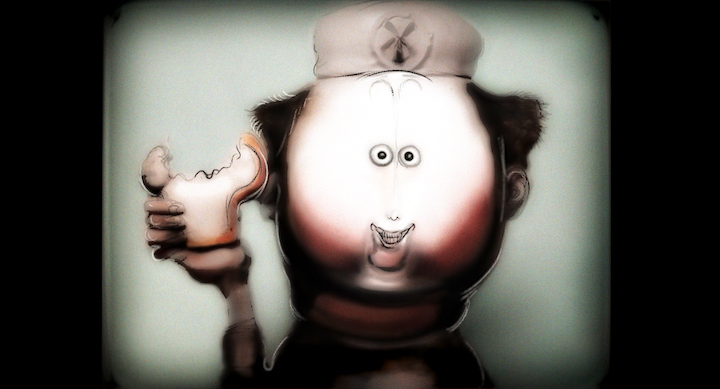
AB: The bread’s porous texture mattered because the characters needed to feel disturbingly tangible. We tested handmade and 3D-printed assets and discussed animating bread as it baked, using a small oven and a heat-resistant green-screen set-up. Fire safety became a practical obstacle at the National Film Board of Canada. Returning to ink on paper also preserved the freedom to allow bodies and space to keep transforming. Photographic bread textures could bring material weight into those drawings. The experiments helped us find a combination in which the food feels real while the world remains unstable.
Q: Had the film been stop-motion, do you imagine the narrative would've changed at all?
AB: I imagine the basic relationship could have remained, but the way we experience it would have changed. Stop-motion gives a body physical weight and makes us aware that it occupies real space. Drawing allows that space to bend along with the characters, almost before we can decide what we have seen. In this film, the chase and the transformations belong to the storytelling rather than sitting around it as decoration. A different material would have changed their rhythm and therefore the balance between tenderness, comedy, and threat.
Q: The film touches upon many themes, including propaganda, greed, and consumerism. How did all of these ingredients come together during the story's conception?
AB: The premise brings those ingredients together: a product promises nourishment, changes people’s bodies, and makes them desirable to other hungry people. Propaganda sells the promise; appetite helps people overlook the consequences. Animation makes those forces physical, through mouths, bodies, and a crowd closing in. Wanting to eat is understandable. What that desire allows someone to do to another person is where things become frightening. With Bread Will Walk now qualified for the 2027 Oscars, I hope more people discover that uneasy recognition: the hunger is familiar, even when the world is strange.
Q: At the film’s heart is a sister-brother story. What motivated you to explore sibling dynamics?
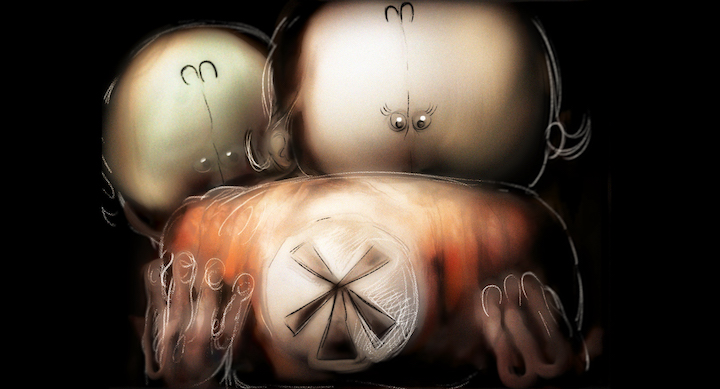
AB: I’m the younger brother; my older brother is Nicolay. So my way into this relationship is from the little brother’s side. The film has a sister and brother, but that feeling of being known by someone close to you is familiar. Someone knows you as a person before the world decides what you are. For me, that is what makes the transformation hurt. Gerben’s appearance changes what strangers want from him. Magret still has a brother to look after. She doesn’t need to solve the mystery before caring about him.
Credit: Bread Will Walk (The National Film Board of Canada)
Q: I got a Frankenstein vibe from the story as well, between the hungry mob and the windmill. Was that intentional, or just a coincidence?
AB: It wasn’t a deliberate reference, but I can see it, especially with the mob and the windmill. I enjoy hearing what people recognize in an image; they arrive with a whole history of films and stories that I haven’t necessarily put there consciously. Frankenstein is an interesting companion because the frightening body and the frightening behavior don’t have to belong to the same person. That connection gives us another way into the film. I’m happy for it to remain a conversation with the viewer rather than something I settle for them.
Q: Is it wrong that I found so many characters in this film delicious-looking?
AB: Not wrong, but perhaps keep an eye on your appetite! The bread needs to look inviting. Those photographic textures give it the familiarity of something you might actually want to eat, even as the drawings turn it into someone trying to get away. I like that you can be hungry and concerned at the same time. The joke gets awkward because you recognize the attraction. A loaf running for its life is funny, and then you find yourself hoping it escapes. I wouldn’t want to lose either reaction.
Bread Will Walk is currently available to watch on YouTube:

Nick Spake is the Author of Bright & Shiny: A History of Animation at Award Shows Volumes 1, 2, and 3. Available Now!