A website dedicated to animation, awards, and everything in between.
Artist Spotlight Christina Park Interview

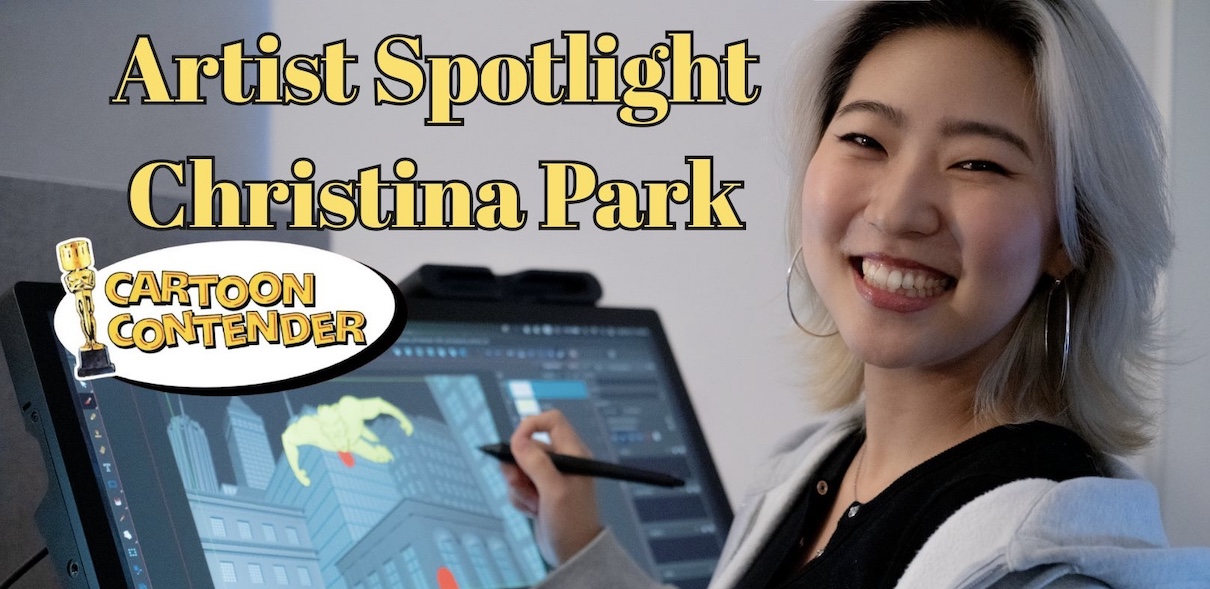
Credit: Christina Park
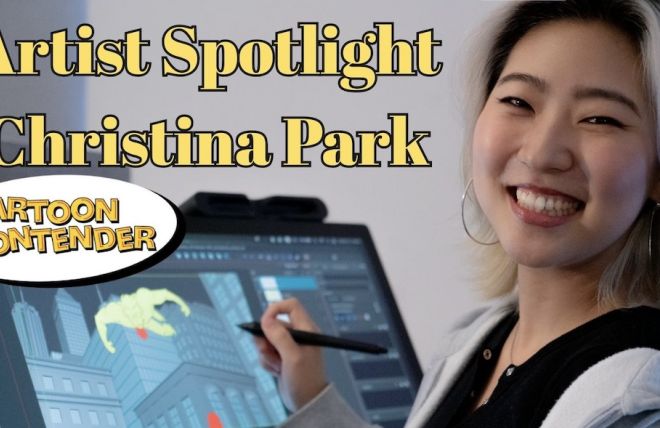
Welcome to Artist Spotlight, where Cartoon Contender provides a platform for members of the animation community. Our guest today is storyboard artist Christina Park of Skybound Entertainment. In addition to working on the Invincible TV series and the game Invincible VS, Park has made the 3D-animated short Snow Dog. Cartoon Contender spoke with Park about the humanity behind storyboarding, creative influences, and her eye for drawing tigers.
Q: Storyboarding is one of the most essential parts of an animated production, but also one of the most underappreciated. What drew you to this profession, and why do you think it’s a job that only a human can spark life into?
CP: I love that you mentioned that storyboarding is a job that only a human can truly bring to life, because it’s so true. Storyboarding requires a person to think about the shots in a scene, how they will visually translate to the audience, and how they will make the audience feel about what is happening on screen. Storyboarding is one of the most essential parts of the animation pipeline because it is the step that comes after the script. The artist needs to consider which camera angles would best fit the overall mood of a scene and evoke emotion from the audience. They also need to stage and block the characters and camera within the environment, building the visuals from scratch. In a way, people consider storyboard artists to be mini-directors because they are responsible for shaping how the story is told visually. Once the storyboards are finalized, they are passed on to the animators, who bring the scenes to life and make them look polished. What initially drew me to storyboarding was the idea of being able to approach storytelling through a director’s lens. As a storyboard artist, I get to shape what unfolds on screen through my creative decisions and voice, crafting a visual narrative that resonates with and connects with audiences.
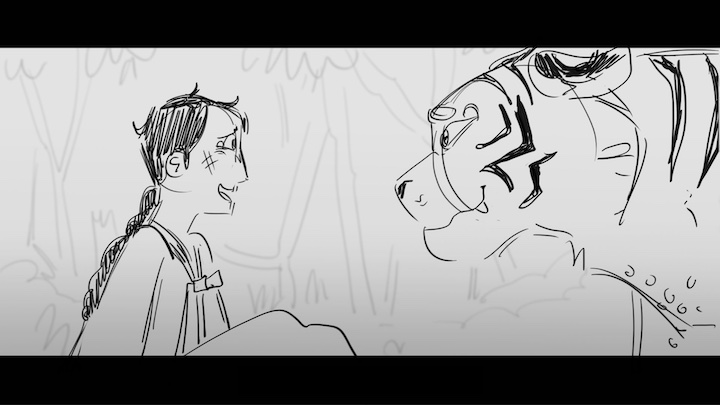
Credit: Christina Park
Q: Looking through your portfolio, you seem passionate about drawing animals, especially tigers. Why does this particular animal call out to you?
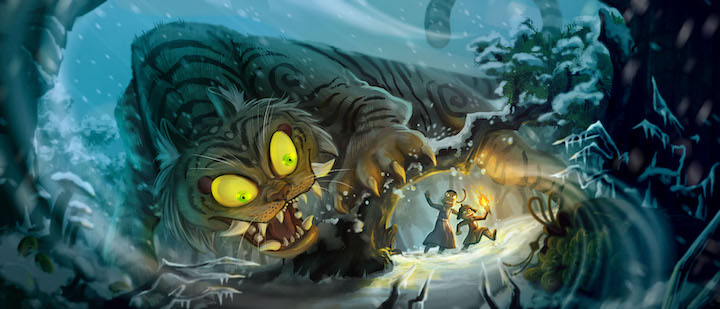
CP: From a young age, I’ve always been fascinated by creatures and animals. I naturally gravitated toward anything related to them, whether it be shows, movies, or books featuring animals. They were also the one thing I drew consistently. It’s so funny that you mentioned my fascination with tigers! This interest really took off when I started exploring traditional Korean folktales as a way to connect more with my Korean roots. Tigers are prominent figures in many of these stories, and I was drawn to their symbolic meaning as a representation of strength and their significance as Korea’s national animal. There’s also a famous style of Korean folk art called minhwa that features tigers with goofy, derpy expressions. I absolutely fell in love with their unique look, which inspired me to start drawing them more often. That’s why you might notice tigers appearing so frequently in my artwork!
Credit: Christina Park
Q: You’ve made several contributions to Skybound Entertainment, most notably on the Invincible VS cinematics. In what ways is working on a game different from an animated TV production, and in what ways are they similar?
CP: To be honest, the production pipeline for Invincible VS was pretty similar to that of an animated TV production. The main difference was working with a 3D animation to 2D, as each medium came with its own unique workflows and creative challenges. Since we were working on the story cinematics for Invincible VS, the overall production structure, from pre-production to production and post-production, was quite similar to the animated TV production pipeline. My background in 3D animation gave me a strong understanding of the software and workflows, allowing me to apply my technical and creative skills throughout the project. Communication was a key part of my role. I worked closely with the team to ensure that artistic notes and storyboard drawings were clearly communicated and understood by the overseas studio, Studio Mir. My ability to speak Korean was a significant advantage, allowing me to bridge language barriers and facilitate clearer communication between teams. This role required strong collaboration with in-house production, adaptability when working with both studio cultures, and close attention to detail in every storyboard drawing to keep everyone aligned and ensure production ran smoothly. I was able to carry these skills into my transition to the Invincible TV animation production, where they continued to be valuable assets. Although there are differences between the two production environments, many of the skills are transferable because the overall animation pipeline follows a similar structure.
Credit: Christina Park
Q: You were one of 11 artists selected for a workshop led by Nickelodeon directors Joe Mandia and Brandon Warren of Kamp Koral. You even got to storyboard a script for the episode “Hill-Fu.” What was it like working on the SpongeBob universe?
CP: Being part of the SpongeBob SquarePants universe was one of the most exciting experiences I’ve had. I was selected as one of a small group of artists to participate in a masterclass, where I had the opportunity to work directly with Joe and Brandon. It was a privilege to explore the show’s distinctive comedic style and incorporate that same energy into my storyboards. One sequence from Hill-Fu that received particular praise from the directors was my interpretation of the scene, especially my use of Western-style title card transitions to introduce the characters. Throughout the masterclass, I incorporated my own creative ideas and storytelling techniques into my boards, which I later pitched directly in front of the directors. This experience allowed me to showcase my creativity, demonstrate my approach to visual storytelling, and explore new ways to bring humor and personality to the screen.
Q: You worked as a storyboard artist on the Tea Leaves Last pilot, which was produced through Asians in Animation. Can you take me through your work on that production?
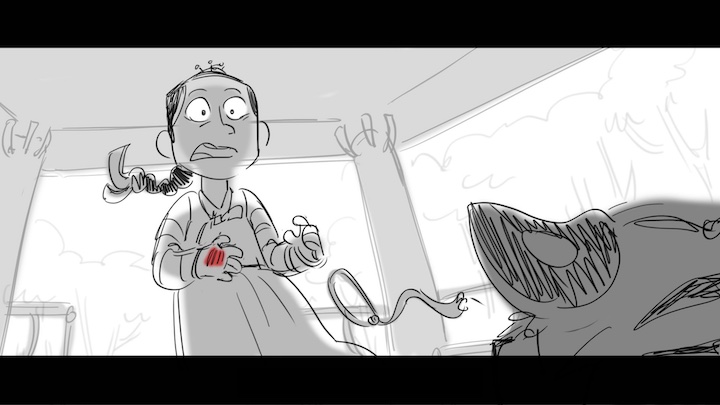
CP: As part of this original pilot, I was brought on as a storyboard artist for a unique story centered on Asian representation, where I was entrusted with developing narratively significant flashback sequences. The scene I worked on followed Mya, the main character, as she revisited memories of her hometown. The sequence revealed the events leading up to the invasion, including the dramatic circumstances surrounding her parents being taken away and the destruction of her hometown. My primary focus was staging the characters within the provided layouts and structuring the sequence to create a cinematic flow. I also paid close attention to character acting, using expressive poses, body language, and facial expressions to reflect the emotional tone of the dialogue. It was essential to ensure that the script’s emotional weight and pacing translated effectively into the visuals through thoughtful shot composition and deliberate camera direction.
Q: You also worked on the first episode of Goofus & Abby, which pays homage to black-and-white cartoons. Is there a particular classic cartoon you looked to for influence?
CP: This was a really fun project to work on because it challenged me to step outside the style I’m used to. People might think that a cartoony style is easier because it’s so loose and exaggerated, but in reality, it takes a different kind of creative thinking to understand how characters move and interact in rubber-hose-style animation. There is a lot of physical acting and expressive body movement involved, especially in scenes without dialogue. For inspiration, I looked at classic Looney Tunes cartoons featuring characters like Bugs Bunny, as well as Tom and Jerry, to study their exaggerated actions and physical comedy. For the black-and-white cartoon aesthetic, the early Mickey Mouse animations from Walt Disney were a huge influence. I wanted to capture that same cartoony, comedic energy in my work. Because of this, I had to be intentional about how I boarded each scene, making sure the characters could clearly convey their emotions through body language alone. The goal was to make their actions and feelings readable to the audience, even without dialogue, while maintaining the exaggerated movements and comedic timing that make this style so entertaining.
Credit: Snow Dog (Christina Park)
Q: What was the inspiration behind your short film, Snow Dog?
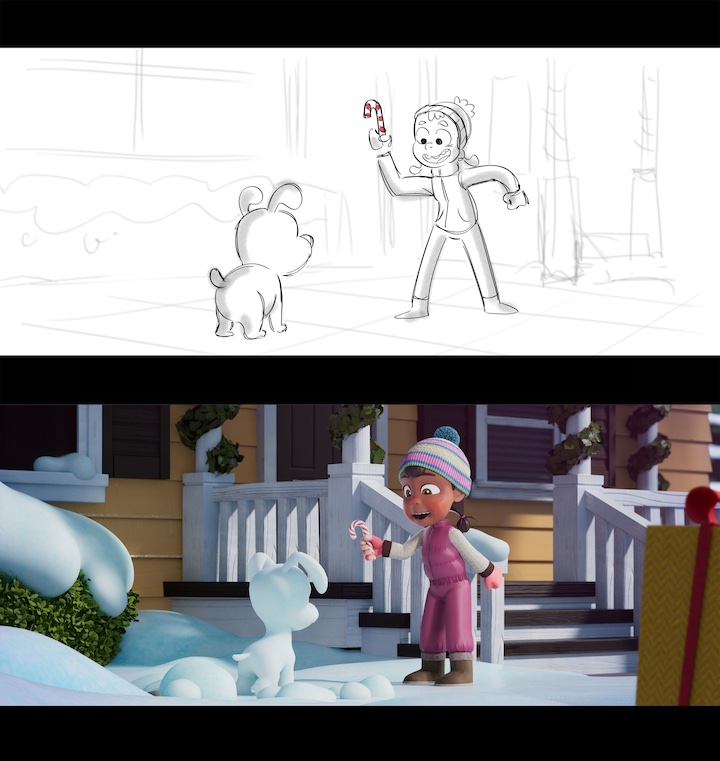
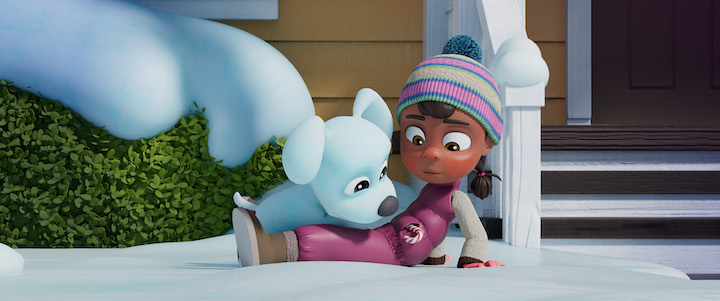
CP: My love for dogs and animals inspired me to create this story. I wanted to make a film that reflects my love for creatures, and the idea eventually grew from a combination of Frosty the Snowman and Clifford the Big Red Dog. I thought it would be a fun concept to create a heartwarming Christmas holiday tale with a meaningful lesson at its core. The story follows a young girl learning what it takes to care for a dog, blending the magic and warmth of the holiday season with a meaningful lesson about commitment and responsibility.
Q: You’ve worked in both 2D and 3D animation. Why do you think 3D best suited Snow Dog?
CP: Creatively, 3D animation was the most effective approach for telling this type of story, as it allowed me to convey a greater sense of weight and depth to the characters and environment. It gave me control over dramatic lighting, camera depth, and spatial blocking, all of which were essential when planning and executing the shots for this film. Lighting played a key role in establishing the emotional tone of each scene. For example, when Holly, the main character, first encounters the dog, the lighting was designed to feel lighthearted and inviting. As the story progressed, the lighting gradually shifted toward a more dramatic tone to reflect the changing emotional atmosphere. Camera control was equally important in creating a cinematic visual language, allowing me to carefully compose shots, guide the audience’s attention, and enhance the storytelling through camera movement. Ultimately, using 3D animation gave me the creative flexibility to bring my vision to life and also ensure that the visual style complemented the story’s narrative. This approach allowed me to create a more whimsical and immersive experience that enhanced the storytelling and brought the fictional world to life.
Credit: Snow Dog (Christina Park)
Q: What has it been like experiencing Snow Dog with audiences at film festivals?
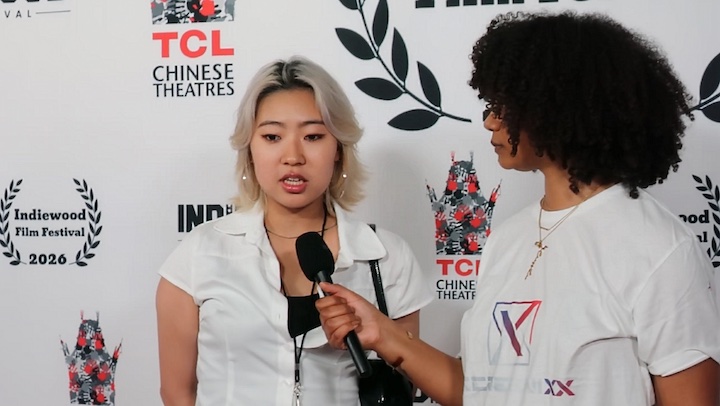
CP: It feels surreal to see my short film reach so many festivals and receive such meaningful recognition. The overwhelmingly positive reception has led to multiple awards, including Best Animation and Audience Favorite honors at both national and international festivals, such as the Golden State Film Festival, Hollywood ShortFest, Miami International Gold Awards, Robinson Film Festival, and Couch Film Festival, among other prestigious festivals. The film’s growing recognition has also provided opportunities for screenings at notable industry venues, including Netflix, as well as internationally acclaimed animation events such as CTNX. It has been incredibly rewarding to see audiences connect with the story, resonate with its characters, and express genuine enthusiasm for the film. Knowing that something I created can bring people joy, leave a lasting impression, and receive recognition on this scale makes the entire experience especially meaningful. It reinforces my passion for storytelling and motivates me to continue creating work that connects with audiences on an emotional level.
Credit: Snow Dog (Christina Park)
Q: What are you working on now?
CP: I’m currently continuing my work at Skybound Animation on Invincible, where I contribute my storyboarding expertise and artistic insight to help shape the series’ action-packed storytelling across pre-production and post-production. Drawing on my experience across multiple projects, including Invincible VS, I bring versatile skill sets that adds value to the team, from drawing expressive storyboards that effectively convey character emotions to bridging language barriers with overseas studios. Beyond my ongoing work on the Invincible TV series, I’ve also been brought on as a storyboard revisionist for upcoming, undisclosed studio productions. My continued involvement across projects reflects my ability to adapt to evolving production needs, contribute meaningfully to the creative process, and support the team in bringing its stories to life. While I can’t share details just yet, I’m excited to continue expanding my contributions at Skybound Animation and look forward to sharing more of our work with fans in the future.
To learn more about Christina Park, check out her portfolio and follow her on Instagram!
Are you a member of the animation community interested in being featured in Cartoon Contender's Artist Spotlight? Feel free to contact us here!