A website dedicated to animation, awards, and everything in between.
Avatar: Seven Havens Season 1 Review | For the Survival of Paramount+

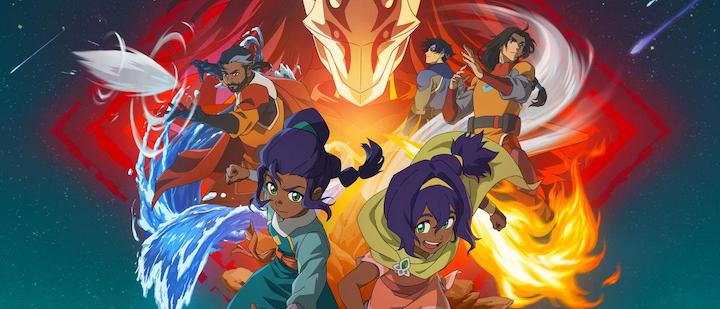
Credit: Avatar: Seven Havens (Paramount+)
I’ll be keeping this review generally spoiler-free, although mileage may vary on what is and isn’t a spoiler. In any case, a few plot points have to be touched upon.
The Avatar franchise has brought us some of the most nuanced character development in modern storytelling. Creators Bryan Konietzko and Michael Dante DiMartino have said that the characters aren’t good or evil, but rather in balance or out of balance. In general, though, it’s usually clear which characters are destined to be heroes and which will be villains. Even Zuko, who started the franchise as Aang’s enemy, always seemed like somebody who could be redeemed, which was of course the case. In Avatar: Seven Havens, this world and its characters feel more morally grey than ever before. The first season’s subtitle is “Survival,” which isn’t necessarily a trait associated with heroism. Instead, it drives people to desperate measures, blurring the line between right and wrong. As such, we’re not always sure who to trust in this new world, including the Avatar(s).
For the first time in history, there are two Avatars: Pavi and Nisha, twins who didn’t realize either existed (or at least don’t remember each other). When they come face to face for the first time in years, one can’t help but think of The Parent Trap. Instead of switching places to reunite their parents, Pavi and Nisha try to remember what happened to theirs. The twins’ memories aren’t the only things thrown out of balance. The world of Avatar has forever changed following the Cataclysm, which left the Four Nations in ruins, but from them rose the Seven Havens. It’s a Max Max-esque world, although it appears order has been restored after two centuries. Of course, order can be an illusion.
With showrunners Sehaj Sethi and Ethan Spaulding taking the reins, Season/Book One is primarily set in the haven of Ellora, where survival is part of their motto. Survival comes at a cost, however. With fewer benders, those who remain must enlist in the Brigade, whether they want to or not. For airbender Jae, it’s a privilege. For a resistance group known as the Faceless, it’s oppression. This larger conflict reflects the turmoil within the two Avatars. Like Korra, Nisha is eager to prove herself as the Avatar, training as long as she can recall under the mentorship of city guard captain Karthik. Pavi is closer to Aang, wishing she could just be a kid rather than carry the enormous weight of being the Avatar.
Both sisters have been forced to hide their true nature, as the Avatar is no longer seen as a symbol of unity. When the Cataclysm occurred, Korra was connected to it. History remembers Korra as a bringer of chaos, although if the Ember Island Players taught us anything, it’s that the truth can get distorted. The first season does an effective job of keeping us guessing what exactly went down at the end of Korra’s Avatar tenure. We know that Korra didn’t suddenly turn evil, but she likely holds at least some responsibility for what went down. Did Korra intentionally destroy the world, believing it was the only way for balance to eventually be restored? While I won’t spoil anything here, the fact that Seven Havens had been questioning Korra’s actions is a testament to its compelling storytelling.
Korra isn’t the only character we find ourselves second-guessing. Karthik is introduced as a caring father figure, but could he have ulterior motives for training the Avatar? Jae is a noble young man, but will loyalties lie with the right people? Even Pavi and Nisha aren’t so clear-cut. They immediately connect as sisters, giving Seven Havens a strong emotional core. In such a divided world, though, one could imagine them going down different paths. The Avatar Cycle started with the conflict between Raava and Vaatu, spirits with similar designs who represent opposing concepts. Could one twin represent light while the other comes to embrace darkness? If so, which one?
Perhaps the most mysterious figure of all is an energy monster known as the Anomaly. Feeding off fear and igniting anarchy, the Anomaly makes for some of the season’s creepiest imagery. Yet, it also may hold the key to unlocking the past. The characters must look the Anomaly right in the eye first, however. Even if the Avatars learn what happened to their parents, Korra, and the world, pushing forward may be easier said than done.
After taking a few episodes to reimmerse us in this world, Seven Havens emerges as a show about control vs. free choice. For much of the season, there isn’t a villain per se. Just people with different ideals on how this new world needs to work. Eventually, a character does cross a line that firmly cements them as the season’s antagonist. While it’s not a complete 180, I wish this character had more screen time to make their turn feel more natural. That said, it goes to show that those obsessed with maintaining control are the most inclined to lose their grasp of it, along with their sanity.
Several other side characters could’ve been better defined, including Jae’s boyfriend Datu. On that note, it’s still wonderful seeing the franchise go all-in on LGBTQIA+ representation, even giving Korrasami their first (sort of) onscreen kiss in an Easter egg. Seven Havens gets disability representation right as well. Pavi's prosthetic leg isn't tiptoed around, presenting a few challenges for her to overcome. Yet, it doesn't define her or make her any less upbeat. Beyond physical disabilities, Pavi and Nisha deal with internal struggles. Their physical and mental health are often linked, with the Avatar powers making both feel like outsiders. Something similar can be said about autism spectrum disorder, which is a disability, but with understanding and acceptance, can come with many strengths.
Although the supporting cast hasn’t fully flourished, Seven Havens takes its time developing its central characters and dynamics. Saheli Khan, the voice of Pavi, and Aishu Devan, Nisha’s voice, share such natural chemistry that you’d assume they were siblings in real life. It’s especially impressive they found two actresses who share similar voices, yet each makes their respective character sound distinct. The show centers on sisterhood, but Jae also serves as something of a big brother to the twins.
Although Pavi and Nisha are the youngest Avatars the franchise has focused on, they’ve perhaps endured the most trauma. Neither realizes this, but as their memories gradually return, the bond they’ve developed is challenged. It builds to a finale that’s mostly heartbreaking, yet hopeful in other respects. It caps off a great season that more than lives up to The Last Airbender and Korra, while still feeling unique. This is reflected in the animation, which maintains the atmosphere and comedic timing of the previous Avatar shows. Animation studio La Chouette Compagnie brings a Steven Universe-esque aesthetic, though, standing out from Studio Mir.
Even if the animation can’t top the all-timer artistry we got in Avatar Aang: The Last Airbender, this is probably the prettiest post-apocalyptic show we’ll ever see. Seven Havens deserves a bigger budget each season, taking the animation to the next level. That said, Seven Havens is renewed for another three seasons. Apparently, that’s the ceiling, but it feels like there’s room for more. Avatar created a world you wanted to explore every inch of. The same goes for this brave new world.

Nick Spake is the Author of Bright & Shiny: A History of Animation at Award Shows Volumes 1, 2, and 3. Available Now!