A website dedicated to animation, awards, and everything in between.
Could You Can See Everything Be the Biggest Oscar Snub Since The Lego Movie?

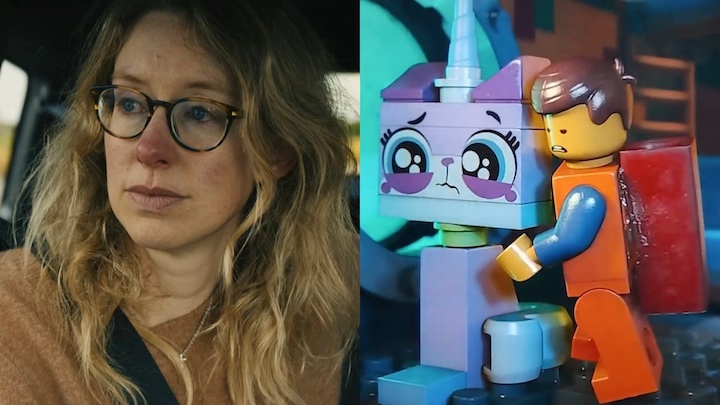
Credit: You Can See Everything (A24), The Lego Movie (Warner Bros.)
What do You Can See Everything and The Lego Movie have in common? Nothing, as of writing, but that could change when the nominations for the 99th Academy Awards are announced on January 21, 2027. For the first time in a century, Nathan Fielder and Lance Oppenheim could finally bring a documentary into the Best Picture race. Whether or not You Can See Everything gets a Best Picture nomination, it’ll surely be nominated for Best Documentary Feature and win… right? Not necessarily. It’s entirely possible You Can See Everything makes history as the first documentary to contend for Best Picture without being nominated for Best Documentary. It could also blank entirely on Oscar nominations morning, despite being one of the year’s most acclaimed, financially successful, and ambitious achievements.
The entire Academy votes on Best Picture nominations, opening the door for a broadly appealing documentary like You Can See Everything to break through in that category. For Best Documentary Feature, nomination voting is restricted to “All active and life members of the Documentary Branch.” Once the nominations are announced, the entire Academy can vote for the winner. If the Documentary Branch doesn’t nominate You Can See Everything, though, it can’t very well compete for the win. But why wouldn’t they nominate You Can See Everything? It’s the most talked-about documentary of the year, it’s defying every box office odd, and it’s challenged the notion of what a documentary can be. That’s precisely why You Can See Everything should be nominated, but also why the Doc Branch may reject it.
The Doc Branch has continually demonstrated that they’re a closed-minded bunch, raising their noses at documentaries seen as “too populist” or outside the norm of what they expect from the medium. At least sometimes. Throughout the 21st century, the branch has nominated several high-profile documentaries, including Bowling for Columbine, Super Size Me, March of the Penguins, An Inconvenient Truth, Amy, O.J.: Made in America, and Summer of Soul. Yet, they’ve also turned a blind eye to many documentaries that likely would’ve won had they been nominated, including Apollo 11, Won't You Be My Neighbor?, Stories We Tell, Still: A Michael J. Fox Movie, Will & Harper, and Life Itself.
Speaking of Roger Ebert, he regularly highlighted Best Documentary snubs along with Gene Siskel throughout the 80s and 90s. Back then, there was a documentary committee rather than a branch. Ebert and Siskel praised documentaries like Shoah, Crumb, and Roger & Me, heavily criticizing the committee for not nominating them. Siskel and Ebert were at their angriest when the documentary committee denied Hoop Dreams a nomination. Both critics named Hoop Dreams the best film of 1994. Ebert later named it the best film of the 90s. Perhaps Siskel would’ve too had he lived into the next century.
It’s worth noting that Hoop Dreams did get a Best Editing nomination. As such, it’s entirely possible that Hoop Dreams would’ve gotten a Best Picture nomination had there been ten spots to fill like there are now. That would’ve only further emphasized how out of touch the documentary committee was. The Academy seemed to move in the right direction with the formation of the Doc Branch in the early 2000s. Even decades later, though, much of what Siskel and Ebert said following the Hoop Dreams snub rings true in today’s Best Documentary landscape.
Siskel said at the time, “The documentary committee continued its shocking streak of ignoring films that are praised by critics or maybe more important, receive plenty of exhibition in commercial theaters and are endorsed by the public. The 47 members of the documentary committee seems to be saying, ‘We'd rather help other films achieve the same kind of prominence.’” Ebert responded, “I was talking to Barbara Kopple, who won two Academy Awards… and she said, ‘This committee is in love with talking heads and stock footage,’ and that's exactly what they are. These old-fashioned television-oriented films with battleships bombing the beaches of Normandy while some deep voice says how many troops went ashore. They are not interested in living, breathing documentaries.”
In 1995, "Hoop Dreams" was denied a Best Documentary Oscar nomination. Back then, they had a doc committee rather than a branch. Yet, many of the points that Siskel and Ebert make here still ring true. We'll be repeating a lot of what they said if #YouCanSeeEverything is snubbed. https://t.co/NSjaDiqP2B
— Nick Spake (Cartoon Contender) (@NSpake) October 25, 2026
If You Can See Everything isn’t nominated for Best Documentary, I sense we’ll be repeating much of what Siskel and Ebert said almost thirty years ago. The Academy as a whole may still nominate the Elizabeth Holmes doc for Best Picture, but what sense would that make? How can it be one of the year’s ten best films, yet not one of the five best documentaries? And don’t tell me that “You Can See Everything isn’t really a documentary.” It is. Even with a meta twist, it still meets the Academy’s definition: “An eligible documentary film is defined as a theatrically released nonfiction motion picture dealing creatively with cultural, artistic, historical, social, scientific, economic, or other subjects. It may be photographed in actual occurrence, or may employ partial reenactment, stock footage, stills, animation, stop-motion, or other techniques, as long as the emphasis is on fact and not on fiction.”
The Academy has a somewhat similar problem with Best International Feature. In 2024, Anatomy of a Fall won Best Original Screenplay and got nominated for Best Picture. Yet, it couldn’t be nominated for Best International Feature because France submitted The Taste of Things instead. Whether or not Anatomy of a Fall would’ve won Best International Feature, its absence in the category was widely felt, especially with its Best Picture nomination. Since then, the Academy has tried to broaden eligibility requirements. Now, if an international film wins a prize from a particular film festival, it can compete even if a country failed to submit it.
With Best International Feature, the issue is which films are and aren’t eligible. With Best Documentary Feature, the issue isn’t eligibility. It’s which films the branch is and isn’t nominating. If the Doc Branch doesn’t nominate You Can See Everything, causing a media uproar, the Academy may be compelled to intervene. Going forward, AMPAS could open nomination voting in Best Documentary Feature to all active and life Academy members. It wouldn’t be the first time the Academy invited members outside of a category’s respective branch to vote on the nominees. The rules were modified for Best Animated Feature not long after a certain blockbuster was left out.
This brings me back to The Lego Movie, which virtually everyone thought was safe for a Best Animated Feature nomination after it hit theaters in 2014. While “Everything Is Awesome” got a Best Original Song nomination, that year’s Best Animated Feature lineup included Big Hero 6, The Boxtrolls, How to Train Your Dragon 2, Song of the Sea, and The Tale of the Princess Kaguya. Those who saw Song of the Sea and Princess Kaguya understood why they were nominated. Normies, however, couldn’t fathom how two films they never heard of got in over The Lego Movie. The Oscar ultimately went to Big Hero 6, although had The Lego Movie been nominated, the outcome might’ve been different.
The following year saw several big-budget animated films that got strong reviews and performed well at the box office, such as The Peanuts Movie. Yet, the Animation Branch seemed to double down on the “that’s what the money’s for” mentality. They nominated four smaller films (Anomalisa, Boy and the World, Shaun the Sheep Movie, When Marnie Was There) and one bona fide blockbuster (Inside Out). Inside Out won, proving undeniable, but even Pixar isn’t exempt from the “that’s what the money’s for” mindset. Finding Dory outgrossed every other animated feature in 2016, only to get left out of the Oscar race. The Animation Branch still nominated two Disney smashes: Moana and Zootopia, the latter of which won. However, they also nominated The Red Turtle and My Life as a Courgette over moneymakers like The Secret Life of Pets, Sing, Trolls, and Sausage Party.
I don’t want it to sound like I’m condemning the Animation Branch for not nominating more mainstream fare. Many of the aforementioned animated features 100% deserved their nominations. After The Lego Movie omission, though, there was pressure for the branch to recognize more audience favorites. The branch wasn’t budging, so the Academy pushed them. In 2017, the rules were modified, allowing members outside the Animation Branch to vote on the nominees as well. Participants were still required to watch a minimum percentage of submitted eligible films. Even so, the expanded voting pool was felt among that year’s batch of nominees.
Two smaller films (The Breadwinner, Loving Vincent) still got nominated along with Pixar’s Coco, which was always going to win. Yet, it’s hard to imagine The Boss Baby or Ferdinand getting nominated under the old rules, especially with alternatives like The Big Bad Fox and Other Tales..., In This Corner of the World, Mary and the Witch's Flower, and A Silent Voice. Ironically, even with the expanded voting body, The Lego Batman Movie couldn’t get a nomination. So, the brick bias wasn’t restricted to the Animation Branch. While The Lego Movie snub didn’t single-handedly bring about these changes, it arguably started a snowball effect that eventually prompted the Academy to alter the rules.
Why hasn’t the Best Documentary category seen a similar overhaul? Probably because animation is responsible for some of the highest-grossing films annually, and they have major studios backing them. When the Animation Branch doesn’t nominate big studio productions, there’s going to be an outcry. That’s not necessarily the case for documentaries, only a handful of which have grossed over $100 million at the box office. Even Won't You Be My Neighbor?, the definition of a crowd-pleaser, only made $22.8 million. That’s great for a documentary that premiered at Sundance, but it’d be rookie numbers for a Disney, Pixar, or DreamWorks animated film.
When Won't You Be My Neighbor? got left out of the Best Documentary category, it was a significant talking point, but it didn’t dominate headlines like The Lego Movie snub did. If You Can See Everything isn’t nominated, it will be considered a Lego Movie-sized snub. Big enough for the Academy to open the Best Documentary nominations to voters outside of the branch? It could come to that. I’m not saying that’s what the Academy should do. Numerous Animation Branch members found it condescending when the higher-ups essentially told them they weren’t qualified to pick their own nominees. Documentary Branch members would surely (and rightfully) have similar views.
All I know is this. The Lego Movie should’ve been nominated for Best Animated Feature. You Can See Everything should be nominated for Best Documentary Feature. If the Documentary Branch can’t see what everybody else does, then there’s something fundamentally wrong with how things are done. Animation Branch member Nancy Beiman once told me, “Films are either nominated by the members or they are not. We do not 'snub' movies, we nominate them.” Generally, I agree with that statement. If You Can See Everything can’t get into Best Documentary, though, it will feel like branch members went out of their way not to vote for it. It'd be their way of saying, "Not one of us."

Nick Spake is the Author of Bright & Shiny: A History of Animation at Award Shows Volumes 1, 2, and 3. Available Now!