A website dedicated to animation, awards, and everything in between.
Wildwood Deserves a Best Picture Nomination | Can It Actually Happen?

Credit: Wildwood (Laika, Fathom Entertainment)
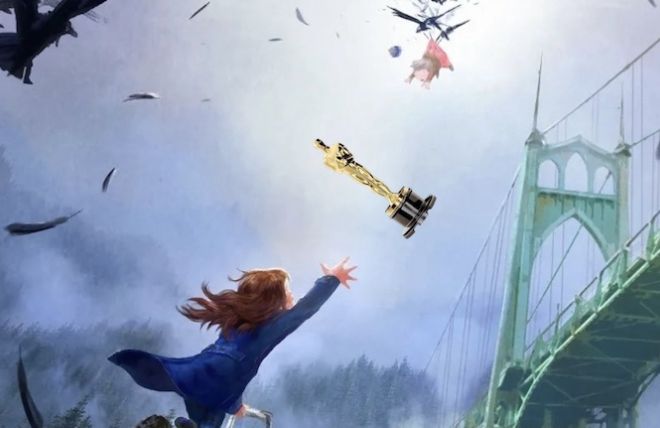
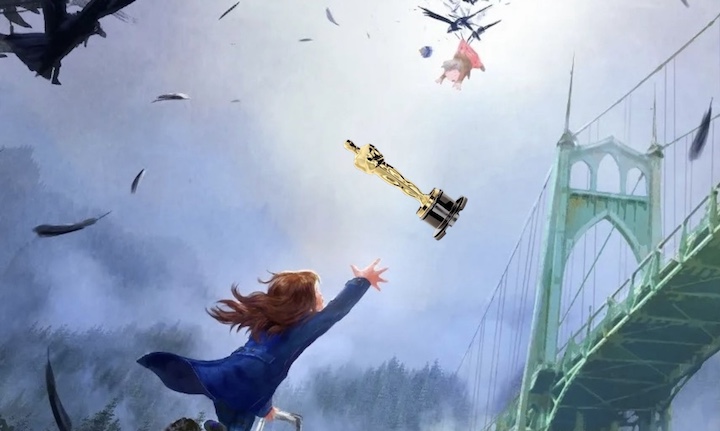
The 99th Academy Awards could bring us one of the most exciting Best Picture lineups in almost a century of the Oscars. You Can See Everything is in a position to become the first documentary ever nominated for Best Picture. Only one thing would be crazier than a documentary making the Oscar 10: a documentary and an animated feature getting nominated! Animation has a slightly better track record in the Best Picture race than documentaries, but not by much. In just under a hundred years, Beauty and the Beast, Up, and Toy Story 3 are the only three animated films to enter the Best Picture field. Many feel Wildwood should be the fourth, but can it actually happen?
If Rotten Tomatoes scores dictated nominations, maybe. Wildwood currently sits at 100% positive from 109 critics on Rotten Tomatoes. Even if a couple of critics come forward with an unpopular opinion down the line, Wildwood will go down as one of the best-reviewed animated films of all time. Cartoon Contender awarded the film a five-out-of-five star rating, calling it “A fantasy epic that warrants comparison to Peter Jackson’s Lord of the Rings trilogy and Hayao Miyazaki’s Princess Mononoke.” While Jackson’s trilogy climaxed with a Best Picture win for Return of the King, Princess Mononoke failed to attain a Best Foreign Language Film nomination back in 1998.
Decades later, the Academy is still more inclined to go all in on a live-action fantasy film than anything animated. Case in point: Christopher Nolan’s The Odyssey is absolutely getting a Best Picture nomination. It may even overcome the genre bias to win. Wildwood doesn’t just have a genre bias, but also a medium bias as an animated film. On top of that, The Odyssey is a billion-dollar blockbuster while Wildwood will be lucky if it can recoup its $100 million budget. Wildwood is expected to make somewhere around $10 million domestically by the end of its first weekend. Hopefully, word of mouth will spread in the weeks to come, but stellar reviews didn’t help Forgotten Island at the box office either.
Even if Wildwood can find financial success to go with its Rotten Tomatoes score, it feels like we have this conversation every year. KPop Demon Hunters wasn’t eligible in the Best Picture race due to Netflix’s release strategy, but several other recent animated films could’ve been nominated. Soul, Guillermo del Toro's Pinocchio, The Boy and the Heron, Spider-Man: Across the Spider-Verse, Flow, and The Wild Robot are just a few recent examples. Even with the buzz surrounding those films, they couldn’t manifest a Best Picture nomination. What makes Wildwood any different? Perhaps the better question is, “What does Wildwood have in common with the three animated films that did get nominated?”
Beauty and the Beast was seen as the culmination of the hand-drawn animated fairy tale that started with Snow White and the Seven Dwarfs. Disney was also on a roll after Who Framed Roger Rabbit and The Little Mermaid, with Beauty being a high point of this new renaissance. On the heels of nine CG animated features that received almost universal acclaim, Pixar finally broke into the Best Picture race with Up, which set a new gold standard for emotional storytelling with its iconic montage. Toy Story 3 didn’t just continue Pixar’s hot streak the following year. It arguably topped two predecessors that were widely seen as perfect. The Best Picture nomination was just as much an acknowledgment of the entire franchise.
All three of these movies had momentum on their side. Their respective studios had multiple game-changing hits in a row, getting to the point that the Academy couldn’t ignore them anymore. In terms of box office and visibility, Laika has never been able to compete with Disney or Pixar. However, Laika is one of the few studios that can say they’ve never made a bad film. In an ad playing ahead of Wildwood, protagonist Prue enters a theater with Coraline, Norman from ParaNorman, Eggs from The Boxtrolls, Kubo from Kubo and the Two Strings, and Mr. Susan Link from Missing Link waiting for her. That’s six characters from six films that all got strong reviews. Not all were financial hits, but each earned critical acclaim, a Best Animated Feature nomination, and pushed the limits of what stop-motion can accomplish.
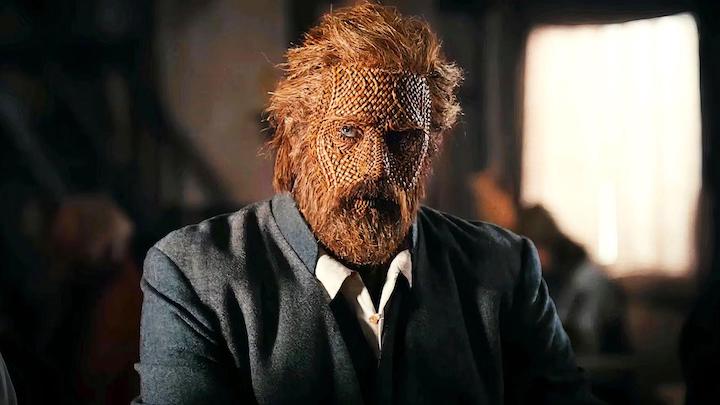
Reading the reviews for Wildwood, numerous critics have not only hailed the film as Laika’s masterpiece, but also as the pinnacle of stop-motion animation. If Wildwood does get a Best Picture nomination, it won’t just be the fourth animated film to do so. It’ll be the first stop-motion animated film to be nominated for Oscar’s top prize. Wildwood needs a narrative to reach that frontier. If Laika can position Wildwood as The Return of the King of stop-motion animation and a cinematic achievement an entire art form has been building towards, the Academy may deem it important enough to be nominated for Best Picture.
Wildwood will need more than a narrative. It’ll need a presence beyond the Best Animated Feature race at precursor awards. Up and Toy Story 3 were both nominated for Best Picture at the Critics’ Choice Awards. They also got nominated at the Producers Guild of America Awards for Best Theatrical Motion Picture. Shrek was nominated for those two awards as well, although it ultimately didn’t contend for the Best Picture Oscar. Of course, Shrek came out when there could only be five Best Picture nominees. The expanded field of ten helps Wildwood, but voters may still leave it off their ballots, assuming it’ll win Best Animated Feature.
As such, Wildwood will need more than a Best Animated Feature nomination to get into Best Picture. Below-the-line support is integral, but what other branches could go for Wildwood? Kubo and the Two Strings is one of only three animated films to be nominated for Best Visual Effects, the other two being The Nightmare Before Christmas and 2019’s The Lion King. With Wildwood arguably being an even more ambitious technical achievement, it could reasonably be in this year’s lineup, even with stacked competition that includes Avengers: Doomsday, Dune: Part Three, Godzilla Minus Zero, Project Hail Mary, The Odyssey, and Spider-Man: Brand New Day. Which of those films would get left out, though?
Although a Laika film has never been nominated for Best Original Score, Best Original Song, or Best Sound, animation has historically done well in those three categories. Wildwood could be the Laika film that wins over the Music and Sound branches. Then there are categories where animation should be seriously considered, but never has been: Best Production Design, Best Cinematography, Best Director, etc. Wildwood could even be submitted for Best Costume Design, as Deborah Cook made over 200 miniature costumes for the film. Unfortunately, Academy branches still have a narrow mindset of where animation should be represented.
Some thought that Guillermo del Toro's Pinocchio might finally bring animation a nomination in the production design category. Even with the Netflix machine and a beloved auteur like del Toro, Pinocchio only got nominated for Best Animated Feature. Wildwood doesn’t have a major distributor aiding its awards campaign, although Laika has Nike money on its side. Travis Knight is in a unique position, being the son of Nike co-founder Phil Knight, who’s a chairman of Laika. Granted, 2026 hasn’t been the best year for Nike, with its stock price reportedly falling over 40%. Nike is still a billion-dollar empire, and the Knights remain committed to using a part of their fortunes to finance Laika films, even if they aren’t profitable.
In some respects, Laika mirrors the early Disney animated features. Snow White was a box office phenomenon out of the gate. Coraline, Laika’s first feature, didn’t do gangbusters, but it grossed over $100 upon release, a major victory for a stop-motion animated feature. Disney went on to make Pinocchio, Fantasia, Dumbo, and Bambi, four more animated classics. Yet, people forget that with the exception of Dumbo, which had a smaller budget, none of those films were box office successes (at least not at first). Audiences went to see Pinocchio, Fantasia, and Bambi, but between their staggering budgets and World War II closing off certain international markets, they couldn’t turn a profit upon release.
Financially, it didn’t make much sense for Disney to continue investing in animated features. Yet, Disney continued to push boundaries for the medium. While Disney has become a corporate enterprise that needs to “feed the beast,” Walt was more interested in producing great art. This isn’t to say that Walt Disney didn’t care about money. Fantasia’s box office disappointment, in particular, devastated him. Yet, Walt was willing to take personal gambles that usually paid off in time. Travis Knight could be seen as the Walt Disney of stop-motion in that sense.
The difference is that Walt didn’t have as much disposable income as Knight. Still, in an industry where some billionaires are using their fortunes to buy legacy studios, Knight has continually proven that he not only cares deeply about stop-motion, but cinema in general, as well as the theatrical experience. Rather than rush out content for viewers, Laika takes its time making the best movies possible, spending nearly 16 years getting Wildwood to the finish line. It’s the kind of commitment that deserves to be rewarded, although that’s far from the only reason Wildwood is worthy of a Best Picture nomination.
Beyond its crafts, Wildwood tells a touching story of siblings within an even grander narrative about loss, war, oppression, nature, the loss of innocence, and preserving a sense of wonder. With a PG-13 rating, some have debated whether Wildwood is appropriate for kids. I’d argue that some - but not all - kids can handle its intense imagery, just as many grew up with The NeverEnding Story, The Lord of the Rings, or the later Harry Potter movies. Yet, Wildwood feels like it was made more for adults, even though its main character is a child.
Prue no longer believes in magic, although her eyes are opened upon being whisked away to Wildwood. The film has a similar impact on its audience, reminding them what it’s like to be a kid again. Some may go into Wildwood with the mindset that animation is just for kids. Walking out of the film, though, you might see the medium differently. If Wildwood can convince enough Academy voters that animation isn’t a children’s medium, they may decide that it deserves a seat at the adult table. The first step is convincing voters not just to consider it as an animated feature, but as a film that can be placed alongside The Odyssey, La bola negra, and You Can See Everything.

Nick Spake is the Author of Bright & Shiny: A History of Animation at Award Shows Volumes 1, 2, and 3. Available Now!