A website dedicated to animation, awards, and everything in between.
Praying Mantis Director Joe Hsieh Interview | Oscar-Eligible Animated Short

Credit: Praying Mantis (Miyu Distribution)
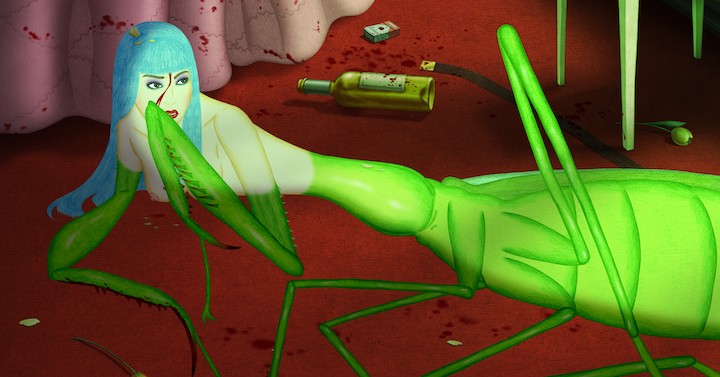
Did you know female praying mantises sometimes eat their mates? You won’t forget that fact after watching Joe Hsieh’s Praying Mantis, a neo-noir animated short about a woman hiding her true nature. She may seem like a monster, but a mother’s unconditional love is what drives our protagonist to prey on men. Praying Mantis won the Taipei Golden Horse Film Festival’s Best Animated Short Film and the Ottawa International Animation Festival’s Grand Prize for Best Short Animated Film, qualifying for Oscar consideration. Cartoon Contender spoke with Hsieh about body horror inspirations, favorite neo-noir movies, and sexual cannibalism.

Credit: Joe Hsieh
Q: I sense that this film was inspired by “sexual cannibalism.” In various cases, the female mantis kills and eats its male partner during mating. When did you first learn about this product of natural selection?
JH: I grew up in the countryside of Taiwan, surrounded by little animals and insects. They were my childhood companions. That’s why I try to include animals and insects in all my films. The green praying mantis has always been one of my favorite insects. When I was little, I loved watching them closely and learning how they lived. I was particularly shocked by their sexual cannibalism, and I wanted to bring that into my animation to connect sex and death.
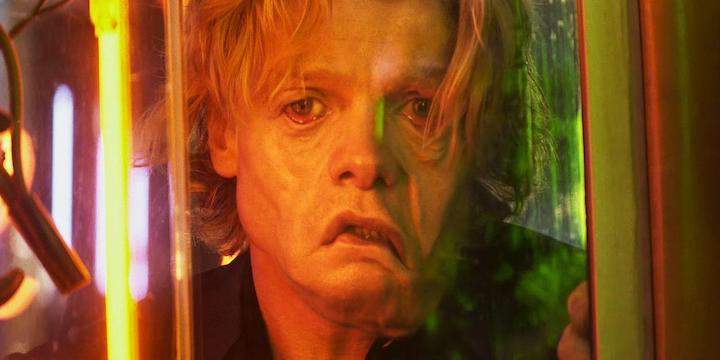
Q: When I think of bugs and body horror, David Cronenberg’s The Fly comes to mind. Was that film at all an influence?
JH: Absolutely! This classic film had a huge influence on me. I was especially inspired by how the character gradually loses control as the story progresses, making the film more and more terrifying. The horrifying image of a human body merging with an insect also really inspired me. These were things I wanted to bring into Praying Mantis. The biggest difference, I think, is that I wanted the body horror in Praying Mantis to focus more on the beauty of insects’ bodies and their intricate details.
Q: I also got serious neo-noir vibes from the film’s aesthetic and atmosphere. Brian De Palma’s Dressed to Kill is one neo-noir film that came to mind while watching Praying Mantis. Was there a particular neo-noir film that you drew from?
JH: Thanks for bringing up Brian De Palma’s Dressed to Kill. I learned a lot from how the film uses its shots to create suspense. I’ve always loved films, and I’ve wanted to make my own through animation. I’m really drawn to the cool, seductive, and mysterious women in Double Indemnity (1944) and L.A. Confidential (1997). In Praying Mantis, the mysterious woman is also a mother overflowing with love for her child. This side of the character was inspired by Mia Farrow’s character at the end of Rosemary’s Baby (1968).
Q: The central character has a phenomenal design, blending the seductive female form with a giant praying mantis. Did the design go through multiple variations before landing on the one in the film?
JH: Thanks for the compliment! It’s funny, actually, but I didn’t make many changes to the main character’s design. From the very beginning, I knew exactly how I wanted to combine a human and a praying mantis. I even had the colors figured out from the start: a green insect body, a blue wig, purple eyeshadow, and red lipstick. I wanted her to look both beautiful and dangerous. In a way, she’s my own version of Alien.
Credit: Praying Mantis (Miyu Distribution)
Q: While Praying Mantis is a horror film, it’s just as much about motherhood and the sacrifices that come with the territory. How did your relationship with your own mother shape the film’s themes?
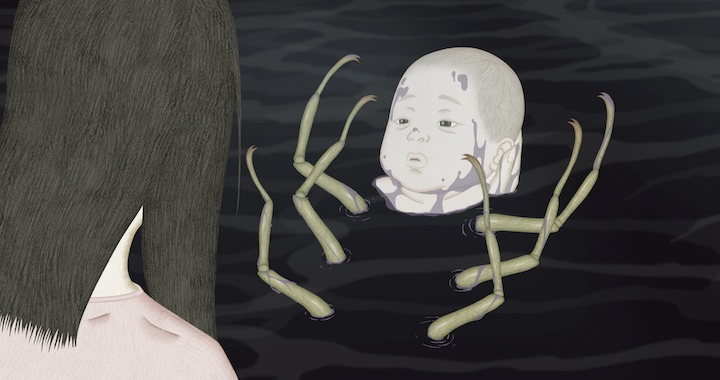
JH: Like many traditional Asian mothers, my mother has made so many contributions and sacrifices for our family. She has always encouraged me to follow my dreams as I grew up, and she even goes to the theater to watch every one of my horror films. That’s why I really wanted to dedicate Praying Mantis to her. In a way, I’m actually the little monster in the film who is never full. Through this strange character, I wanted to thank her for always taking such loving and selfless care of me.
Q: Praying Mantis has won two Oscar-qualifying prizes: Best Animated Short Film from the Taipei Golden Horse Film Festival and the Grand Prize for Best Short Animated Film at the Ottawa International Animation Festival. I imagine this film would be a lot of fun to experience with a festival crowd. Have you heard any audible gasps or screams from the audience?
JH: Haha! My favorite thing is to sit quietly in the theater and watch my film with the audience without them knowing I’m there. You can hear laughter and gasps, but most of all, screams! And the nervous sounds people make when they cover their eyes and tremble with fear really remind me of the characters in the film. I’m really grateful that the audience gets so immersed in the film and experiences it so fully.
Credit: Praying Mantis (Miyu Distribution)
Q: Without going into spoilers, there’s a moment toward the end that feels almost hopeful and touching… then we get to the final shot, which left me gutted. Do you consider the ending more hopeful or devastating?
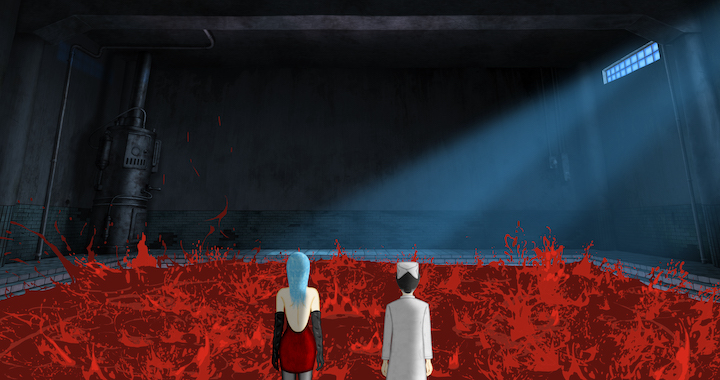
JH: I’m glad the ending left you feeling so heartbroken, because that’s exactly what I wanted the final shot to convey. After all, she’s just a monster mother who has done everything she can to protect her child. As the boy sweetly asks for “more… more…” again, I wanted the audience to feel both hope and despair at the same time.

Nick Spake is the Author of Bright & Shiny: A History of Animation at Award Shows Volumes 1, 2, and 3. Available Now!