A website dedicated to animation, awards, and everything in between.
Wicker Review | The Shape of Wicker

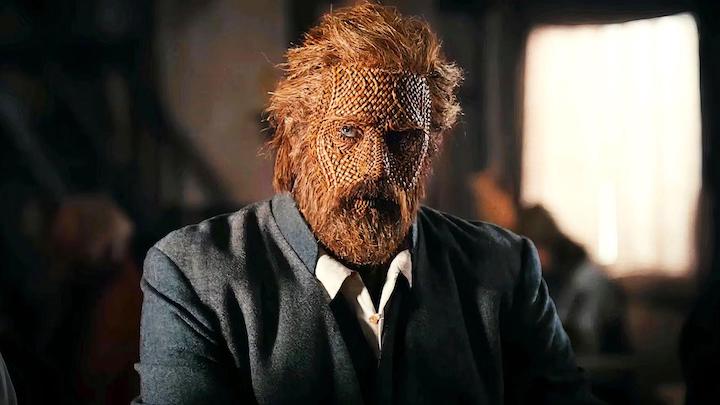
Credit: Wicker (Black Bear Pictures)
At Cartoon Contender, we mainly discuss animation and awards, but also everything in between. Nick’s Flick-Reel is that in-between, reviewing live-action films and more!
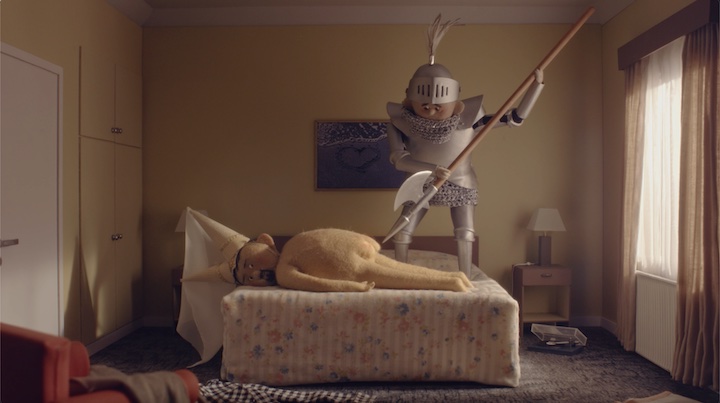
The premise of Wicker sounds like it was taken from an ancient tale. In reality, Alex Huston Fischer and Eleanor Wilson’s film is based on Ursula Wills’ 2008 short story, The Wicker Husband. Fischer and Wilson still approach the material through a fabled lens. While made with a contemporary audience in mind, Wicker doesn’t overthink its setup. When a man made of wicker shows up at a doorstep, the person on the other side doesn’t ask how this is possible. Yes, eyebrows are raised, but no explanation is required. The wicker man asks for a suit because he’s getting married in the morning, and the stranger complies.
After getting hitched, the wicker man becomes the Wicker Husband (Alexander Skarsgård). He’s not the only character who’s never given a proper name. His betrothed is Olivia Colman’s Fisherwoman, who appears content with being alone. As the Tailor's Wife (Elizabeth Debicki) and other villagers throw shade at her, though, the Fisherwoman asks the Basket Weaver (Peter Dinklage) to make her a husband. He steps up to the challenge, telling her that her groom will be ready in a month.
It’s not exactly a Beauty and the Beast romance, as the townsfolk don’t fear the Wicker Husband. Actually, the women start falling over him. Not just because he’s Alexander Skarsgård underneath the wicker, but because he enjoys fixing things around the house, is sensitive to other people’s feelings, and is explosive in the sack based on his wife’s screaming. The men, meanwhile, grow jealous, attempting to one-up the perfect man. This backfires spectacularly for one villager in the film’s most hilariously dark moment.
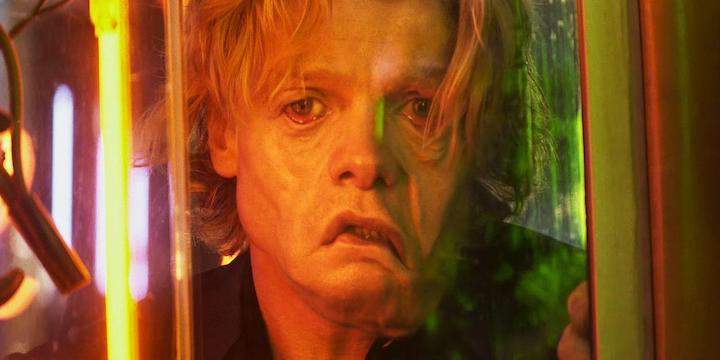
Wicker fully embraces the fact that it’s a modern fairy tale with a simple story and characters. Perhaps too simple at times, as the romance between the Wicker Husband and Fisherwoman isn’t especially deep. Yet, Colman and Skarsgård do bring great chemistry to their roles. I can’t imagine it was comfortable, but Skarsgård feels oddly at peace underneath the phenomenal makeup effects and a mostly practical costume. Dinklage also shines as the Wicker Husband’s creator, owning the screen with every monologue he’s given. Debicki makes for an icy antagonist, although she isn’t a one-dimensional villain. Despite seemingly having an ideal life, you get the sense that Debicki’s character has never truly been happy, which only becomes more apparent when her rival finds love.
While the actors bring a lot of charm to the production, I still feel some characters could’ve been better fleshed out, even if the titular one technically doesn’t have flesh. A particular character gets their comeuppance toward the film’s conclusion, although their fate would’ve felt more satisfying with more buildup. Even if the screenplay isn’t quite on par with its craft, Wicker isn’t a surface-level movie. It does touch upon relatable themes such as conformity, envy, and what true love is. There are more emotionally complex romances that’ve tackled these themes, but then again, Wicker’s appeal largely lies in its simplicity. The film knows what it wants to be: a fable for adults, which it weaves together with wit, creativity, and a human touch.
Awards Potential:
Best Makeup and Hairstyling (Oscars)
Best Costume Design (Oscars)

Nick Spake is the Author of Bright & Shiny: A History of Animation at Award Shows Volumes 1, 2, and 3. Available Now!