A website dedicated to animation, awards, and everything in between.
Oscar-Nominated Animated Short Forevergreen Filmmakers Interview


Credit: Forevergreen (Nathan Engelhardt & Jeremy Spears)
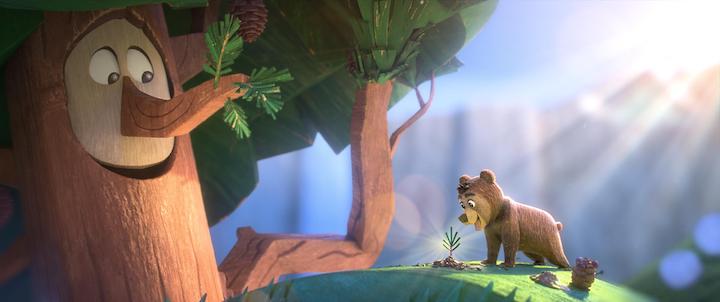
Nathan Engelhardt and Jeremy Spears come from Disney backgrounds, their credits ranging from Wreck-It Ralph, to Big Hero 6, to both Zootopia movies. The two made their directorial debut with Forevergreen, an independent short with the essence of a Disney classic. Yet, their CG-animated film possesses the unique essence of wood carvings brought to life. Spears, himself, is no stranger to whittling. Forevergreen’s aesthetic complements the story of an orphaned bear cub and the tree that takes him in. The bear is led astray by the scent of garbage, abandoning the tree that’s sheltered him. When the bear’s actions lead to disaster, the tree demonstrates what true love is rooted in.
Engelhardt and Spears spent almost six years working on Forevergreen with help from roughly 200 fellow artists eager to volunteer. Their efforts paid off with an Oscar nomination for Best Animated Short Film. Cartoon Contender spoke with the duo about their personal connection to the short’s themes, making an indie film while also working at Disney, and becoming Academy Award nominees.
Q: Congrats on the Oscar nomination! You filmed a reaction to the nominations announcement. Your excitement was visible on your faces, but what went through your heads in that moment?
JS: We had a little moment before where we were like, we have no idea what's gonna happen, you know? My computer was slightly ahead of everyone else's. So, I was like, “If I see it, I'm gonna try not to react.” And I couldn't help myself! I was frozen. I was like, “I don't know what to do,” and then everyone was like, “Yeah!”
NE: I think everything happened so quick. I was still trying to wake up. It was, like, 5:30 in the morning, they do this thing. It's alphabetical, so we were the second one listed, and then, I was still processing. “Wait, what?” It was really amazing, because there were incredible shorts this year. We were among so many great shorts, a lot of which we got to know the filmmakers and travel with them, and do things. Just to have conversations and enjoy each other's films, and enjoy each other's company. It could have been any of them, you know? And so, when we heard our name called, we were so ecstatic.
Q: You’ve both been working at Disney for over a decade. How did you apply what you learned from feature animation to making your first short film?
JS: I've been in the story department at Disney Animation. There are things that I've been wanting to try, which is kind of the hope and the thought with an iterative process like storyboarding, where you're trying as many ideas as possible, as quickly as possible. A lot of times, our drawings get thrown away and tossed in the trash. Well, not really, but they get lost forever, and sometimes those ideas will come back. If you spend a lot of time on your drawing, and you make it all pretty, I have the highest respect for that craftsmanship of a storyboard. But a lot of times, the majority of our film is we're trying things, throwing things out. It's an iterative thing. We tried to do a thing on this film with storyboarding, with thumbnails. A very quick, much more small, manageable-size drawing, and then we would cut those together, and we would iterate as many times as possible, really quickly. Then towards the end, we would tie things down more if we needed to, to sell the emotion or the tone of the scene… I've always wanted to try to work a little bit faster, a little bit rougher. As long as it's clear and the idea comes across, then you can work with it. You can see what you have by clicking through the drawings and seeing the rhythm and timing of it.
NE: I think the same thing for me. As an animator, I brought things that I had learned over my almost 20-year career, many of those years with Disney. Everything from truth and materials, how things will move and animate, to appeal, really drilling down on that, as well as performance and clarity of performance. Then the subtext of a performance. I think you bring all of your previous knowledge and learnings into whatever the next project is. So, our time at Disney has been no exception.
Q: The CG-styled wooden world is based on Jeremy’s woodcarving experience. It also drew from 40s and 50s animated shorts. Was George Pal of Puppetoons an inspiration?
JS: No, I don't think so, but I think that our love for the classics… There's a few things. There's the rhythm. There's the pacing of the old classic Disney shorts and things like that. It felt like there was a little more room for them to breathe. You weren't rushing, you weren't rushing through. There was, there was kind of a desire to tap into that, but there was also, stylistically, the mid-century modern [look]. We both love that style, that design aesthetic. Maurice Noble, wonderful backgrounds for the Looney Tunes, the Chuck Jones shorts. There's so many great inspirations out there. Obviously, Mary Blair, these wonderful Disney artists that have given us so much over the years. I think that's definitely rooted in that. Then the National Parks posters, the WPA posters that were done… I enjoy opening that up and seeing what kind of inspiration… Some image always sparks something for a new idea or a color sense, the way that they put certain colors next to each other. It's so inventive. We got excited about doing a limited color palette… Then, just to speak to the wood carving. I've been doing this for I think over 10 years now on my side time, making projects that have honed a design aesthetic that is very again, mid-century modern… I wanted to be able to live in a space like that. Being able to see these wood carvings come to life in this short film, and with this aesthetic, was super fun.
Q: At first glance, one might mistake Forevergreen for a stop-motion short. Did you ever consider producing the film in stop-motion, or was the desire always to blend two worlds through CG?
NE: The latter. I wanted to be a stop-motion animator before I became a CG animator. It would have been amazing to do that, stop-motion and practical. But there are so many other constraints, space, materials, know-how I had never done, even though, again, I still want to one day do a stop-motion film or be a part of one. My skill set was in CG, and I know that pipeline pretty thoroughly. So, I think it was always going to be trying to harness the best of what the computer can give, but always trying to aim and target towards something that was tactile, handcrafted, and that could utilize Jeremy's unique wood carving aesthetic to its fullest. To ask Jeremy to hand-whittle a new sculpture for every frame of animation probably wouldn't have been too practical.
JS: Yeah, what are you saying, Nick? I mean, is that what you're really… no, I'm kidding (ha ha)! That would have taken at least 100 years. It's still worth trying, though.
Q: The film ends with the Bible quote, “Greater love has no one than this that lay down his life for his friend.” It was also featured in The Jungle Book, when Bagheera comforts Mowgli when it appears that Baloo is dead. Was there a particular moment in the film’s production that got you thinking about this quote?
JS: Nathan and I are both Christian guys. We have a faith in Jesus Christ. He saved us, we've heard that before, but we wanted to show it through something. This is a passion project. This is all done in our free time. So, there has to be something more than making an animated film, or making a certain aesthetic, or a certain style, or whatever. There needs to be several things that add up to it being worthwhile, worth your attention and your free time. Nathan and I, we've been friends for a long, long time, and we thought, we share this common story about undeserved grace given. The tree character, what he gives to the bear in this film, it should cause a bit of a reaction in the audience. It should cause a reaction of, that's not fair. That bear doesn't deserve that, you know? And that is the exact reason we made this film. As an audience watches the film, they understand that there's something more there. There's an idea that I think we could all walk away from after watching this film, and ponder about a little deeper. Like, how much would I actually give to someone who either disagrees with me, or I disagree with them, or they consider me their enemy? I mean, that's a hard thing to think about, but how would you show love to someone like that?
In our faith, Jesus, he gave himself, he took our place. Basically, we were guilty. We had messed up, and he came in and he paid our fine. This film is anchored in that idea. The cool thing, though, was that, obviously, we've been doing this a long time. We know a lot of wonderful people. Not everyone shares that same sentiment, and we knew that, but we've had a chance to share our hearts and why we were making it. We also said it's an open door. We want to make something that everybody can enjoy to watch, and also that everyone can enjoy to make together. It was such a special thing. This verse, though, was always there. We wanted to anchor it in something, like a credit on the film. So the credits roll, and it is our first credit, it's our first way to say this is what this film was about...
It was funny because, The Jungle Book reference, I was watching it probably a year or two into the making of this short. I remember watching that with our kids, and we got to that moment, and I've seen it a million times. Jungle Book is literally one of the reasons why I got into animation. I absolutely love that film. I had this epiphany moment, like, “Wait a minute!” Bagheera says it, this is great… Now, hopefully, we all know where it came from.
Credit: Forevergreen (Nathan Engelhardt & Jeremy Spears)
Q: You can draw several biblical parallels, with the tree as a Christlike figure, the bear as man, the forest as the Garden of Eden, and garbage as a forbidden fruit of sorts. At the same time, someone can watch the film without picking up on the religious subtext. Was that the intent?
NE: 100%. I think that's something that we've always said. Jeremy… you like to call it “a feast where everyone can come and enjoy a delicious meal together.” That's what we tried to be. We tried to be hospitable with that, and it's one of those things, if you know, you know, as, say, another Christian. But if you don't believe that, then hopefully you still take away some of the wonderful parental themes. What parent wouldn't lay down their life for their child? I think there are a lot of different ways that you could read this. We've heard people get some environmental messages from it. One of my favorite stories was a gal, who is originally from China and was then adopted by American parents, and she never knew her bio parents in China. So, she had said, watching Forevergreen gave her some peace in knowing that the family is really about the ones that have loved you and have sacrificed for you. It gave her a newfound appreciation for her adoptive family and never to take them for granted. That's an incredible story from even the adoption standpoint of someone feeling like they have been taken in and have been loved and cared for unconditionally. What does that mean, even as far as family? Like, what does family mean? It means that. It means that someone is loving you unconditionally, and caring for your needs, and sacrificing for you. It’s cool how the story has come home to people's hearts in unique ways, and I think some of the best. Art can do that, right? There's a universality to a lot of good art that hopefully can resonate and translate.
JS: As geeks for film, we always appreciate it when a film connects with an audience… connects with you personally, and then you're thinking about it. Then next time you see a fish, well, that’s Nemo all of a sudden… So, our hope was that when you see a tree, maybe even a tree that's fallen, which is a very sad thing, trees are, especially a giant sequoia redwood… We've been in the forest where there are 100 feet long, and they're laying on the ground. You can actually go and walk across them, and they're just… it feels like you're in a cathedral. It's a solemn feeling, but it's powerful, and there’s a sense of wonder… Our hope would be is when people see that, they'll reflect on seeing the film. They'll reflect on what they felt when that tree sacrificed himself for his friend.
Q: Did you think about pitching Forevergreen to Disney, or did you feel it would work better as an independent production?
NE: We always desired to try something on our own. It’s really neat that we were able to get 200 volunteers to come and help with this project. It was one of those things where if you want to do something, go do it. This story was on our hearts, and we just started doing it. That was the genesis of it. Wanting to tell this story with eternal weight and purpose, that's something that could resonate with everyone… At least 200 other people felt the same way.
JS: One other aspect of it is, none of us got into it thinking that we would go after awards or accolades. We just wanted to make something that could resonate. There's a purpose behind it, and it feels like it should be made. Obviously, we wanted it to feel worthwhile, but also to give anybody a chance to maybe put on a different hat that they're not used to wearing, and be able to try something new. Working in our free time, we had complete freedom. We didn't have anyone telling anyone what we could or couldn't do… All the creative choices were very specific to this film. But also looking for growth opportunities, Nathan and I, we've been wanting to try on this director's hat and see what it's like. We've been doing this for many years. Nathan, being in animation, he's supervising many projects. I've been in story, worked on many projects. Over the years, you accumulate a good amount of input from all these amazing people we get to work with. To be able to turn that around, regurgitate all the things that we've ingested… Now, how am I going to take that in and make something out of it?
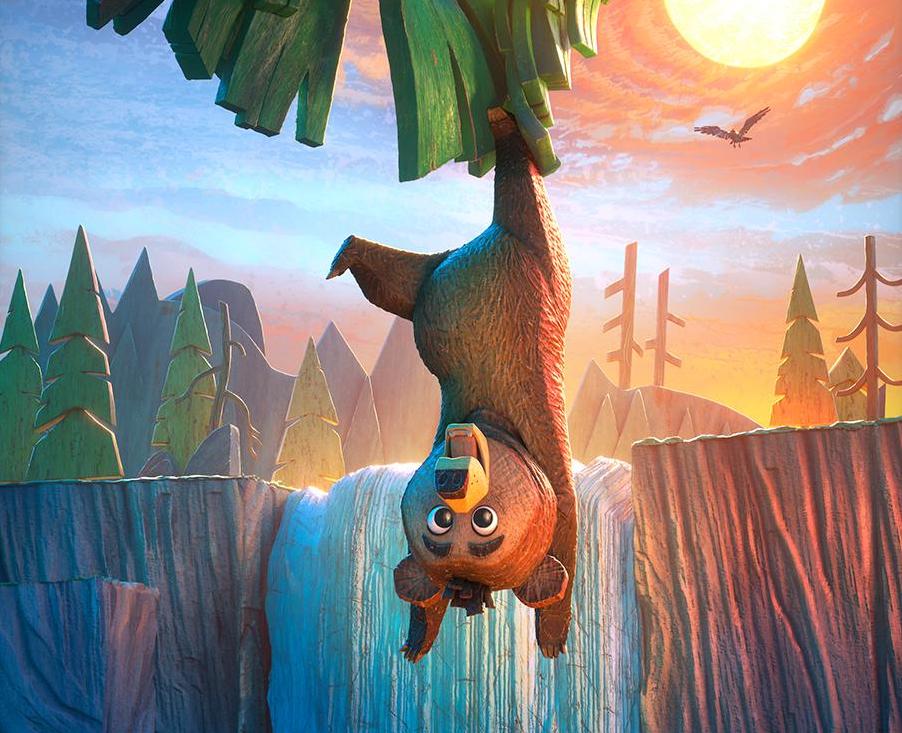
Obviously, he and I, working together, we were sharpening each other and pushing on each other, and trying new things. But we had our team… We wanted to be ambitious, of course, but it was our team that pushed us further than we ever thought we could possibly go with this film. Everything from the wooden waterfall is a good example in my mind. We didn't know how we were gonna do that. We thought, maybe we'll do an actual water effect that we normally would see in a film. It was our effects artist, one effect, this is just one story of many, but Dan Lund, an amazing guy that we get to work with, he's at Disney, but he's the one who suggested, “Guys, you should do a wooden waterfall, and oh, by the way, here's how it could look.” He showed us a proof of concept, and it actually pushed us way further than we ever thought into the wooden world aspect. It helped cement and solidify what the film should actually look like.
Credit: Forevergreen (Nathan Engelhardt & Jeremy Spears)
Q: Brendan Gottlieb is up for an Annie nomination for his character animation. Jeremy and Gregory Culp are also up for their production design. What did Brendan and Gregory bring to the production?
JS: Greg is, he's one of a kind. He's the guy that wears many hats. He's a lighting supe, done many, many films. But he's got a certain characteristic that not every lighter has. It's not to say that it's a negative towards anyone who doesn't, but he's able to take it and paint into his work. He's constantly innovating… So, this project was a perfect fit for him. He got so excited to be on it because he was able to, again, wear some different hats... He's not only our DP of cinematography for lighting, but he is the associate production designer on the film. He and I working together, I was more of the design language, the wood aesthetic, the eye on characters, the world, the design of everything. His whole piece of it was so important and so huge and monumental because… how do you light this? How do you make it feel wooden? How do you incorporate the lighting? There was a lot of tricks that he would tap into to make it feel like a real wooden stop-motion film. He has such an eye for lighting design, for color design. I feel like the two of us, we were able to complement each other quite well in this role.
NE: Greg, he would paint right into the frame on the final image. Sometimes, project textures that weren't there before, if we needed something a little higher res, he could paint it in. Another thing that he did to make it feel more stop-motion is he actually did sort of a modulating light source so that it would be like a flicker almost, as if it was getting different apertures or exposure levels across each time they would take a new frame… He helped bring more of the components together into one cohesive package.
Brendan was incredible… I think he did, like 25 or 30% of the animation himself, single-handedly. So, he's got quite a reel from this film. I'm so happy that he got that nomination. There are many artists who are committed, and I wish each one of them got an award. But it was so cool seeing from an animation perspective, to be acknowledged by the Annie Awards. I'm hoping that he wins because he was so dedicated. I mean, this guy's got four kids, a fifth on the way, but when he was working on it, he had four. His wife had sacrificed so much... After his full day of working at Disney, he would go into the backyard in his shed and animate something else, turn on a computer, and get back to work while she's taking care of kids… We sacrificed day in and day out to try to make this thing, since it was entirely donated for a free project, no one getting paid, doing nights and weekends at lunches, and whatever other free time we can grab. So, you've got these wives, Brendan's wife, Anastasia, my wife, Jeremy's wife, they're the unsung heroes of this thing, and so many other spouses and partners and friends and people who spent tons of time on this.
Q: It was a great year for animated shorts about bears. Aaron Blaise’s Snow Bear, which took a hand-drawn approach, was also among the Oscar shortlist. Did you guys ever cross paths on the awards trail?
NE: All the time. Aaron became a friend over this whole journey of ours. I met him in Annecy when I went out. Because he's an old Disney guy as well, it was great to be able to talk shop, talk [about] people we know, then talk craft, and enjoy one another's film. We loved his film so much, such a special, personal, but relatable story… Of course, there's gonna be two bear films this year (laugh)! Maybe he thought the same.
JS: I'm glad you brought up Aaron, specifically because we go way back. When I first started at Disney, he was working on a project. I knew and loved his work on Brother Bear. I was super into bears even back before I worked at Disney…. The art of Brother Bear [book], a lot of it is their research trip, the drawings that they did. I have such an admiration for his talent, his skill, and the fact that he can bring a crew together to make something, but then he made that film all on his own. It blew my mind, and it was just such a joy to go through this year with him, and he's just been such a good, huge supporter of our film. So, we really appreciate that, and we support him. Whatever he ends up doing next, I think he's up to some cool stuff…
NE: I don't think people realize that when you start doing the festival circuit, which I highly recommend if someone's making a film, is that you'll start to see some of the same people, and Aaron was certainly one of them. It's such a fun, familiar, friendly face that you see, and you get to talk about your films together. You build this camaraderie as a group. It wasn’t just Aaron. We had met so many other wonderful people. Shabrayia [Cleaver], she was the producer on Wednesdays with Gramps… We got to meet each one of those directors, enjoy time together, and talk about their films. You get to know them, and you feel like you're all supporting one another.
Q: Animated shorts featuring animals have a good track record at the Oscars. In the past three years, In the Shadow of the Cypress, War Is Over! Inspired by the Music of John & Yoko, and The Boy, the Mole, the Fox and the Horse won. All had at least one animal. With that in mind, are you feeling good about your Oscar odds?
JS: I never really thought about that aspect! I don't know. I feel good because we're surrounded by amazing films, amazing filmmakers. We got to meet a lot of them yesterday for the first time in real life at the Oscar Luncheon. What a treat that was. I'm just so proud of everyone's work. It's such an honor to be next to everybody.
NE: I think our mindset right now is we already feel like more than winners than what we had ever expected with this project… This free side passion project. To be at the Oscar Luncheon with all these other nominees… like Jeremy said… surrounded by incredible talent, incredible films in our category… So it's like, no matter what happens, I think our mindset is we're so grateful to where we got, and we already feel so thankful, grateful, accomplished, all the good things. We already feel like winners in a way. We're hopeful, but you never know with these things.
JS: I don't know if you're supposed to say this at this kind of moment, but I'm rooting for everybody. I don't know if you're supposed to say that, but it's just fun. I mean, this is awesome, too, to just be able to talk to you, Nick. I appreciate all your questions that you've asked us, because it's stuff that we are so excited to share. We don't get a chance to talk too often about how we made the film and sort of why we made the film. So, this is really such an honor to get to talk with folks like you.
Me: The pleasure is all mine!
Forevergreen is currently available to watch in its entirety on YouTube:
Forevergreen can also be streamed on The Animation Showcase and will be playing in select theaters with this year's other Best Animated Short nominees starting February 20, 2026.

Nick Spake is the Author of Bright & Shiny: A History of Animation at Award Shows Volumes 1, 2, and 3. Available Now!