A website dedicated to animation, awards, and everything in between.
Living with a Visionary Director Stephen Neary Interview | Oscar-Eligible Animated Short

Credit: Living with a Visionary (Cartuna, Garden Shed)
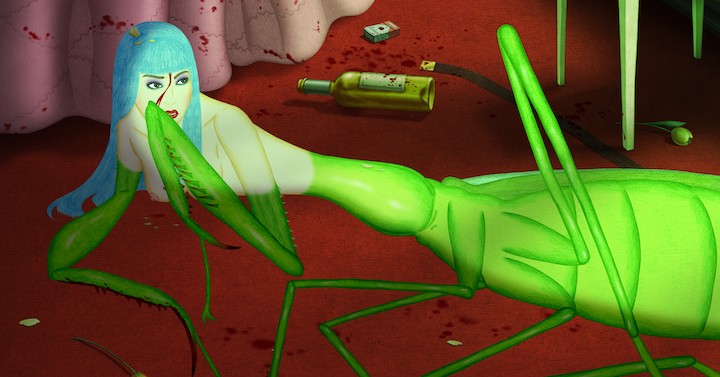
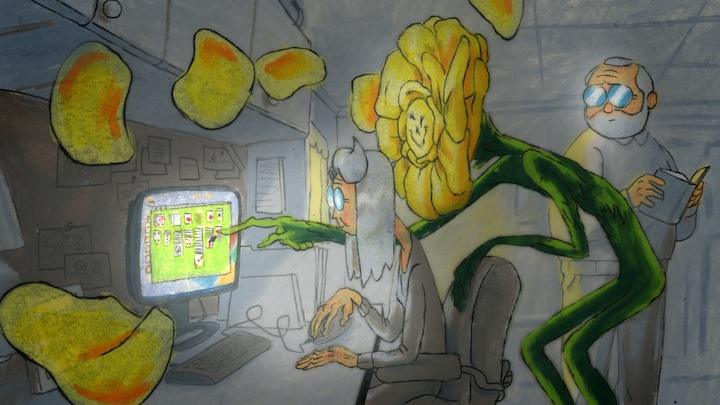
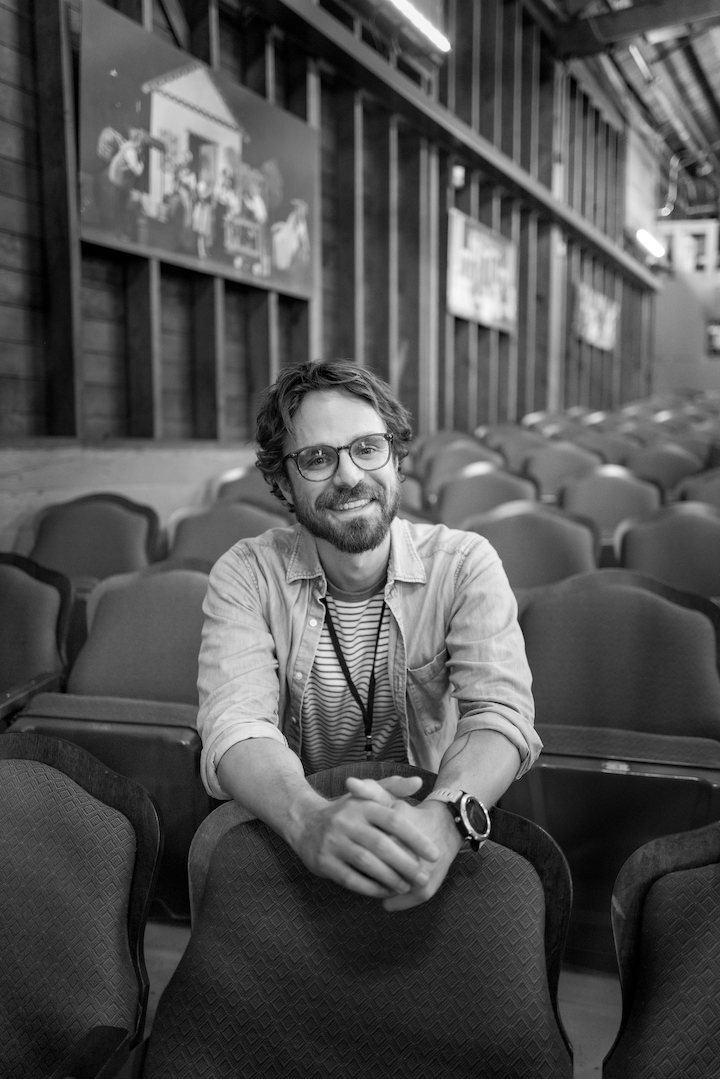
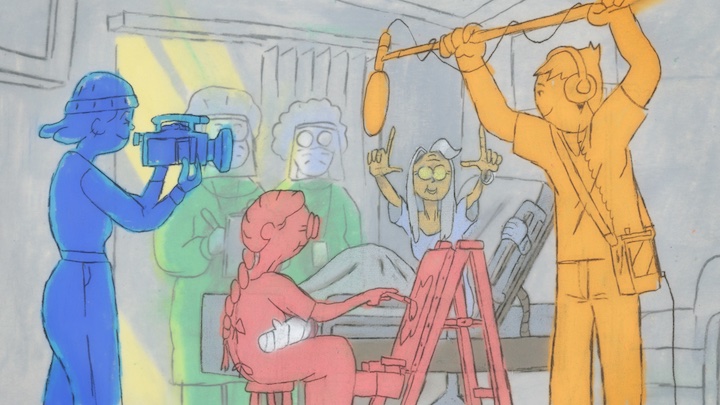
Stephen P. Neary has worked on numerous studio productions, most notably creating the series The Fungies. He embarked on possibly the most personal project of his career upon reading John Matthias’ memoir, which was originally published in The New Yorker. After fifty years of marriage, John and his wife Diana reached a turning point when the latter started experiencing vivid visions brought on by her medication to treat Parkinson’s. John cared for Diana as long as he could until COVID presented a global challenge they couldn’t overcome. Upon receiving John’s blessing to adapt his story, Neary spent nearly three years gradually animating the film in his backyard shed. Although the story came from humble roots, it attracted an Oscar-nominated actor in James Cromwell, who voices John. Living with a Visionary won the Short Film Jury Award: Animation at the 2026 Sundance Film Festival, qualifying for Oscar consideration. Cartoon Contender spoke with Neary about being entrusted with someone else’s story, drawing inspiration from Frédéric Back, and balancing this passion project with studio work.
Credit: Stephen P. Neary
Q: John Matthias’ story is deeply personal, yet I think many can relate to it. Was there a particular reason the story not only touched you, but also inspired you to adapt it into a film?
SN: I couldn't stop thinking about John's memoir since first reading it in 2021. My grandmother had a long struggle with dementia years ago, and my parents are now approaching that same age. Something about reading this story with a newborn baby sleeping on my chest during COVID brought to mind so many thoughts about what it means to be alive, what we do with our brief time on Earth, and how we share the beauty we see in the world with others.
Q: This being an adaptation, was there an element of Matthias’ story you had to leave out?
SN: For time, I edited and compressed a lot of John's story. There were anecdotes about Diana's beauty, along with more details of her care and medication. But I left in a lot of things too, just because I wanted to do this story justice–things like some of her more obscene hallucinations that had a lot of specificity. And the animation ended up being more of a dramatization than a strict documentary, of course.
Q: Frédéric Back, the Oscar-winning director behind The Man Who Planted Trees and Crac, served as inspiration for the film’s visuals. What is it about Back’s style that you think suited this story so well?
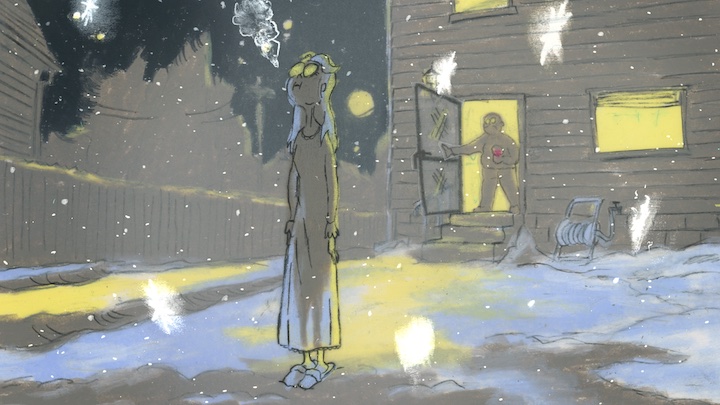
SN: It's funny because I don't know if I've ever actually even seen film prints of Back's work. So much of what I've seen has been on PBS as a kid, or in very low-res YouTube video transfers. But to me there's always an ethereal, dreamy quality that maybe comes from the drawings being done on frosted animation cels, usually in a very small field. There's texture everywhere. It's harder for me to tell what elements are on which layers, and sometimes it feels more like I'm looking at modern art or illustrations even though things move beautifully. Those dreamy textures seemed to lend themselves to Diana's visions, which needed to stand out visually but still feel like part of her world. And more than anything, it made me want to make the film on paper, specifically, layers of vellum that have a similar consistency to frosted cels.
Q: You spent three years animating the film in your backyard shed. How did you balance this passion project with making a living?
SN: I worked most nights and weekends on the project, usually pushing to get past the next production hurdle. I'd work late for a few months doing the boards, take a little break, and then push again to get a rough animatic. I'd been working at Cartoon Network for a long time and was used to working these crazy hours, either on shows or on projects in development, so it felt incredible to finally use that time on a personal project. But I love the stability of having a day job, and for most of this film I was boarding on feature animation projects, which felt wonderful after the stress of supervising a television show. I work from home and found myself drawing in any spare moment. I'd draw at the breakfast table while encouraging my son to eat his eggs, or draw in the bathroom when my son was in the bath. The last year was the hardest. With my partner pregnant with our 2nd kid, I worked every night on the short from 9 p.m. to 2 a.m. so I could finish before the baby arrived.
Credit: Living with a Visionary (Cartuna, Garden Shed)
Q: You’ve worked on various studio projects like KPop Demon Hunters, Clarence, and The Fungies, the latter of which you created. How did this completely independent project differ from your experiences in the studio system?
SN: Big studio projects need to appeal to the widest possible audience to recoup their giant budgets. So much of a movie involves finding a relatable metaphor or hook while offering the most visual fun for an audience. Working on an independent short is incredible because you can do whatever you want and be very specific with your story, as long as it's cheap. A pared-down production means thinking outside the box, and for me that meant more limited animation balanced against a handcrafted aesthetic. My hope is that though this short will be seen by fewer people than most animated features, those who connect with it will connect deeply. They'll hopefully understand why it was a story that needed to be told, even though nobody was asking.
Q: How did James Cromwell come to be cast in the film, and were any other actors considered?
I was at a wedding and ran into our old casting and voice director from Cartoon Network, Kristi Reed. I told her about this insane short I was making, and that James Cromwell would be perfect. She just so happened to be working with him on Bat-Fam at Warner Bros. James liked the script, and I feel incredibly lucky that I got to work with him. From Babe, to LA Confidential to Six Feet Under to Succession, there's never been a point in my life where James Cromwell isn't in something amazing.
SN: Living with a Visionary won an Oscar-qualifying prize at the Sundance Film Festival. What is the most rewarding reaction you’ve gotten from somebody who watched the film?
At Sundance, people who had seen the film stopped me in the street and shared their own stories of loss and grief. I remember a stranger not saying anything, just giving me a hug. It's extremely rewarding that it resonated with so many people on different levels. And at a time when the entire animation industry fears the looming threat of AI replacing our craft, I feel all the more grateful for the human connections I've formed through this handmade film. Computers can't feel, and this story made me feel a lot.
Credit: Living with a Visionary (Cartuna, Garden Shed)
Q: Did John give you any notes during the film’s production, or did he trust you’d do the story justice?
Early on, I wanted to ask John as many questions as possible. I wanted to interview him in person, go to his house, and take reference photographs. But understandably, there came a point in our phone conversations where he didn't want to talk about it anymore, and pushed me into making something that was my own interpretation of the story. He said, "I think it's something Diana would have liked." That was wonderful direction, and I used that as a guiding light in the production.
Q: What was John’s reaction when he saw the finished film?
SN: I was so worried about what John would think of the film, and let him know that he didn't need to watch it if he didn't want to. In the end, he did watch and was very complimentary. I feel very lucky to have been trusted with Diana's story. The short will be available online in November through the New York Times' Op-Docs series, and I'm hopeful many more folks can watch then.

Nick Spake is the Author of Bright & Shiny: A History of Animation at Award Shows Volumes 1, 2, and 3. Available Now!