A website dedicated to animation, awards, and everything in between.
Buddy Review | Nick’s Flick-Reel

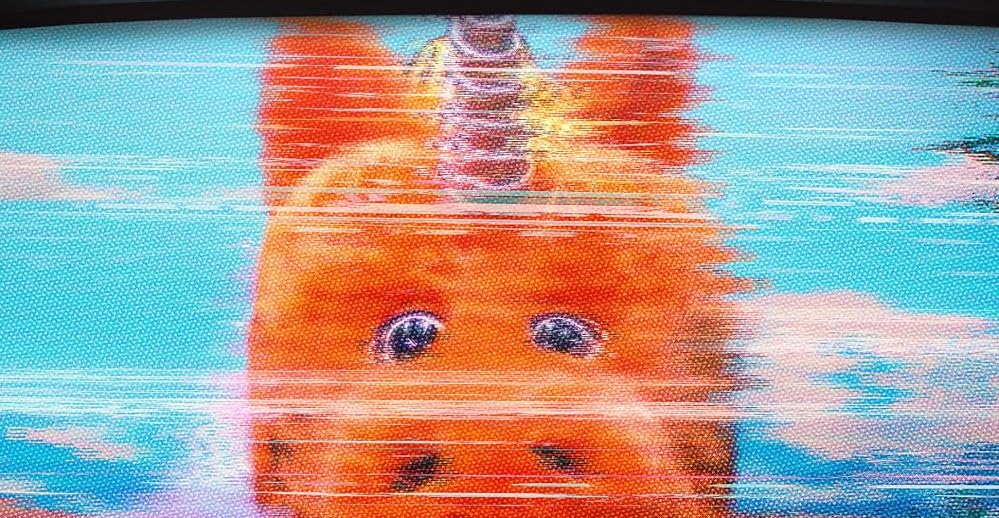
Credit: Buddy (Roadside Attractions, Saban Films)
At Cartoon Contender, we mainly discuss animation and awards, but also everything in between. Nick’s Flick-Reel is that in-between, reviewing live-action films and more!
At some point in adulthood, we all look back at a childhood show, realizing it was weirder and creepier than we remember. For those raised at the dawn of television, it might’ve been Howdy Doody. For 80s kids, it was Pee-wee's Playhouse. Both likely influenced Casper Kelly’s Buddy, although his horror comedy mainly borrows from a certain purple dinosaur. In this case, it’s an orange unicorn who blends Barney with the Babadook. While Barney & Friends wasn’t meant to be overanalyzed, everything crumbles when you start to question who these kids are, what happened to their parents/teachers, whether there’s a world beyond the primary setting, and why kiddies find this dead-eyed mascot charming.
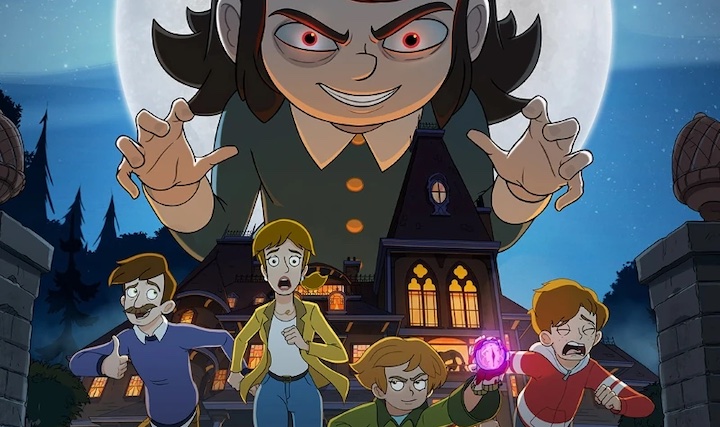
In Buddy, it isn’t the audience who asks those questions. The children within Buddy’s world become self-aware. You might not recognize Delaney Quinn, but those who saw If I Had Legs I’d Kick You will know her voice. Quinn’s Freddy finds herself under even more hazardous supervision when Buddy – voiced by Keegan-Michael Key – shows what happens when kids don’t play his game. When one child mysteriously vanishes, Freddy suspects murder. Buddy’s playhouse begins to seem more like a prison. The kids and sentient objects (one being a backpack with the voice of Patton Oswalt) consider escaping. Even if they do, what’s outside the playhouse, and how far can Buddy follow?
Those aren’t the only questions. Cristin Milioti is an actress who will fully commit to any role she accepts, no matter how outlandish. In a film with a killer orange unicorn, Milioti brings genuine depth to Grace, a suburban mother who senses something is missing. Her husband, played by a somewhat underutilized Topher Grace, isn’t much help. Whatever's eating away at her, she becomes convinced that it has something to do with this strange children’s show from the 90s. For all the questions that Casper Kelly answers, he leaves just as much ambiguous. A part of me would’ve liked to know more about the lore of this universe. Since I didn’t question Barney as a three-year-old, though, maybe I shouldn’t question too much about Buddy as a thirty-six-year-old.
Buddy plays like a Black Mirror episode if it were brought to us by Adult Swim. That’s not surprising, as Kelly previously made Adult Swim’s viral hit, Too Many Cooks. He was also one of the minds behind The Scooby-Doo Project. With those works, Kelly understood that the more authentic the parody feels, the funnier it’ll be. He applies the same logic to Buddy, with the opening scenes looking like they were recorded on an old VHS tape. Buddy’s domain could be mistaken for an actual children’s show set with practical effects that are fun until characters start getting dismembered. Actually, even then Buddy is a lot of fun.
Kelly fully commits to the dark comedy in a movie that would play well opposite Death to Smoochy, the OG Anti-Barney parody. While Death to Smoochy was a borderline horror show, Buddy leans into slasher satire with no shortage of inventively demented kills. The film’s real victim is childhood itself. Maybe Kelly just wanted to make a surreal movie where a guy in a unicorn suit impales people with his horn. Underneath the bloodshed, though, you can sense a deeper message about that moment in childhood when you realize that the world isn’t such an innocent place. Loved ones die, people we admire turn out to be monsters, and shows that once provided escapism subconsciously screwed us up for life.

Nick Spake is the Author of Bright & Shiny: A History of Animation at Award Shows Volumes 1, 2, and 3. Available Now!