A website dedicated to animation, awards, and everything in between.
Cosmonauts Leo Černic Director Interview | Oscar-Eligible Animated Short

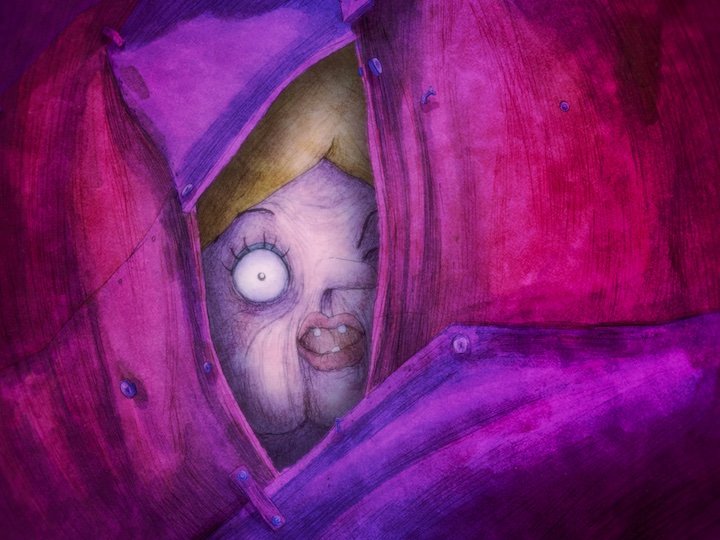
Credit: Cosmonauts (Finta Film, Miyu Distribution)
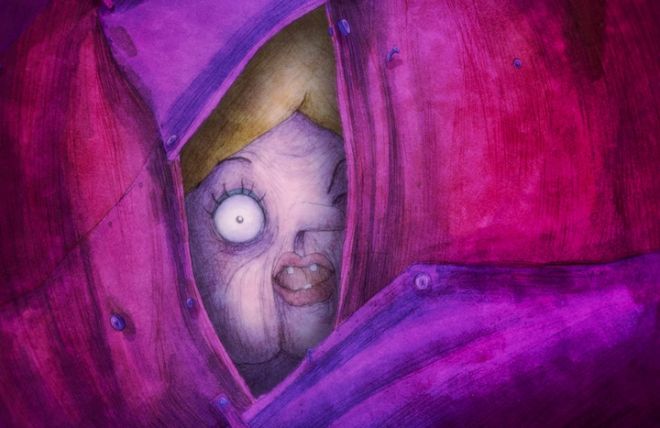
Cartoon Contender spoke with Leo Černic, the director of the animated short Cosmonauts, which has qualified for Oscar consideration through theatrical distribution. The story sets itself on the Pompelmo Express, an intergalactic cruise where virtually everyone is open with their bodies. For passengers Delfino, Zenf, and Rita, though, being open with their feelings may be an even bigger hurdle to overcome. Černic discusses the film’s unapologetically suggestive imagery, its human themes, and being compared to the likes of Bill Plympton.
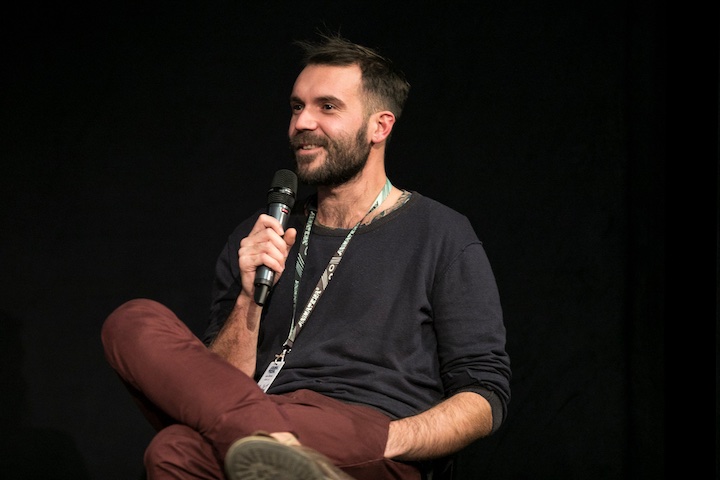
Credit: Leo Černic
Q: How did you land on the title “Cosmonauts?”
LC: The title hasn’t changed since the very beginning. I wanted something that could evoke a sense of collectiveness, something that could refer to how far we are willing to travel to find just a glimpse of love. Aren’t we all just bizarre creatures wandering through the universe, looking for some tenderness, or at least for a spot where we can fit in?
Q: To call some of the imagery in Cosmonauts suggestive would likely be an understatement. Even the moments that technically don’t contain nudity have a way of sneaking innuendo into the background, from a spaceship, to a telescope, to gears being turned. My personal favorite is the “Cockpit.” What’s your favorite visual in the film?
LC: It was extremely fun working on all those little details, bringing out the horny teenager in me. I’m pretty attached to my reinterpretation of the Creation of Adam. Not really for the sake of being blasphemous, because it’s definitely not a film about that, but because I find a deeper message behind this silly joke. If even Adam, as the embodiment of all our monolithic concepts of gender, sex, and masculinity, likes “something unusual,” there must be something in it. Love can have so many different shapes, so if even Adam doesn’t fit the norms he is supposed to represent, why should we?
Q: Cosmonauts was produced using 2D computer animation. The look of the film reminded me of Bill Plympton. Were his films at all an inspiration?
LC: It’s curious because it’s not the first time I’ve heard that, and honestly, my heart explodes with joy whenever I receive this feedback. I am a devoted fan of his work, as you can easily assume, but he had never really been a conscious inspiration in that sense — maybe on some deeper subconscious level. One of my Berlinale highlights this year was actually having the privilege of being in the same screening slot as him, meeting him, and sharing our work.
Q: While some viewers may focus on the revealing imagery, there’s a poignant story of love and loneliness underneath. What compelled you to tell this story against an intergalactic cruise backdrop?
LC: When you speak about love, facing loneliness becomes almost inevitable. I was asking myself a lot about the relationship between the two: do we feel lonely because of a lack of love? Do we love because we are just scared of being alone? When it comes to unconventional practices, this inner loneliness becomes even more tangible and painful, because you can feel lonely, marginalized, and miserable exactly when you are supposed to feel loved. I find it ironic and extremely melancholic that we have to hide in the most remote corner of the universe to find some tenderness and feel free.
Q: The film focuses on three characters (Delfino, Rita, and Zenf). Each is distinct, but how do you think all three are cut from the same cloth?
LC: They are all brave, passionate, and ready to be fragile.
Q: I find it ironic that on a cruise where everyone is open with their bodies, some still feel incredibly introverted. It goes to show that expressing yourself emotionally can be even more difficult than physically putting yourself out there. How do you relate to these themes?
LC: What I wanted to explore is that what we do with our bodies doesn’t necessarily represent our personalities, flaws, and qualities as individuals. Beyond that, I also wanted to add a layer that is often overlooked — even inside queer communities, we are often subject to norms that we are expected to embody, and those who don’t conform to them can easily find themselves excluded and isolated.
Q: What has it been like experiencing Cosmonauts with live audiences?
LC: One of the things I enjoy the most is seeing how the film changes the atmosphere in the room. The audience is the ultimate co-author of the film, bringing their own experiences into it and becoming part of its meaning. There’s something very liberating in that, because people seem to feel free to respond without worrying about how they are supposed to behave. In a way, I think the film creates a little safe space for 15 minutes, where you can feel okay being yourself, embracing your own weirdness, and even laughing at all the contradictions that come with it.
Q: I’m pretty sure I saw a Mickey Mouse caricature among the passengers. Have you heard from anyone at Disney… or bracing yourself for a call from the Mouse?
LC: Receiving a call from Disney would already be quite an achievement for an independent short crafted patiently and with love in my little Slovenia. Maybe we should rather ask them if the Mouse is really as vanilla as we’ve been told. : )

Nick Spake is the Author of Bright & Shiny: A History of Animation at Award Shows Volumes 1, 2, and 3. Available Now!