A website dedicated to animation, awards, and everything in between.
Whalefall Review | Gravity Meets Pinocchio in a Whale of a Big Screen Experience

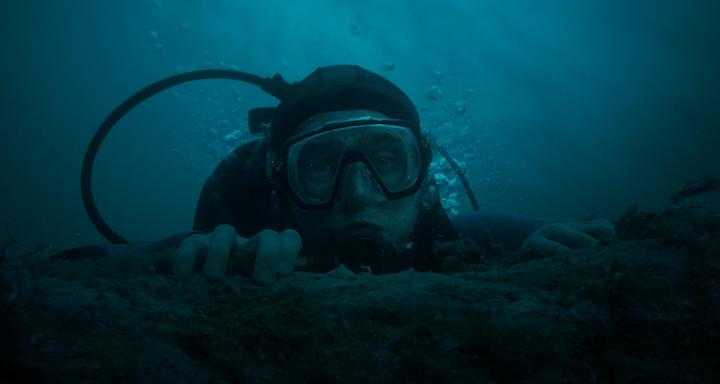
Credit: Whalefall (20th Century Studios)
At Cartoon Contender, we mainly discuss animation and awards, but also everything in between. Nick’s Flick-Reel is that in-between, reviewing live-action films and more!
From Life of Pi, to Avatar: The Way of Water, to Fantasia 2000, whales have generally been depicted as majestic creatures. They are, and moments in Whalefall will leave you in sheer awe of its central behemoth. Yet, perhaps not since Monstro in Disney’s Pinocchio has a whale been more intimidating. Like Gravity, Brian Duffield’s thrilling film is claustrophobic while taking full advantage of the big screen. It’s a whale of a cinematic experience, making the audience feel as if they’ve been swallowed whole by a not-so-gentle goliath.
Austin Abrams has had quite a year, going from trying to survive a zombie apocalypse in Resident Evil to fighting for his life inside a whale. Thankfully, Abrams’ character has better survival instincts in Whalefall. He plays Jay Gardiner, who has a difficult relationship with his deceased father (Josh Brolin). Jay’s dad taught him everything he knows about scuba diving. Those lessons also contributed to the rift between them, however. Although his mother (Elisabeth Shue) and sisters (Jane Levy, Emily Rudd) have found space to grieve, Jay hasn’t even opened the letter his dad left behind.
Never getting to share a proper goodbye, Jay seeks out his father’s final resting place in the deep sea. He finds more than he bargained for when a sperm whale emerges, consuming Jay. He doesn’t immediately die, although it’ll be a slow, painful death if Jay doesn’t act fast, his oxygen tank serving as a ticking clock. Jay isn’t the only one on the menu, as the whale swallowed a squid, too. The whale itself is a feat of special effects and production design. While CGI was used for some shots, Duffield largely relies on practical set pieces, from the whale’s 30-foot head, to its giant tongue mounted on an animatronic arm, to its stomach organs pressing up against Jay.
James Miller’s sound design is just as integral to the immersion, washing over the audience from the second Jay hits the water. Once he’s inside the whale, the audience can not only hear everything around him, but practically feel it squirming. We can thankfully see it as well, with cinematographer Aaron Morton knowing how to light these shots. While Whalefall is an all-around technical achievement, it also tells a father-son story with heart. Much like the titular character of Moby-Dick, the whale is more than a beast. It becomes a metaphor for a fractured relationship as Jay reflects on his time with his father. As hard as his father was on Jay, they shared some good times, many of which were out at sea.
Despite the whale’s threatening nature, the film avoids turning it into a Syfy Original Movie monster. There’s still a majesty to this creature, both inside and out. Duffield seems to realize that the whale can’t be entirely vilified, as Jay intruded on its territory. Even so, this is man vs. nature, and we want to see Jay survive at all costs. The film won’t leave you eager to nuke the whales, Nelson Muntz style. When it’s us or them, though, that nuke is tempting.
Awards Potential:
Best Sound (Oscars)
Best Visual Effects (Oscars)
Best Production Design (Oscars)

Nick Spake is the Author of Bright & Shiny: A History of Animation at Award Shows Volumes 1, 2, and 3. Available Now!