A website dedicated to animation, awards, and everything in between.
2026 Oscar-Eligible Animated Short Filante Director Marion Jamault Interview

Credit: Filante (Marion Jamault)
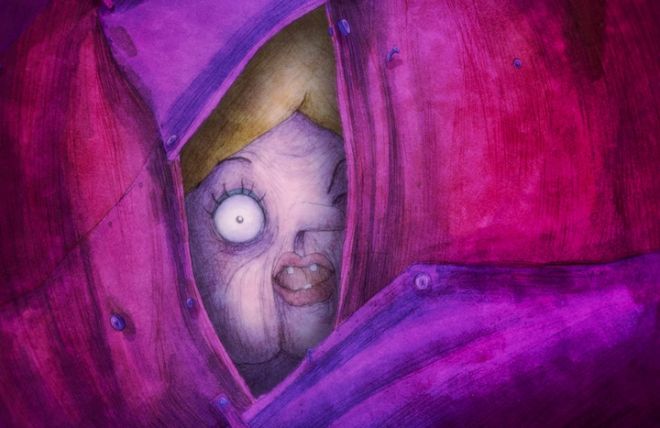
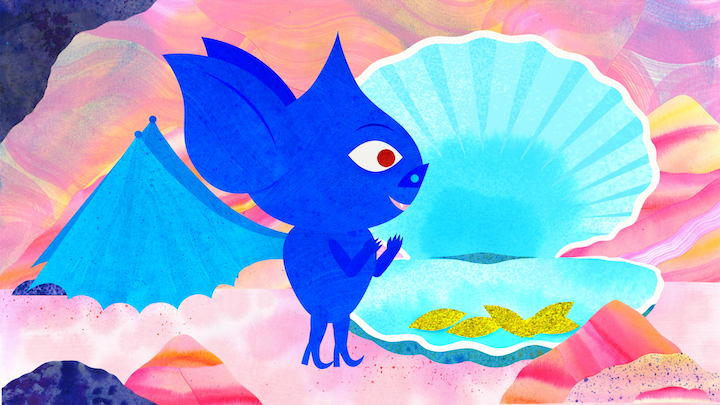
In Marion Jamault’s Filante, a little girl named Paulette wishes upon a star to find her missing rat. She receives assistance from a bat in this colorful short, which utilizes cutout animation. Winning Best in Show at Spark Animation, Filante has qualified for consideration at the 98th Academy Awards. Cartoon Contender spoke with Jamault about her film’s animation techniques, inspirations behind the story, and what she’d wish for if she saw a shooting star.
Credit: Marion Jamault
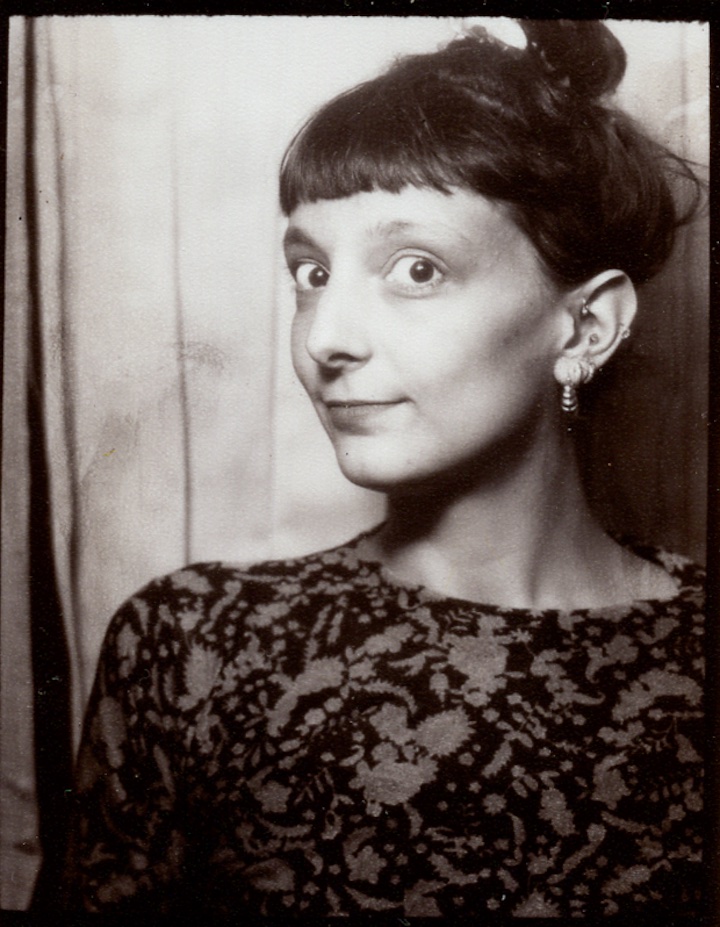
Q: Where did the idea for his charming short film stem from?
A: Among the somewhat absurd, recurring automatic drawings in my sketchbooks, there was one of a bat wearing shiny dresses. I started wondering how she had ended up there, and that’s how the story began.
Q: The film centers on a young girl searching for her missing pet rat with the help of a bat. How did you choose these two animals as subjects for the film?
A: A few years ago, I stumbled upon a YouTube video of a bat eating a banana. I fell in love with this animal, adorable and spooky at the same time. I tucked it away in the back of my mind, among the creatures I’d like to include in my stories. The idea of the rat came next. It’s a slightly spooky animal that suited the personality of its mistress, the little witch. I had a lot of fun drawing him. His face is strange. You can’t quite tell if he’s cute or very creepy.
Q: Filante utilizes cut-out animation, if I’m not mistaken. What drew you to this particular style?
A: Since I’m not a master at drawing, I had to develop another way of creating images and telling my stories. That’s why I often use a paper cut-out technique, built from a wide range of painted textures. This approach gives color a central role. I think about it even before I consider the outlines of my settings and characters. It’s also a technique that lets me play with geometric shapes. I feel as if I’m assembling my images like a construction set, a kind of playful, formal synthesis of the world.
Q: In addition to animation itself, the colors pop out at the audience. How did you select the film’s vibrant color scheme?
A: With the paper cut-out technique, the elements that make up an image are layered without outlines. Color therefore becomes a question very early in the creative process. Most of the time, when I imagine a place or a character, I see its color before its shape. I don’t know if that’s a good thing, but I like creating ‘clear’ images where every element stands apart from the others, which naturally leads me to choose highly contrasting color palettes. I also chose animation for the sheer pleasure of inventing worlds that don’t exist. Without worrying about realistic landscapes, I can use color primarily for its narrative expressiveness.
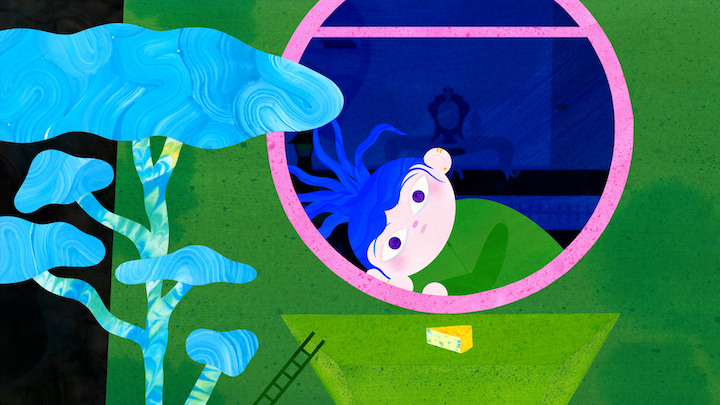
Q: It’s fitting that Paulette wishes upon a star, as she dresses like a crescent moon. Was that intentional?
A: That's a funny observation, but no, it wasn't intentional. When manipulating geometry to create images, it's easy to find symbolism in certain elements, and that's something I like. It can reveal unconscious intentions that enrich the universe and the narrative.
A: While Filante is dialogue-free, it’s far from a silent short. What can you tell me about the music and sound design, which play integral roles here?
Q: The film’s music was composed by the band Chamaye. I love their sound, it’s danceable, playful and dreamlike. Their world is close to that of fairy tales, just like my stories, so I felt it would be a perfect match. I also liked the idea of experimenting with techno music in a film with a childlike universe.
Q: Filante has qualified for Oscar consideration through its Best in Show win at Spark Animation. What has it been like taking Filante on the festival circuit?
A: Filante is a project that was made on a shoestring budget. I never expected it to travel so widely to festivals, and I am, of course, very happy about that.
Q: If you wished upon a star, what would it be for?
A: It’s a secret wish I’ll keep to myself, just between me and the shooting star.
Nick Spake is the Author of Bright & Shiny: A History of Animation at Award Shows Volumes 1 and 2. Available Now!