A website dedicated to animation, awards, and everything in between.
2026 Oscar-Eligible Animated Short Butterfly Kiss Director Zohar Dvir Interview

Credit: Butterfly Kiss (Zohar Dvir)
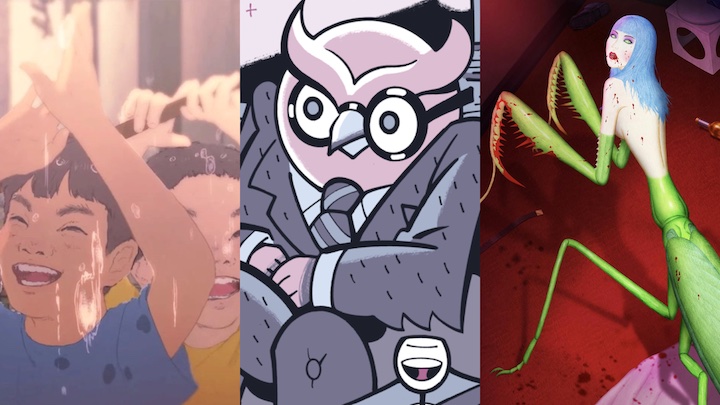
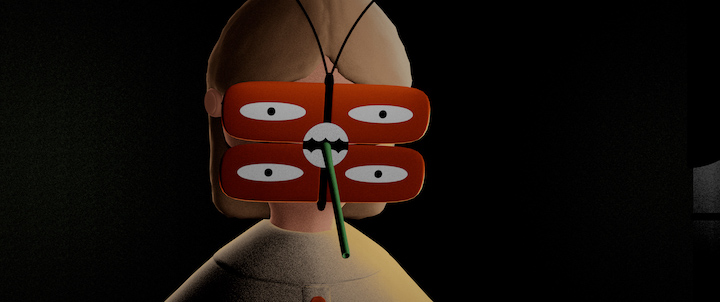
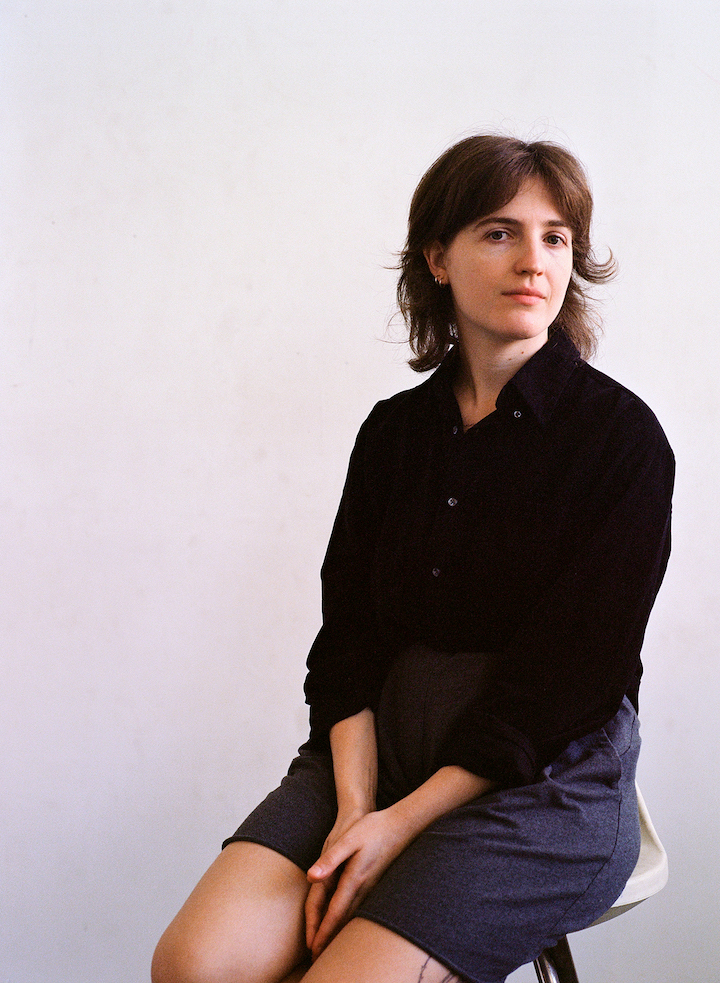
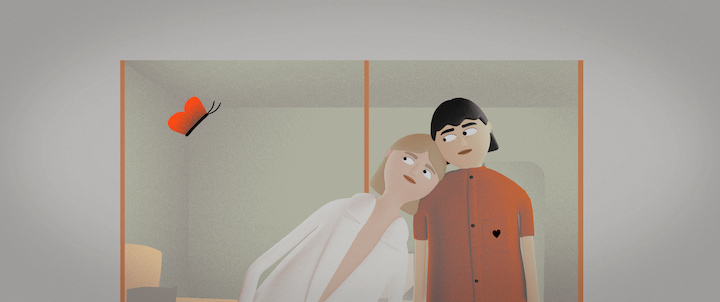
Gamophobia and entomophobia coincide in director Zohar Dvir's Butterfly Kiss, in which a woman’s fear of commitment is manifested as her girlfriend transforms into a giant insect. Mixing elements of horror and relationship dramedy, Butterfly Kiss is practically autobiographical, with the characters being based on Zohar and her girlfriend, Carolina. Winning the Chicago International Film Festival’s Gold Hugo prize, Butterfly Kiss is eligible for the 98th Academy Awards. Cartoon Contender spoke with Dvir about drawing inspiration from horror movies, LGBTQIA+ representation, and the real-life relationship that impacted this story.
Credit: Zohar Dvir
Q: Your film reminded me of Franz Kafka’s novella The Metamorphosis, both featuring a person transforming into an insect. When did you first make the connection between The Metamorphosis and your personal life?
A: The film deals with the fear of change, and the butterfly came in as a symbol of transformation. When I developed the concept of the butterfly-possessed girlfriend, I was interested in playing with identity — the tension between not knowing if a person is still themselves or if they’ve transformed into another being. I was thinking about Kafka’s The Metamorphosis and Friedkin’s The Exorcist. In The Metamorphosis, Gregor is trapped in the body of an insect but remains himself. In The Exorcist, the demon completely takes over the girl’s body, and she stops being herself. I wanted to keep that sense of in-betweenness — I wanted the girlfriend and the butterfly to want the same thing. They become one being. And just as a fun fact, the original title of the film was Metamorphosis.
Q: Among the film’s inspirations were the horror movies you watched with your dad growing up, The Exorcist being one of them. What were some others that influenced Butterfly Kiss? The Fly, I’m willing to wager?
A: I’m embarrassed to say I’ve never seen The Fly! Hitchcock was definitely an influence — I love the psychological horror in his films, like Vertigo and Rear Window. When I animated the scene where Carol is out on the street being attacked by butterfly people, I referenced The Birds. Another huge influence is David Lynch — Mulholland Drive, Inland Empire — that feeling of not knowing when you’re dreaming, or if you’ve just woken up into another one. He also made me realize that, as a director, I don’t have to give the audience all the answers — I can raise questions and leave them thinking afterwards. But not just films — there’s a book I read just after finishing the script, Our Wives Under the Sea by Julia Armfield. It’s a sapphic horror story, and I was in love with the atmosphere the writer created.
Q: Would you say Butterfly Kiss is more psychological horror or body horror?
A: I’m playing with both genres to convey my message, but initially I pitched it as psychological horror. In general, it’s a genre I enjoy watching more than body horror. But after I released the film, there was a wave of female filmmakers making incredible and thought-provoking body horror films — like Coralie Fargeat’s The Substance and Emilie Blichfeldt’s The Ugly Stepsister. These films changed my mind about the genre, and I’m proud to be somehow included in this wave.
Q: You partially based Carol and Ray on yourself and your girlfriend, Carolina. What was Carolina’s reaction to the film? Was she by your side throughout its production, or did she not see any footage until after its completion?
A: Carolina was always a big part of the process and supported it — I couldn’t have created it otherwise. She saw the drafts and works-in-progress and gave very insightful feedback. She’s also the voice of Carol, as I wanted the film to feel as authentic as possible. I initially thought about recording myself as Ray, but it would have been a nightmare to have to hear my own voice again and again — so, for my sanity, I found another voice actor for that role.
Q: You produced Butterfly Kiss with Fabian&Fred and The Hive Studio, the latter of which worked on the Oscar-nominated Letter to a Pig. How did they help to define the short’s visual language?
A: When I approached The Hive, I already had an early draft of the script and some designs. In my case, I have a strong visual voice, and I think that made them trust my vision and give me freedom in terms of design. You can tell their approach from the range of films they produce - Films like Letter To A Pig and Black Slide are so different from one another, and Butterfly Kiss is a completely different creature. Fabian&Fred have a similar approach, all the films they produce are so unique and different from one another. Both The Hive and Fabian&Fred were there to support me with whatever I needed to make the film happen.
Credit: Butterfly Kiss (Zohar Dvir)
Q: Butterfly Kiss is a win for LGBTQIA+ representation, but its themes can resonate with anyone who has ever been in a serious relationship. How do you think makes this a universal story?
A: I get a lot of feedback from women — both straight and queer — who tell me they’ve been in this situation. Strangely, I haven’t heard much from men, and I’d love to get their insight as well. Ultimately, it’s a film about experiencing a crisis in your relationship — loving someone but feeling like something isn’t working, being afraid of commitment, having to compromise. I think every couple goes through that at some point. In that sense, I could have made this film about a heteronormative couple, but I wanted to normalize queerness. It’s not another coming-out story, but a love story between two people who both happen to be women.
Q: Butterfly Kiss won the Chicago International Film Festival’s Gold Hugo prize, qualifying it for Oscar consideration. What has it been like taking the film on the festival circuit?
A: I feel very grateful to have had the film screen in so many places and reach so many audiences — it was shown in over 30 countries! One of my favorite experiences was attending the New Chitose Airport International Animation Festival in Japan. It was my first time watching the film on a big screen, and the audience was incredible. I even made Butterfly Origami Kits for the occasion, and they loved it. I believe part of the film’s success has to do with the fact that it touches different audiences in different ways. Animation festivals appreciated the animation and design; short film festivals liked its storytelling; LGBTQ+ festivals celebrated the representation; and even a couple of Jewish festivals screened it — though I never expected lesbians to appeal to a Jewish audience!
Q: How did the film change you as an artist?
A: I don’t think my films change me — they’re more like mirrors of who I was at the time I made them. Naturally, I keep changing over time, and my next film won’t be another Butterfly Kiss. If it changed anything, it’s that I now believe I can commit to an idea so deeply that others will believe in it too and help me bring it to life. It’s easier when you’re a student — you make a film in a safe environment. But in the real world, you need to get a producer on board, then a co-producer, secure funding, plan distribution, marketing, networking… You need a thick skin to be a filmmaker. So I don’t know if I’ve changed, but I’m certainly more aware of what it takes.
Nick Spake is the Author of Bright & Shiny: A History of Animation at Award Shows Volumes 1 and 2. Available Now!