A website dedicated to animation, awards, and everything in between.
Acid City Directors Will Freudenheim & Jack Wedge Interview | Oscar-Eligible Animated Short

Credit: Acid City (Laser Days)
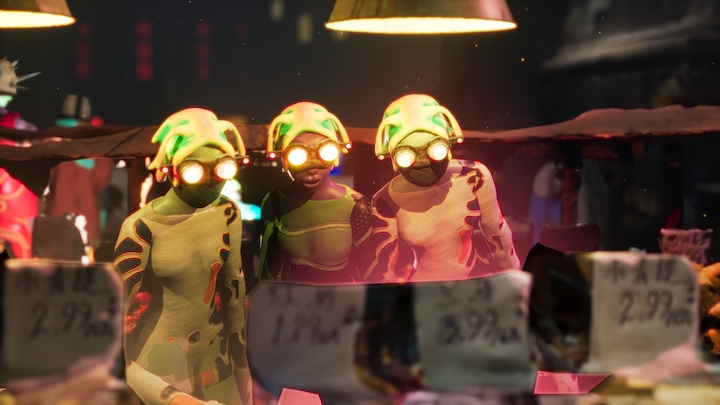
Acid City may be fictional, but its inhabitants and the issues they face feel all too real. That’s because directors Will Freudenheim and Jack Wedge took a documentary approach to their animated short film, using actual recorded interviews for much of the audio. While Acid City reflects New York and several other major metro areas, Freudenheim and Wedge have created a wholly unique locale that’s as gritty as it is immersive. This short from studio Laser Days has qualified for Oscar consideration, winning the Golden Dragon for Best Short Film at Krakow Film Festival. Cartoon Contender spoke with the filmmakers about rendering Acid City, the science behind it, and whether the film has already become a reality.
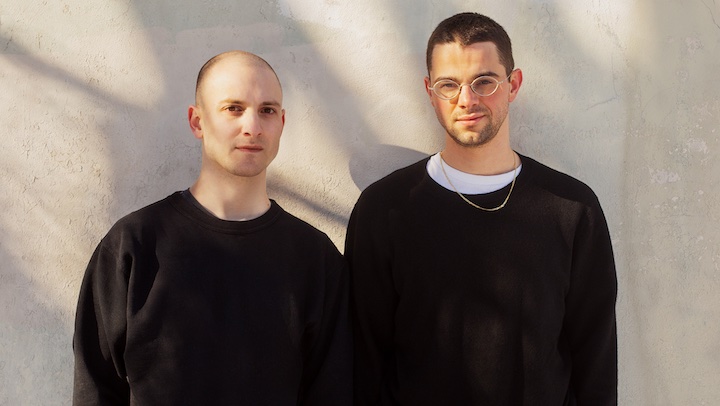
Will Freudenheim and Jack Wedge
Q: From the moment Acid City was conceived, was the intention always to approach it as a documentary?
A: No, the documentary structure came quite late. We had a version of the story and script in 2022 that was much more conventionally narrative, focused on a specific protagonist going on a journey into the city. We worked on that version for well over a year before coming to the pretty painful realization that the movie wasn't about what we wanted it to be about.
By that point, we had already poured an enormous amount of time into building the world, developing characters, animating sequences, and trying to make that structure work. Deciding to move away from it felt like giving up on something we had invested a lot in, but it had become clear that we needed to change the center of gravity of the film.
A lot of things from that first version eventually found their way into the finished movie. We had already created a long montage of a water taxi entering the city and moving through the canals, which we eventually took apart and redistributed throughout the film. There was also a little gang of kids who acted as guides to the protagonist. They were always intended to be unscripted, so Jack had started interviewing friends' kids to generate dialogue for them.
Once we decided to shift away from making a film about one character and toward making a documentary about the city itself, we expanded that process and started going out into New York with a field recorder and headphones and talking to people. The documentary form gave us a way to make the city itself the protagonist.
Q: Acid City perhaps most closely resembles New York, but did you draw from any other major cities while developing the film?
A: Definitely. New York is probably the emotional center of the film, but Acid City draws from cities all over the world, including Karachi, Delhi, Jakarta, Venice, Dhaka, Tokyo, Amsterdam, and Taipei.
We were especially interested in archipelagic cities, places where water breaks the city into separate pieces connected by bridges, ferries, tunnels, and other infrastructure. New York already has that quality, and we also looked at places like Tokyo and Jakarta, where the relationship between land and water is constantly being engineered and renegotiated.
We were also researching cities dealing with severe water scarcity. Karachi and Delhi were important references because both have developed water tanker economies and so-called water mafias around gaps in municipal supply. That influenced how we thought about Acid City socially as much as architecturally. A water crisis creates new jobs, informal economies, power structures, and inequalities around who controls access to water.
So the city came from learning about and combining real conditions that already exist across many different cities and pushing them into a single environment.
Q: The interviews in the film were taken from real interactions with water scientists, emergency responders, and people on the street. How did you go about conducting these interviews?
A: It was a pretty informal and constantly evolving process. Sometimes we sought people out because of their expertise, like water scientists or emergency responders. Other times Jack would go out into New York with a field recorder and headphones and approach people on the street.
We generally didn't ask people to pretend they were living in Acid City. We were much more interested in getting them to talk honestly about their actual lives and then seeing what happened when those words were placed somewhere completely different. We would ask broad questions about New York: What's your relationship to the city? How has the neighborhood you're from changed since you were a kid? What was it like growing up here? What's your favorite thing to do?
We became particularly interested in the idea of home and what that means as a place changes around you. We've been thinking a lot about heritage in relation to the climate crisis because people are literally losing the places where they grew up. That's a major theme in Acid City: this idea of a city being eaten by the rain and swallowed by the ocean while people are still trying to preserve their memories and relationships to it.
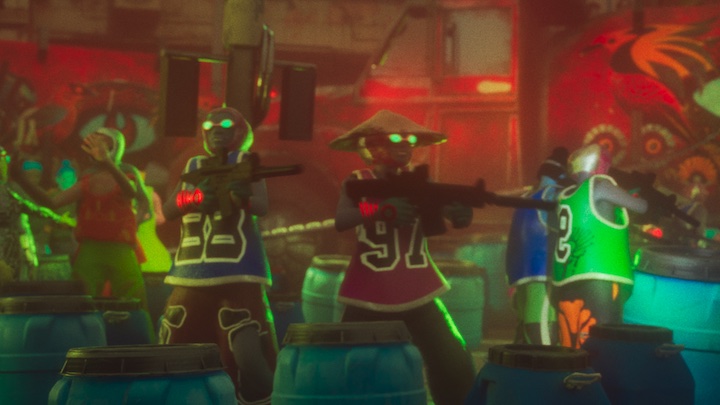
Credit: Acid City (Laser Days)
Q: This approach is reminiscent of Nick Park’s Creature Comforts, which also used animation to convey interviews with real people about their living conditions. Was that film an inspiration?
A: Definitely. Creature Comforts was an inspiration along the way, especially this basic idea that you could take a real person's voice and place it into the body and circumstances of a completely fictional character. There is something funny and strange about that gap, but it can also make you listen to what somebody is saying in a different way.
We ended up taking the process in a very different direction, and Creature Comforts was mixed into a larger group of documentary influences for us. Films like Soy Cuba, Sans Soleil, Lessons of Darkness, and Invisible Demons were really important because of the way they treat a place or environment as the subject of a film. The camera is allowed to drift away from an individual character and become interested in architecture, weather, infrastructure, or the people who collectively make up a place.
We really wanted to preserve the specificity and messiness of the way people actually speak. People hesitate, repeat themselves, go on tangents, or suddenly say something funny or perceptive. We could never have written a lot of the lines in the movie. Putting those real voices into this completely invented city became one of the main ways that we could blur the boundary between documentation and fiction.
Q: Was there a particular interview you conducted that you almost included, but ultimately didn’t make the cut?
A: We went on a research trip to Tennessee with a groundwater microbiologist and PHD student Riley Drake to record audio as she took water samples from two different cave systems. We spent many, many hours underground with her.
We were interested in cave microbiology, groundwater, and the relationship between what happens on the surface and what happens underground. We talked with Riley about how pollutants move through cave and groundwater systems, what happens to waste, how rainwater travels through rock and soil and gets filtered or contaminated along the way, and what kinds of microbial communities develop underground.
Substantial research went into creating Acid City. How does a city in the middle of an acidic sea survive? Questions arose like “How could it collect and clean rainwater? Where would pollution accumulate? What kinds of biological systems might emerge around all of that? Where does the sewage go?” Well, it turns out poop in the water creates algae blooms. The algae attract fish, which supports the fishing industry. But there are parasites, bacteria, and viruses in the water and in the fish, so it takes time for the body to acclimate to the environment. That is why children are forbidden from eating fish until they are five years old in Acid City.
A lot of what we learned filtered into the way the city works and into things that you see without them necessarily being explained. We were really grateful that Riley was willing to spend that time with us and entertain all of these strange hypothetical questions.
Here is an example of how that research permeated through into the dialogue of Acid City: “So fish love to come to Acid City. The fishermen love the fish. But you have three problems. You have parasites, bacteria, and viruses. You freeze a fish to kill parasites. Cook to kill the bacteria. Viruses are still a problem. Older people have built up immune responses. Younger people are vegetarians until they reach about five years old. When their immune systems are ready, they can start eating fish.” The lore of the place, the backstories make everything feel more real to us, and we hope that this complexity and depth is translated through to the audience even on a subliminal level.
Q: Did the people you interviewed at all influence their character designs, or was the intent to make the characters look completely different from their real-world counterparts?
A: None of the people we interviewed share a likeness with their animated character. However, our work is extremely referential, and a lot of characters in the film are based on real people. Fictional characters also served as major inspiration. Perhaps it was a half-and-half.
Jack is an illustrator, so a lot of the designs came from how he draws. The 2d style transforms into 3d. We wanted the people that lived in Acid City to have a weathered feeling about them. They live out in the middle of nowhere with harsh weather, extreme heat, and acidic air. We wanted their appearance to reflect that. They’ve been exposed to the acidic environment their entire life. Their skin has grey, blue, and green tones. Over generations, they’ve learned to thrive. This lends itself to the core themes in the movie: resiliency, adaptation, heritage, collective memory.
Q: Acid City plays with a variety of styles, from cyberpunk to surrealism, utilizing Blender, Unreal Engine, and performance capture technology to bring it to life. How did you come to define the look of the film?
A: We came to the movie from different backgrounds. Jack is an animator and filmmaker, while Will had been working much more in games, virtual environments, and real-time systems. Acid City ended up somewhere in between those approaches. We were making a linear film, but a lot of the way that we constructed it was closer to building a world first and then discovering the movie inside of it.
A big part of that process was procedural. Jack would hand-craft individual buildings, objects, signs, pieces of infrastructure, and architectural elements, and Will would design systems that could distribute them, reform them, modify them, and produce variations. Rather than building every shot as an isolated set, we could use those parts to create much larger environments.
We would then walk around inside those environments almost like we were location scouting a real place. We might build out an elaborate part of the city and then discover an alleyway, rooftop, or canal that felt like the right place for a scene. We could take character performances that we had animated and place them into those settings, then go back in and carefully reshape the environment around what we had found.
So it was always a mixture of discovery and intentional placement. Some things were very specifically composed, while other things emerged from systems that produced combinations we hadn't entirely anticipated. There was a constant back-and-forth between making a system and responding to what that system gave us.
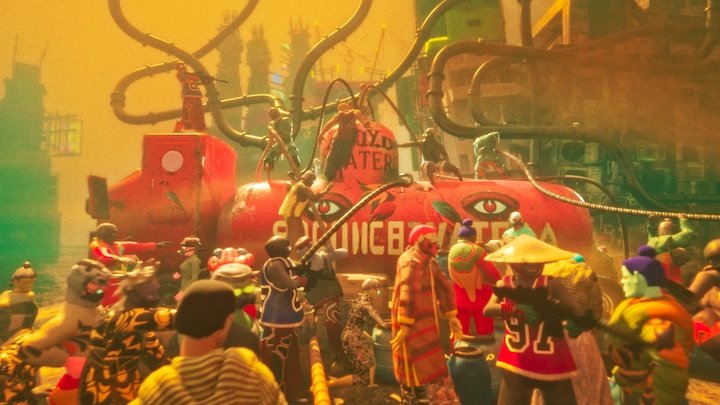
Credit: Acid City (Laser Days)
Q: It’s not surprising that Will comes from a game design background, as Acid City feels like an open-world location one could actually explore. Would you ever consider producing a game based on the film?
A: Definitely. In some ways, there is already a game version of Acid City inside the film because we had to build so much more of the world than you ever see onscreen. We could walk through these environments freely while we were making it, and sometimes we would spend a long time exploring parts of the city looking for somewhere to put the camera.
A game would also let us return to one of the things we liked most about making the film, which was discovering small stories without having a single protagonist driving you through them. I could imagine something much more observational than a conventional narrative game, where you wander through the city, listen to people, ride the water taxis, enter buildings, and develop your own understanding of how this place works.
At the same time, I think we'd want to find a reason for it to be a game rather than simply making an explorable version of the movie. The film is very deliberately edited and structured, whereas games create a completely different relationship between a person and a place. That would be an interesting part to explore.
Q: Acid City has qualified for Oscar consideration, winning the Golden Dragon for Best Short Film at Krakow Film Festival. What has it been like taking the film on the festival circuit?
A: It's been pretty surreal because we spent so long just trying to make the thing good. For years that was the entire focus. Then suddenly the film is finished, and you're sitting in a theater somewhere watching people encounter it for the first time. We’re so grateful for how it’s been received and how global the audience has been.
The film feels less speculative every day. While we were at Annecy screening Acid City this summer, France experienced the hottest days ever recorded nationally. You walk out of a screening of this movie about people adapting to extreme heat and environmental instability, and the world outside suddenly feels uncomfortably close to the one you've just been watching.
There is the strange experience of being finished. We still see things when we're traveling or walking around New York or on our festival travels with the film and immediately think, “that should be in Acid City.” For so long, the city was this open thing that we could keep adding to and changing that it can be easy to forget we're not actually building it anymore.
Q: How far do you think we are from Acid City becoming a reality… or are we already there?
A: We're already there, just distributed across different places.
Enormous floods displacing millions of people, cities dealing with unprecedented heat, fires moving through urban areas, neighborhoods repeatedly rebuilding after extreme weather. While working on the film, every few months there seemed to be another image that would have looked like speculative fiction a couple of years earlier.
That's part of why we eventually felt that we couldn't make Acid City entirely inside the computer. If we were making a film about a climate-altered future, we needed to go outside and document the climate-altered present.
The speculative part of Acid City is that all of these pressures have accumulated in one place and people have had generations to adapt to them. What interests us is what happens after the disaster. People still have jobs. Kids still play. Somebody still complains about their neighborhood. New rituals, technologies and forms of infrastructure emerge. People develop affection for a place that, from the outside, might look completely unlivable.
That is why we never really thought of the movie as a warning about some distant dystopia. It is about conditions that already exist, and an attempt to imagine the cultures that might form around them.

Nick Spake is the Author of Bright & Shiny: A History of Animation at Award Shows Volumes 1, 2, and 3. Available Now!