A website dedicated to animation, awards, and everything in between.
On Saint Nicholas' Eve Director Emy-Mirel Ivaşcǎ Interview | Oscar-Eligible Animated Short

Credit: On Saint Nicholas' Eve (Emy-Mirel Ivaşcǎ)
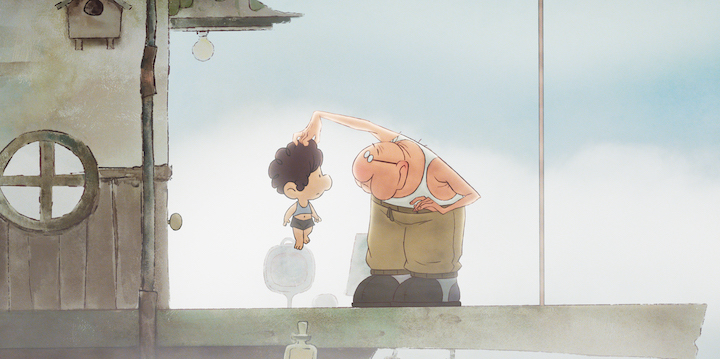
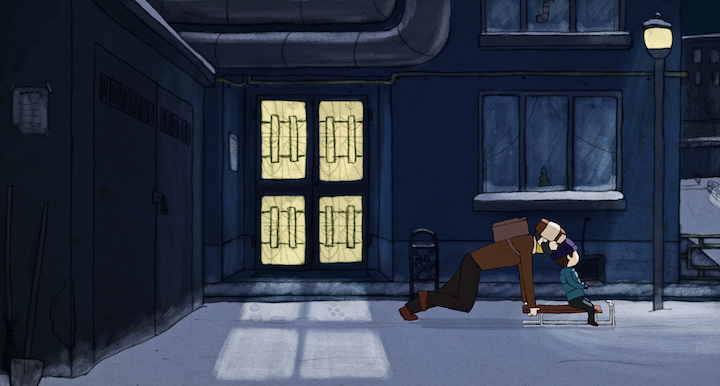
Seeing a man lying in the snow triggers a childhood memory in Emy-Mirel Ivaşcǎ’s On Saint Nicholas' Eve. Winning Best Romanian Film at the Animest International Animation Film Festival, this Oscar-qualifying animated short is told from a child’s perspective. Even at its most fantastical, though, the story is grounded in reality, which we sometimes look back on differently. Cartoon Contender spoke with Ivaşcǎ about the nature of memory, the importance of sound design, and more!

Credit: (Emy-Mirel Ivaşcǎ)
Q: In what ways does On Saint Nicholas' Eve draw from your childhood?
EI: The film is probably the most personal thing I've made so far. Many elements come directly from my childhood: the places, the atmosphere, certain events, and even some of the characters. The relationship between the father and the boy is also rooted in my own experiences. Growing up in Romania in the late '90s and early 2000s meant living between the remnants of the communist period and the growing influence of American culture. I wanted to capture something of that world while exploring how childhood memories can change meaning as we grow older. In many ways, the film is an attempt to revisit my childhood and understand it a little better.
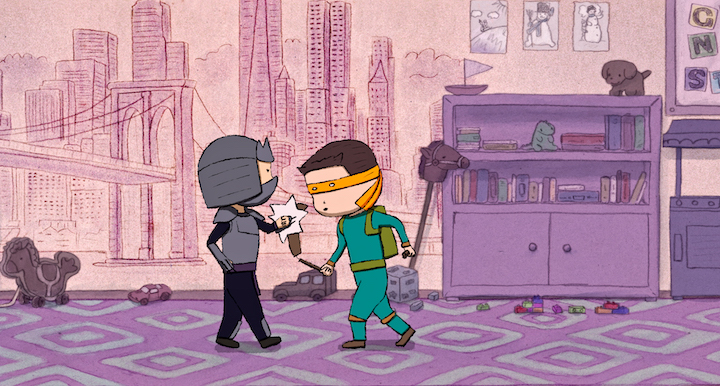
Q: The film takes place around Christmastime, although seeing kids dressed as the Ninja Turtles, I couldn’t help but think of Halloween. Is dressing up as Michelangelo (the turtle, not the artist) a core memory for you?
EI: Saint Nicholas' Eve takes place before Christmas. In Romania, as in many other parts of Europe, there's a tradition where children clean their boots and leave them out overnight, hoping Saint Nicholas will visit while they're asleep and leave them gifts. I chose this particular time of year because, unlike Christmas, it feels a little quieter and more intimate. There's something about that atmosphere that I really liked for the film.
Credit: On Saint Nicholas' Eve (Emy-Mirel Ivaşcǎ)
As for the Ninja Turtles, we loved watching cartoons and imitating characters in kindergarten. Funny enough, I wasn't actually a big viewer of the TV series, but we had these inexpensive, unofficial Nintendo consoles, and the Ninja Turtles game cartridges were incredibly rare. Sometimes a single cartridge would make its way around the entire neighborhood, passing from one kid to another. I remember really loving those games, and one particular Ninja Turtles game from the '90s has stayed with me ever since.
Q: On a design level, what were your inspirations while making On Saint Nicholas' Eve?
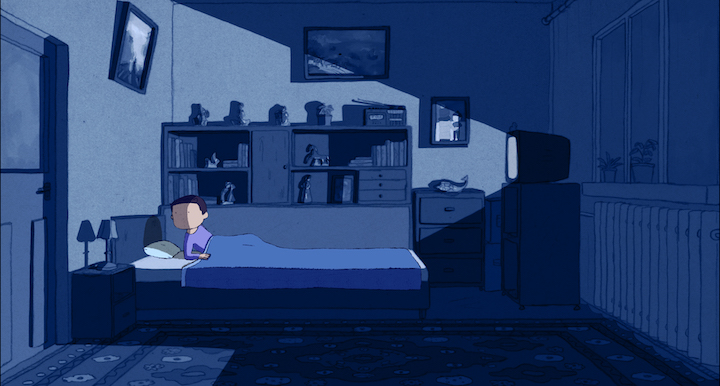
EI: The setting is inspired by my hometown in northern Romania, including the apartment where I grew up. I wanted to make a love letter to the places and people that shaped my childhood. Many of them feel faded now, and I wanted to capture the contrast between how vividly I remember them and how they look today.
Q: There’s a particular moment in the film involving a window that almost had me gasping. Have you had any similar reactions while showing the film to others?
EI: Yes, I've had a few different reactions, sometimes even confusion, but I actually like that. I think it's an important moment in the film and, in many ways, marks a turning point in the story. Until then, everything feels like a fairy tale, but afterwards, reality begins to sink in. I see that sequence as a bridge between those two worlds.
Q: On Saint Nicholas' Eve reminded me of Dianne Jackson’s adaptation of Raymond Briggs’ The Snowman, both having winter settings, a lack of dialogue, and mystical scores in common. Did that short influence you while making this film?
EI: I can certainly see the similarities you mentioned, and I think The Snowman is a wonderful example of visual storytelling. However, my main influence was actually Trevor Jimenez's Weekends. The first time I watched it, I was really captivated by its visual style and the way it explores family dynamics, which resonated with me on a personal level. I ended up studying the film quite closely, and in many ways, I tried to shape my own visual style by drawing inspiration from it.
Q: While the music plays a significant role in shaping the film’s atmosphere, other moments simply allow Ștefan Azaharioaie’s sound design to wash over. What do you think is the film’s most impactful use of sound?
EI: Sound was very important to us, especially because the film has no dialogue. Ștefan and I spent a lot of time discussing it and figuring out how sound could help tell the story. I think one of the most impactful elements is the coughing heard in the distance, particularly because there are two scenes in the film that mirror each other. More generally, we really enjoyed searching for sounds that could bring that period to life: the old Dacia, the high-pitched whine of an old CRT television, the atmosphere of a small industrial town. It was a real pleasure to explore that side of the film.
Credit: On Saint Nicholas' Eve (Emy-Mirel Ivaşcǎ)
Q: On Saint Nicholas' Eve has qualified for Oscar consideration, winning Best Romanian Film at the Animest International Animation Film Festival. What has it been like experiencing the film with audiences?
EI: Honestly, it's been quite overwhelming, in the best possible way. This is a very personal film, so sharing it with audiences has always felt a little vulnerable. At first, I actually felt a bit embarrassed showing it to people I knew, because I was sure they would recognize the places and some of the characters. But I kept telling myself that if I didn't go all the way and put those personal things into the film, it simply wouldn't work. What's been most rewarding is seeing how people from different backgrounds and cultures connect with it, sometimes in ways I hadn't anticipated.
Q: It felt like your film blended memory with flights of fantasy. Where does the reality end and the fantasy begin?
EI: I think the film is very much rooted in reality, but filtered through the perspective of a child. Sometimes certain experiences stay with you, and you don't necessarily remember the events exactly as they happened, but you certainly remember how they made you feel. The film is always told through the eyes of a child, and I think imagination plays a big part in how we experience the world as children. But at the same time, when you're exposed to difficult or harsh situations at such a young age, there's also a certain clarity, almost a sense of maturity, that comes with it. I think the film tries to capture that contrast between a child's imagination and the difficult realities children sometimes have to face.

Nick Spake is the Author of Bright & Shiny: A History of Animation at Award Shows Volumes 1, 2, and 3. Available Now!