A website dedicated to animation, awards, and everything in between.
9 Million Colors Director Bara Anna Stejskalova Interview | Oscar-Eligible Animated Short

Credit: 9 Million Colors (Bionaut, Reynard Films, Trollfilm)
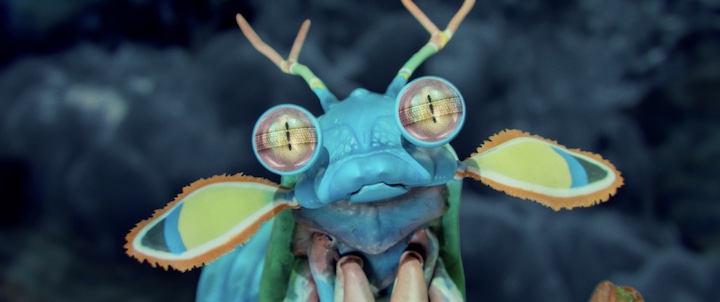
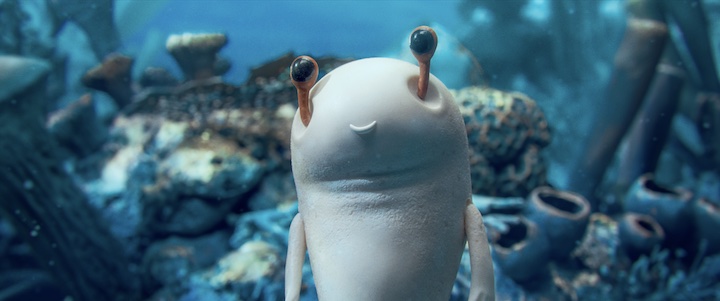
In 9 Million Colors, Fran the shrimp sees the beauty in Milva, a blind fish who struggles to survive on a daily basis. All Fran wants is for Milva to see the ocean the way she does. Can they overcome their differences? Director Bara Anna Stejskalova conducts an underwater symphony of music, sound, and color in this Oscar-eligible short, which won the Animated Grand Prize at the Indy Shorts International Film Festival. Cartoon Contender spoke with Stejskalova about executing stop-motion against an underwater backdrop, the film’s unique approach to music, and more!
Credit: Bara Anna Stejskalova
Q: Did you go into this project with a vast knowledge of ocean life, or did it prompt you to do a deep dive into research?
BAS: I liked to base my films around nature. I also really like fish, and I find serenity going to huge aquariums. I knew about the mantis shrimp before I started writing, because I wanted to make a film about her. However, there was still some research left to be done. I went to try diving, as I needed to know how light actually works underwater, and I couldn’t get that kind of understanding from watching videos. However, underwater came an idea for a musical. As I could hear that there was so much of a rhythm, claps and bubbles. It only made sense to make the animals sing as well.
Q: Stop-motion is one of the most time-consuming techniques in animation. Water is especially tricky to pull off, even with green screen. What was the biggest challenge in producing 9 Million Colors, and how did you overcome it?
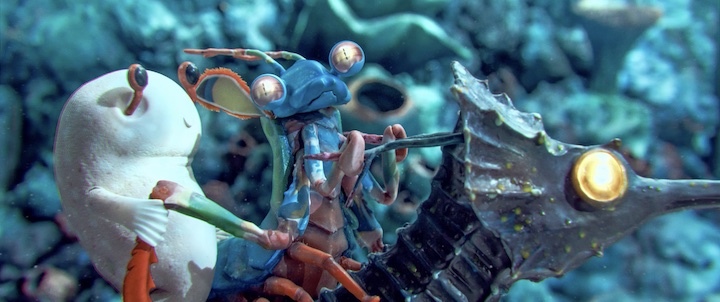
BAS: You are absolutely right. It is a lengthy process. Every frame is detaily crafted, and I think you can really see the human touch behind the scenes. We have spent a lot of time with the animators learning about how to imitate the weight of the water and the small currents that are always moving the small parts - like antlers - of our heroes. Animating the mantis shrimp was definitely the biggest challenge (and also a reason why the production took more than years), as she has four arms, six legs, twenty small swimming fins, big tail, movable eyes, and four antlers. I had to promise my animators that the next film will have creatures with six limbs maximum.
Credit: 9 Million Colors (Bionaut, Reynard Films, Trollfilm)
Q: Of all the sea creatures to focus on, what drew you to a mantis shrimp and blind fish?
BAS: The film is centered around the relationship of two individuals with very different senses of the world. For example, if you have one friend who is battling nonstop melancholy and the other friend is only sad for one day a year during a breakup. Mantis shrimp fits perfectly into this idea. She can see so many colors (that I really wanted to try and portray on the silver screen - I love myself an artistic challenge), they are tiny but very powerful, and overall they just look sassy and confident to me. From there, I just needed to find the perfect counterpart. A fish that was born and grew up at the very bottom of the sea, with immense pressure and darkness that there was no need for her species to develop eyes.
Q: Would you say the central dynamic is friendship, romance, or a bit of both?
BAS: I would say relationships are complicated. It is definitely a bit of both. To me, you need love in the relationships, and without friendship you can’t have a proper romance. The lines can be blurry.
Q: 9 Million Colors is a musical, though the lyrics aren’t sung in the traditional sense. How did you define the musical language of the film?
BAS: We worked on the music with brilliant composer Floex, who is known for his unusual approach. We first started with the idea of having humans singing under the water, but we shortly realized it would be hard to actually find singers willing to do so. We also tried to modify the singers’ voices so they sound like they are underwater, but at some point it started to sound too computerized. And we agreed at the start that we want to have an analog and organic sound. The last option was to try to create a special language for each of the creatures based on their characters, which proved to be the best approach. Floex is singing all the parts except for the fish. That is me.
Credit: 9 Million Colors (Bionaut, Reynard Films, Trollfilm)
Q: 9 Million Colors has qualified for Oscar consideration, winning the Animated Grand Prize at the Indy Shorts International Film Festival. What have been some other highlights from the film’s festival run?
BAS: We had a great premiere at Annecy, as we were screened at the opening ceremony. The film received Special Jury Mention at AFI Fest, and won Grand Prize Short Film Audience Award & Audience Award at New York International Children’s Film Festival. In the last two weeks, we also received awards at SCAD Savannah Film Festival and Tampa Animation Festival. Overall, the film has travelled to over forty festivals, and it is still running.
Q: So, how many colors would you say are actually in the film? Nine million exactly???
BAS: Nine million colors is actually the number I came up with for how many colors the mantis shrimp can see (if her brain processed the colors the same way we do). It also proves that I am bad at math. She would be able to see so many more colors, but the title wouldn’t sound so good. But to answer, I must turn to biology, who says the average human is able to see around one million colors. There could be more of them in the film, but the question is if we are able to see them.

Nick Spake is the Author of Bright & Shiny: A History of Animation at Award Shows Volumes 1, 2, and 3. Available Now!