A website dedicated to animation, awards, and everything in between.
2026 Oscar-Eligible Animated Short Éiru | Interview Giovanna Ferrari


Credit: Éiru (Cartoon Saloon)
Giovanna Ferrari joined famed Irish animation studio Cartoon Saloon over a decade ago, working as an animator on Song of the Sea. Since then, she’s contributed to The Breadwinner, Wolfwalkers, and My Father’s Dragon, serving as the head of story on the latter. She was also a storyboard artist on the Star Wars: Visions episode, “Screecher's Reach.” Ferrari made her directorial debut with the short Éiru, a collaboration between Cartoon Saloon and Herstory, the first comprehensive women’s storytelling platform on Ireland’s national broadcaster.
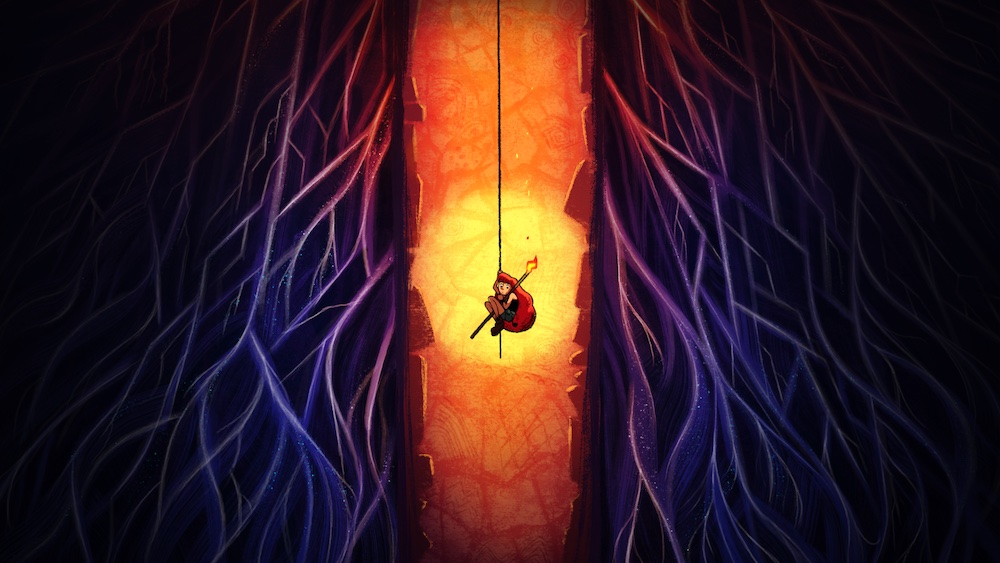
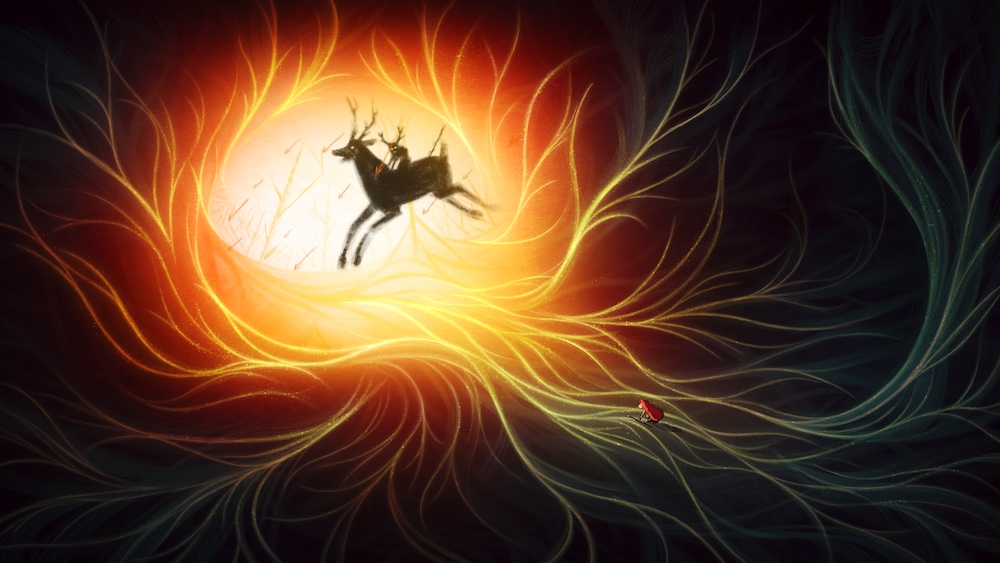
The story centers on Éiru, a young member of the Flame Clan, which is in constant conflict with the tree and stone clans. When her clan’s water mysteriously disappears, Éiru seizes the opportunity to prove herself. The deeper she digs, Éiru finds that to save her people, she must also heal the roots that connect all clans. Éiru has received several festival prizes, including Best Animated Short at the RiverRun International Film Festival, the James Horgan Award at Galway Film Fleadh, and the Animated Grand Prize at the Indy Shorts International Film Festival. All three are Oscar-qualifying awards. Cartoon Contender recently spoke to Ferrari about the film’s production, her inspirations, and the Oscars.
Credit: Éiru (Cartoon Saloon)
Q: How did your past experience prepare you to make your directorial debut with Éiru?
A: Prior to coming to Cartoon Saloon, I also worked in France for a number of years with a number of different directors of indie movies, which allowed me to have a broad view of what directing is with different media, with different situations, with different budgets… 20-plus years of experience on the other side of the barricade helped me a lot when I had to be a director myself. I knew the importance of listening to other people… I knew that comments and criticism, at times, come from a very good place when you trust the people you have around you. I was happy to listen to the other people in the room.
Q: Nature often factors into Cartoon Saloon films. Éiru, in particular, stands out with an emphasis on the elements. Water and earth play key roles here, although the titular character’s hair burns like a flame. Why did you choose fire to represent Éiru’s clan?
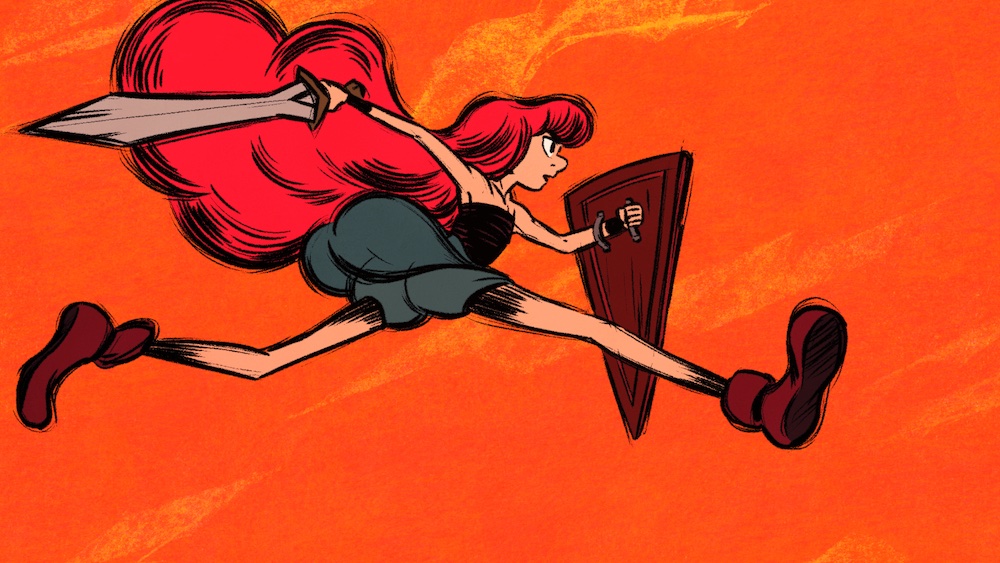
A: For various reasons. First of all, because it's symbolic of an attitude of destruction… but at the same time, it's an element that brings us warmth, and it's the reason why we are as developed as we are… It encapsulates that dichotomy between technology that can help you and can destroy you at the same time… There is also a sub-layer of Irish folklore in the story, especially the goddess Brigid. It's an ancient pre-Christian goddess that is important to Irish people, and its mythology is present in almost every frame of the short. One of our symbols is fire, but also water… The forge is another of her symbols. The forge could be used to craft tools for the land, for growing plants, and also to create weapons. So, it has the same sort of interesting contrast.
Q: Éiru is in the spirit of Cartoon Saloon’s past projects, especially their Irish Folklore Trilogy. Watching the short, I was also reminded of Princess Mononoke. Did that film influence you during the production of Éiru?
A: Princess Mononoke didn't influence me particularly in the production, but it's one of the movies that are most important for me as an animator, but also as a human being… I think it's my favorite movie. When I watched it the first time, I was pretty young. I was starting in animation, and I just thought, “Okay, this is it.” The things you can say with animation are really profound. I understood the potential of the medium, thanks to that movie. Obviously, I always had a real worry and concern about the environment since I was very young. Growing up as a woman, I really understood the confluence, the connection there is between the destruction of nature and the way we behave with women, and with children, and with minorities. There is a real interconnection between those things. You cannot address one without addressing the other somewhat. That's something that has been fundamental in my ideas of the world, in my vision of the world, since I was pretty young. So, yes, it informed myself as a person.
Credit: Éiru (Cartoon Saloon)
Q: What were some other artistic inspirations in crafting Éiru’s character designs, style, and world?
A: Straight ahead animation… I think, is more specific to Éiru than other movies of Cartoon Saloon. It's a much more rough attitude towards the animation… Especially in Éiru, we kept the two worlds a bit separate, so that the style of the clans is much more cut out, even if it's often TVPaint. Sometimes we used Moho, but it's mainly TVPaint… The characters cannot turn, and they're really stiff on purpose, while Éiru is basically animated completely straight ahead, really rough, to the extent that our cleanup department sometimes was roughing up the drawings rather than cleaning them up. We were using the same tool, the same brush to clean up and to rough up so that the cleanup artists could, instead of wasting time retracing drawings, they were doing the in-betweens and adding frames and adding character to the drawings by adding lines and adding roughness to them rather than taking it away. That's something that I think is very personal. It’s my way of drawing. It's also a more traditional, continental, specifically French way of approaching animation.
Q: You can see the impact of folklore in every frame of Éiru. Aside from Brigid, was there another myth or legend that you drew from while telling this story?
A: Éiru itself, the name, it's a goddess of Ireland… The main folk reference is the goddess Brigid. In Ireland, very recently, Brigid became a national holiday, Brigid Day, because finally, we decided to recognize the existence of this feminine deity that is really, really important in Ireland…
I did have an incredible experience of listening to a storyteller who came to Cartoon Saloon thanks to Bard Mythologies, and she did this beautiful storytelling session, like oral storytelling session. Ireland has an incredible oral tradition of storytelling… She came and gave us an example of one of these oral storytelling sessions... It blew my mind… It felt like a river that takes you away into another world and then brings you back where you were, completely changed. It was incredible, just a person talking to you, and you're just transported to another world completely. That is something that I tried to emulate in the short. I wanted the short to feel like that, to feel something that at a certain point brought you somewhere else completely before bringing you back to where you were.
Q: Éiru’s producer is Nora Twomey, who made Cartoon Saloon’s first short, From Darkness, in 2002. Since then, she’s been a director on features like The Secret of Kells with Tomm Moore, The Breadwinner, and My Father's Dragon. What did she bring to the table during Éiru’s production?
A: A lot. Nora is an incredible producer, but also, she's an incredible voice actor. She's an incredible editor. She's an incredible artist in general. And also, she trusts me a lot. She gave me a lot of confidence as well. She gave me all the tools necessary. It's thanks to her the movie exists as well…There was a gap in another production, in a feature film, and the studio decided that rather than leaving people idle or worse, not being able to pay them, they decided to produce this short so that artists could jump off to kill their time doing [Éiru] in this gap. That alone tells you what Nora put on the table.
Q: How did Herstory get involved in this project?
A: Herstory is a non-profit that tries to bring back to life a lot of old stories of women, first of all. Melanie Lynch from Herstory came initially with a big idea… something too big for us to do in a way. It was an idea of having many short films from many places in the world that were bringing back to life old goddesses that were forgotten. And that's where I developed the synopsis. I just wrote the synopsis, pitched it… But we didn’t have time in the slate at that point. It was too big an ordeal with all the other projects. So it seemed impossible. It lingered a bit in a drawer for a while, until there was this production delay on a feature film that we were doing at the time. Nora took advantage and said, yeah, let's bring this goddess back to life then… Melanie ignited the spark of the flame at the beginning.
Q: The film is largely about how it’ll likely be up to a younger generation to usher in a better future. What message do you hope younger viewers take away from Éiru?
A: The message is to be curious about the other people around you, and don't put up walls, and just try as much as you can to create communities that go across the boundaries that adults impose on them... I’m really scared. I’m an expat. I’ve been an expat for a long time. I’ve been working and living abroad. I’m Italian. I lived in France. I live now in Ireland. I have a double nationality. My daughter was born in France from a Dutch father, an Italian mother and now lives in Ireland. And to me, this connection with other countries that I actually live through every day is what allows me to be empathic towards a lot of people. I'm so scared of a world where we live right now, where there is a tendency to use the other as a scapegoat for things that are going wrong instead of looking at ourselves.
Credit: Éiru (Cartoon Saloon)
Q: Éiru has won several festival prizes. What are some standout experiences you’ve had taking Éiru on the festival circuit?
A: It's been amazing. Similar to Éiru herself, I experienced this exchange with people that have different backgrounds, and the coming together of this community of artists from all over the world. Right now, I'm in L.A. I just presented the short at Animation Is Film in these rooms crowded with people from everywhere, like amazing artists, amazing filmmakers. It's very humbling, but it's incredible because people come to me, telling me how much they appreciate the message and they believe in it as well. It opens discussions about the importance of nature, but also the overlapping, the interaction between violence towards minorities, and children, and women, and colonialism, and the destruction of nature, and the extraction of resources. These things are all connected. People think about it a lot. They don't maybe discuss it a lot, but that's what I feel, is that people do care a lot. That warms my heart. It makes you feel less lonely.
Q: Cartoon Saloon has been nominated for several Oscars in the past, including Best Animated Short in 2017 for Louise Bagnall’s Late Afternoon. What would it mean to you if Éiru got nominated for an Oscar?
A: Well, it would be amazing! It would be a dream come true, of course. I don't even go out that far with my wishes. It would be an incredible opportunity to show the short to even more people, which is, I think, what we did this movie for. We just want people to watch it a lot. We have been incredibly lucky as well that GKIDS is releasing Éiru in cinemas across North America ahead of Little Amélie or the Character of Rain, which is a beautiful feature film directed by Liane-Cho Han and Maïlys Vallade.
Q: That brings me to my last question. Éiru will be playing theatrically with the feature film Little Amélie or the Character of Rain. I’d love to see more animated shorts accompany features with their theatrical releases. Do you think this could become a trend?
A: I definitely hope so. When they announced this beautiful thing, that was the first thought I had. It was like, yes, let's do it more often… Short films, especially nowadays, have so much poignance. Also, they're short and they're easy to watch… It's not an engagement for an afternoon. You can watch it quickly. Young children like short formats too… It's such a shame that now there’s such a little economical return for shorts. It's hard to make them, given the fact that they usually don't get sold and they just live in festivals and then end up on YouTube, but they rarely have a bigger audience in the cinemas. I mean, they're stunning… So much artistic research as well. There’s so much new technology, new ideas, and new art forms explored in short films because it's so much easier to do on a shorter format. It would be amazing to see it.
Éiru recently won the Special Jury Prize at the Animation Is Film Festival, while Little Amélie took home the Grand Jury Prize. You can see both in select theaters starting October 31 before expanding to a wider release on November 7.
Nick Spake is the Author of Bright & Shiny: A History of Animation at Award Shows Volumes 1 and 2. Available Now!