A website dedicated to animation, awards, and everything in between.
2026 Oscar-Eligible Animated Short Cardboard Director J.P. Vine Interview

Credit: Cardboard (J.P. Vine, Locksmith Animation)
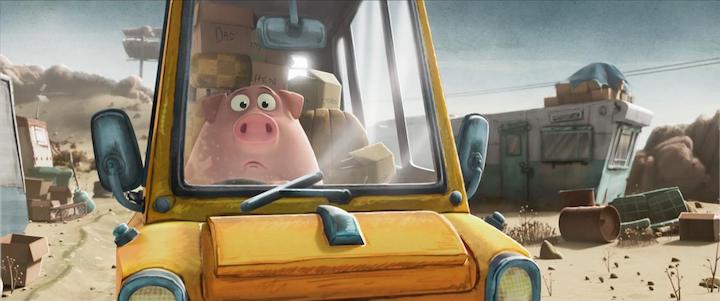
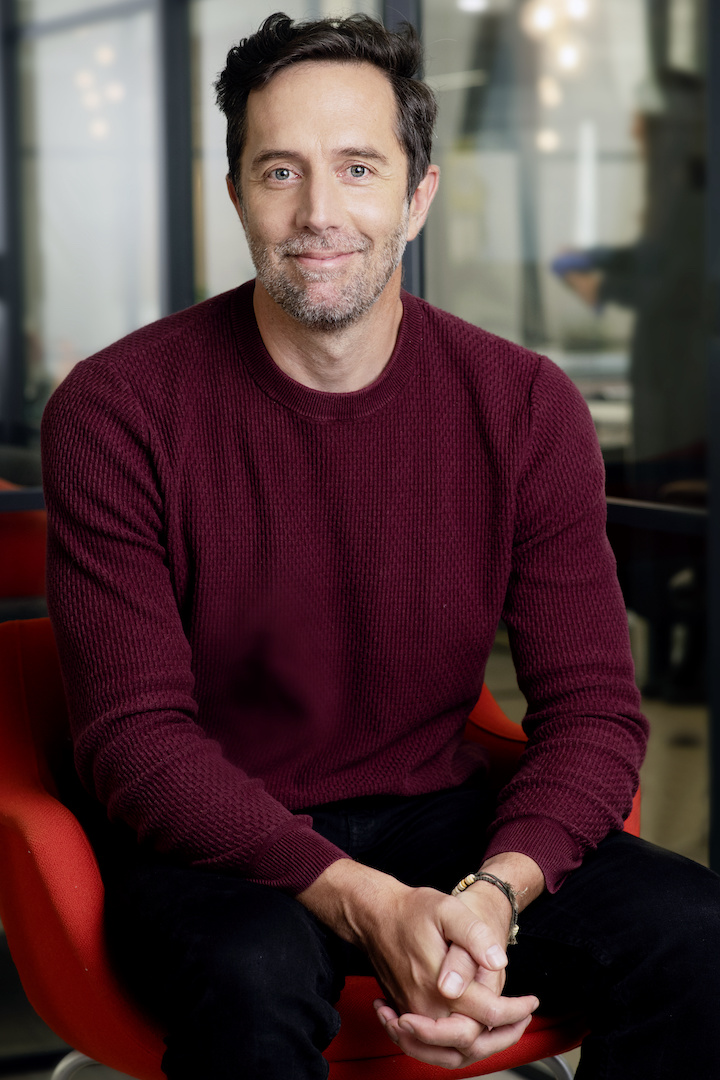
Jean-Philippe (J.P) Vine made his feature directorial debut with Ron's Gone Wrong, which was also the first film from Locksmith Animation. Cardboard marks the first short from Vine and Locksmith, telling the story of a single father and his two piglets moving to a new home following a death in the family. As the father grapples with grief, the kids retreat into their imagination against the dilapidated trailer park backdrop. Cardboard has qualified for consideration at the 98th Academy Awards. Cartoon Contender spoke with Vine about going from a feature to a short, childhood inspirations, and telling this story from a father’s perspective.
Credit: J.P. Vine
Q: Cardboard is your first short film with Locksmith. How did the production differ from your feature directorial debut, Ron's Gone Wrong, which you made with Sarah Smith?
A: Ron’s Gone Wrong was a massive feature machine - hundreds of people, multiple departments, and a long runway. We’re really proud of what we achieved. A short film like Cardboard let me experiment with a tiny group of talents at Locksmith and lead a project that was the opposite in the best way: tiny, scrappy, and deeply personal. With the short, we experimented liberally. We tried 2D, we tried Unreal, and eventually found the right balance using a classic CG pipeline supported by the talents of Ritzy Animation and DNEG Animation. There’s no financial argument to make a short; it’s about passion, mentoring, and experimenting. It was like post-feature therapy for me!
Q: You previously worked at Pixar, which is also known for balancing shorts and features. What are the most valuable lessons from Pixar that you took with you to Locksmith?
A: Pixar films, at their best, are driven by an emotional clarity. I got to work on comedy and thoughtful acting scenes, and always love to bring them together. I loved being surrounded by talent that pushed me to get better. We really pushed on Ron to blend those two on a big storytelling canvas. Pixar reinforced to me that every choice, visual or narrative, should serve one central idea. With Cardboard, that idea was that wonder and play can redefine how we handle change and fear. I also absorbed how much culture matters: small teams, open collaboration, room for experimentation. Locksmith embraced that ethos. They didn’t just greenlight the short - they protected its creative voice and let us make a studio film with the spirit of an independent project.
Q: Do you have any particular childhood memories of playing with a cardboard box that inspired the film?
A: Not so much boxes, but as a kid, I split my time between walking the dog in the woods (my afternoon gig) and my comics. Both were places to let my mind spiral and create random and daft situational worlds. I’m often drawn to the idea that we all have those worlds inside us- no matter how ordinary the circumstance or how we see ourselves. One of those bubbling themes that I’m trying to get out in most of my stories. These piglets are basically running with idea to the ultimate degree!
Credit: Cardboard (J.P. Vine, Locksmith Animation)
Q: The story is split between reality and imagination. How did you decide upon the visual styles to differentiate the two?
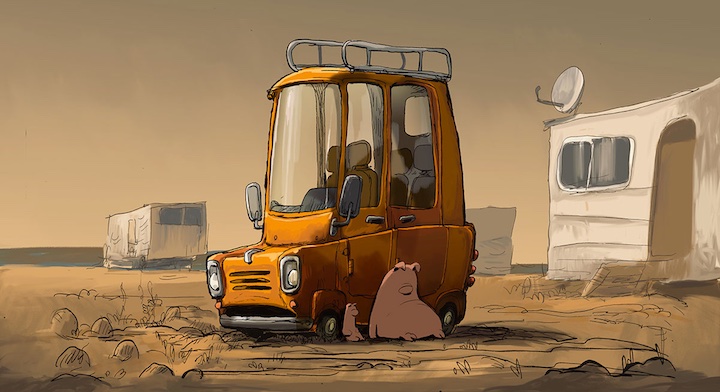
A: The film’s visual language was built around cardboard as the “one idea.” It’s papery, ephemeral - literally the material burdening the dad, and the source of infinite possibility for the piglets. Using those paper textures and watercolor effects, we split their intensity: The real world is dusty and subdued; the imagined world is loose, vibrant, and textural. Ink splatter everywhere! We used cardboard textures, paper grain, inky contours, and hand-drawn effects. Even camera blur was designed to mimic watercolor paint as it bleeds. The look dev was a lovely process of ‘removing the CG’ and layering illustrative effects instead.
Q: This short has one of the funniest Babe references I’ve ever seen. Did you come up with that visual gag?
A: I can credit that to Thomas Lépine, our art director - I always had a warthog pinup in mind, but it’s one of those daft ideas that come up in review and have to go in!
Q: Did you always envision pigs as the protagonists, or did other animals come up?
A: It was always pigs. I’ve been tinkering with images of pigs at play in the woods, in junkyards, and the wilds for ages. I thought it might be a picture book, but as the short started to bubble up in my mind, I thought, “I’ll use these guys!” One of those random ways development ideas combine. As we’ve been developing a show based on the short, it gives me a chance to populate the trailer park with a whole array of critters, down to a conspiracy theorist Gecko.
Q: Grief is a theme of the story. Notably, Cardboard is dedicated to two individuals who were taken too soon: animator Helen Schroeder and Fumi Kitahara Otto, who was a publicist on numerous animated projects. What are your fondest memories of them?
A: Helen was an exceptional story artist and film-maker, who we leaned on whenever the scene required soul and heart. She ‘cracked’ the relationship between Ron and Barney on our first film, building those moments that just breathe- that cause you to lean in. And she did that on every film she worked on. A true artist.
Fumi championed our short and took great interest in the journey of cardboard, and made us all feel empowered and excited to make it. Once you know Fumi, you realize she has done that for so many filmmakers throughout the industry. Her impact across the community has been enormous. She cared so much about stories and the people who make them.
Q: Cardboard has qualified for Oscar consideration through theatrical exhibition. What has it been like sharing the short at festivals like Annecy and Animation Is Film?
A: I’ve always dreamed of premiering a short at Annecy. My French family come from there, and it’s a festival that remains the peak of my year. Watching audiences react, along with my crew and French family, was a life goal unlocked. At Animation is Film, I got to see the amazing reaction of the American audiences that laugh and get invested like no other. There’s a gratitude to all of this- we made something personal, and it’s on its journey around the world. It’s lovely to see how different ages respond to the short - you hear the giggles from the kids and if we’re lucky- the emotional hits on the adults.
Q: The film can resonate with young and old audiences in different ways. Does it speak more to the kid in you or the parent in you?
A: That’s a lovely question. It’s both. The whole plan in story is to strike a duality of vision. Two ways of seeing the world: childlike optimism and wildness, vs the worry and burdens of a struggling parent. I love watching the short with mixed audiences and hearing how it hits different ages in different ways. Dad is at the heart of this story; he needs to learn to see the change in their lives as a new adventure.
I’m trying to remember the child in us, and remind the parent in me to live more, and play more!
Nick Spake is the Author of Bright & Shiny: A History of Animation at Award Shows Volumes 1 and 2. Available Now!