A website dedicated to animation, awards, and everything in between.
2026 Oscar-Eligible Animated Short Psychonauts Director Niko Radas Interview

Credit: Psychonauts (Niko Radas)
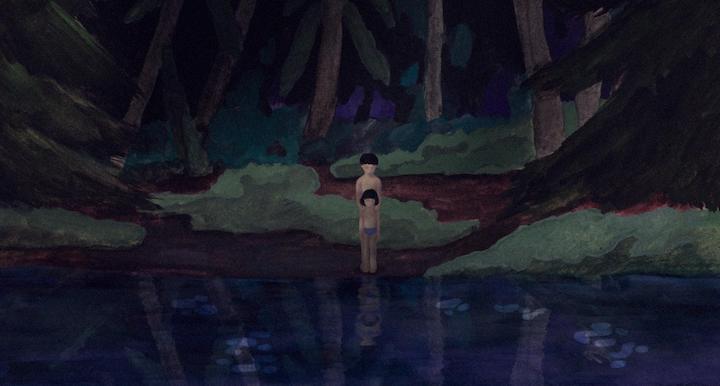
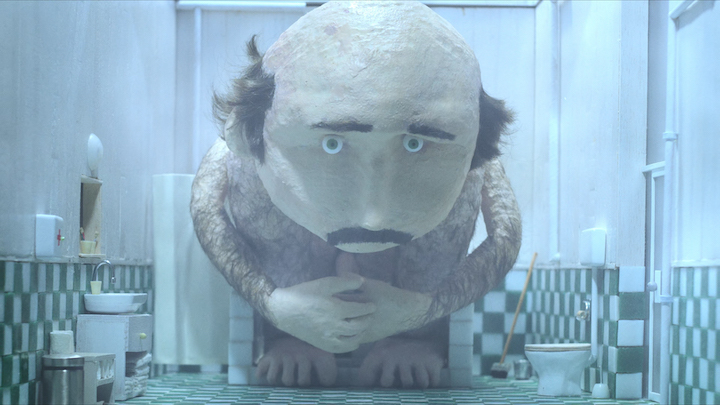
Niko Radas directed the animated short Psychonauts, but it was truly a group project. Granted, you could say that about most films, although few had a production like this one. Psychonauts began with an art therapy program at the University Psychiatric Hospital Vrapče, sparking creativity among seventy-one inpatients. While Psychonauts was “made for recovery rather than recognition,” it went on to become a festival favorite. It even won Best Short Animation at the Guanajuato International Film Festival, making it eligible for the 98th Academy Awards. Cartoon Contender spoke with Radas about his work with Vrapče, the film’s genesis, and healing through art.
Credit: Niko Radas
Q: How did this most unique short come about?
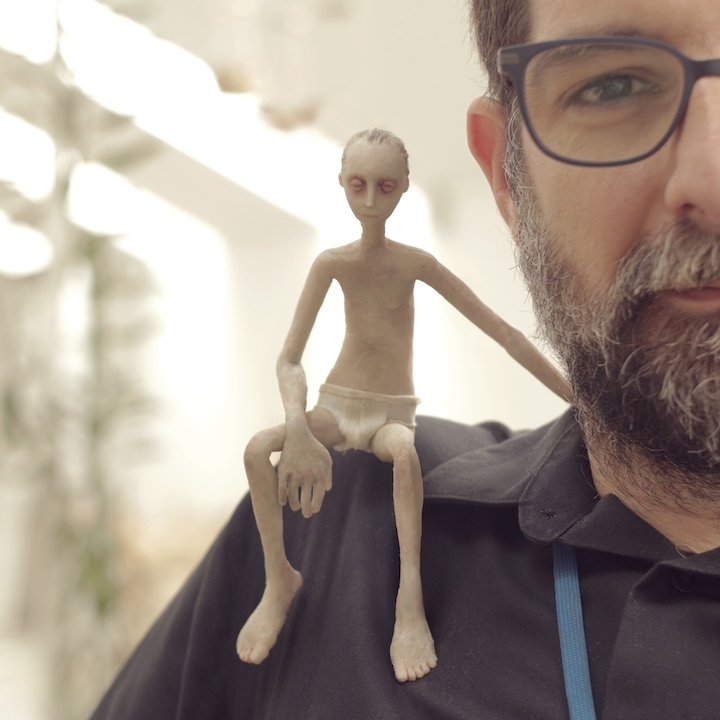
A: The story really begins at Vrapče — the oldest and biggest psychiatric hospital in Croatia, in many ways a synonym for psychiatry in the country. As such, it carries both a long history and a heavy stigma. Nonetheless, it has always strived to improve the quality of care, and in that sense it leads the way for the entire mental-health system in Croatia, and even beyond. Vrapče has always included professionals from different backgrounds, not only medical. I am one of them — I joined the hospital in 2006, straight from the Academy of Fine Arts.
Most recently, I began working more closely with our forensic inpatients, those under mandatory treatment. We do what is formally called art therapy, but in reality it is more of an open, reflective, shared creative activity. We simply like to call it play and rehearsal. That is the setting where Psychonauts were conceived and slowly — five years later — came to life. Through art-mediated play therapy, one shared decision after another, frame by frame, the film found its unexpected shape. That is why Psychonauts is more than just an artistic achievement; it is undeniable proof that beauty can emerge from the most unlikely places.
Q: While you served as the film’s director, seventy-one inpatients from the University Psychiatric Hospital Vrapče contributed to the film. Can you take me through that collaborative process?
A: I have worked at the University Psychiatric Hospital Vrapče for more than twenty years, leading an art-therapy workshop in the forensic unit. Our work includes writing, painting, drawing, sculpture, music — and sometimes animated film. Patients choose how they want to take part, following their own interests. Animation has been part of our therapeutic practice for over fifteen years. It brings people together in a setting that naturally encourages cooperation, communication, respect, and shared effort. What matters most to me is seeing them not just as patients, but as individuals with different roles, interests, and potentials.
I try to observe, ask, and listen more than I direct — letting their ideas and reflections lead the process. Through this kind of creative work, many begin to regain basic skills and abilities: focus, trust in themselves, and ultimately agency. It’s part of their treatment that’s more focused towards rehabilitation and recovery - towards everything they’ll need in their lives once hospital treatment is done. Because therapy is always at the center, my primary role is that of a therapist. When it comes to the film itself, I step into the role of director — and in Psychonauts, with the support of professional filmmakers, that role naturally became more defined.
Q: Did any of the patients have experience in stop-motion or sculpting going into this project?
A: Most, if not all our patients have no experience with the arts, especially in animation. But many are quite good with their hands and various tools. Many, if not all, of them fall in love with model-making because it feels more tangible and hands-on compared to many other activities and therapies. Stop-motion is nearly perfectly placed here: it involves building sets and doing careful, detailed work made up of many small steps — each one a tiny, negotiated decision. That slow rhythm also has therapeutic value as it requires patience and perseverance. And it’s always moving to see how someone’s confidence shifts the moment they realize they can make something so gentle and something they never imagined they could.
What matters to me is how these new skills can reveal creative potentials my patients often didn’t know they had. My job as a therapist is to shape the process so it fits a group of non-professionals, and to make sure each person’s abilities are matched with challenges that feel achievable, not overwhelming.

Credit: Psychonauts (Niko Radas)
Q: How did the project evolve over time? Was there always a clear vision, or was the process more spontaneous?
A: We did not start Psychonauts as a planned project or with the intention of making an animated film. Everything grew from the bottom up — slowly and spontaneously — out of our shared work and reflections. We began by building small wooden houses out of discarded materials — old vegetable crates. After several houses were finished and connected into a kind of settlement, one patient suggested painting them to look like pillboxes. The invented names for imaginary medications and pharmaceutical brands came next. That moment sparked a shift: a world began to appear. I asked simple questions — Who lives here? What happens in this place? — and their answers gradually led us toward the idea of a film. It was an organic process, with the story emerging from what they created rather than from any plan we had at the beginning.
Q: Zagreb Film, which had a hand in award-winning animated shorts like Dušan Vukotić’s Surogat, also worked on Psychonauts. How did they get involved?
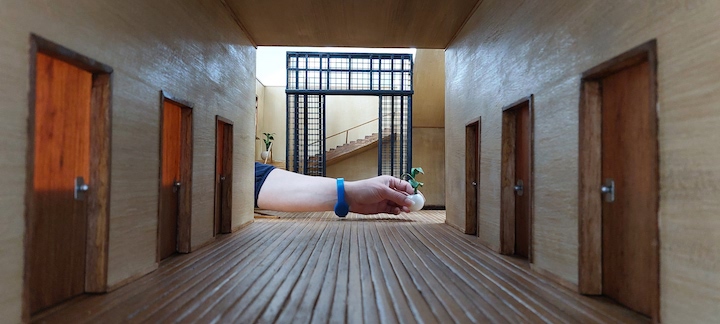
A: Vrapče is, first of all, a public hospital, so when it comes to making an animated film our production conditions are naturally modest. We improvise a lot, finding inventive solutions to challenges that, in professional settings, would require a large budget. For example, we had a 120-second shot with a constant circular camera movement. We filmed it by placing the set and lights on a rotating sculptor’s stand, while the camera remained fixed. Sometimes you must turn the world upside down to get what you need.
Still, there were moments when we needed professional conditions, and Zagreb Film offered their support by providing a studio and equipment. It’s important to say that about 80% of the film was made inside the hospital — I would say in almost guerrilla-like conditions. But that’s also a good thing, scarcity opened place for creativity. For all of us, especially for our patients, the collaboration with Zagreb Film meant a great deal. Suddenly, a major, highly respected production house wanted to work with us — people who are often pushed to the margins and avoided because of fear and stigma. That recognition gave them a powerful sense of value, and it motivated all of us even more.
Q: About three sculptures appear in the film. Were more made for the film that ultimately didn’t make the cut?
A: The patients imagined a story built around three mental states taking on anthropomorphic form — anxiety, depression, and psychosis. They shaped these characters themselves, drawing on their own experiences and translating them into something visual and relatable. During our “casting” phase, two more characters appeared — psychopathy and narcissism — however, the group decided that, much like in real life, those characters might be a bit too difficult to collaborate with and could disrupt the setting. So, they were politely thanked and told they might be considered for a future project. They were not very happy about it.
Q: The film follows its characters through a labyrinth of sorts in what’s staged to look like one continuous take. What was the most difficult moment to capture?
A: The idea of a constantly moving camera actually came from the patients. They wanted the film to feel like a clinical observation — a continuous glide through Pharmapolis, as if navigating the interior of a mind, with synthetic voices reciting medication instructions. A continuous camera treatment makes every moment demanding, but the depression scene was the most technically challenging. It required a full 360-degree rotation in one uninterrupted take. Achieving that without professional equipment, and keeping the motion steady and coherent, was by far the most difficult part of the shoot.
Credit: Psychonauts (Niko Radas)
Q: Psychonauts won Best Short Animation at the Guanajuato International Film Festival, qualifying it for Oscar consideration. What has it been like taking the film on the festival circuit, and have any patients joined you at screenings?
A: Psychonauts has screened at nearly fifty film festivals and at numerous mental-health symposia, gaining recognition for its innovative approach to working with patients with complex needs. It secured two Academy-qualifying honors: Best Short Animation at Guanajuato and Best Croatian Film at Animafest Zagreb. Additionally, its clinical and ethical framework was recently featured in The Lancet Psychiatry.
Because forensic patients are under mandated treatment, they are generally unable to travel to festivals. However, many of them did attend Psychonauts’ first public screening during Croatia’s “Night of Museums,” a cultural event in which museums across the country keep their doors open late into the night. For a hospital — and for patients burdened by social stigma — this was an important bridge to the community. Around a thousand people attended, sitting together with the authors. It was extraordinary. The patients experienced the audience’s reactions firsthand — the surprise, the laughter, the warmth. From a therapeutic perspective, that shared validation was invaluable.
As for the awards, we receive them with real joy. They show that five years of quiet, dedicated work were recognized — and that something created in a closed ward, under modest conditions, could still find its place in the wider film world.
Q: In what ways do you feel film and filmmaking can be part of the healing process?
A: Filmmaking, and the arts in general, offer a unique path to recovery because co-creation creates a space for healing that comes from moving from a passive role to an active one. Instead of just receiving treatment, patients become the authors of their own stories, regaining a sense of dignity.
It really comes down to having faith in someone's potential. When patients see their internal struggles translated into a work of art—and see that art applauded by an audience—it shifts their identity, empowering them to reclaim their agency. In that sense, Psychonauts is an anti-stigma project par excellence. It sends a profound, broader message to the mental health system: that even in the most restrictive settings, we can create space for humanity, creativity, and meaningful recovery.
Nick Spake is the Author of Bright & Shiny: A History of Animation at Award Shows Volumes 1 and 2. Available Now!