A website dedicated to animation, awards, and everything in between.
Solar Opposites Season 6 | Review


Credit: Solar Opposites (Hulu, 20th Television Animation)
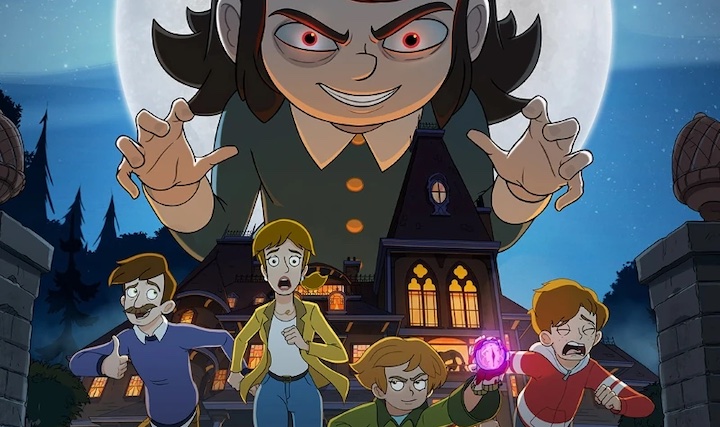
Solar Opposites is to Rick and Morty what American Dad! is to Family Guy. It always stood little chance of having the same cultural impact as its co-creator’s previous show. Over the years, though, Solar Opposites gained a faithful following and developed its own distinct voice. The show also changed voices with Dan Stevens replacing Justin Roiland as Korvo, although it’s hard to imagine a time when the character wasn’t British. For those who haven’t seen the first five seasons, Solar Opposites is best described as an even more chaotic Third Rock from the Sun, centering on a dysfunctional group of aliens who form a family unit on Earth. Where the Solomons (poorly) disguised their true nature, these Shlorpians rub their alien tech in humanity’s face, giving people no choice but to deal with it.
While the Solar Opposites are tasked with terraforming the planet with their Pupa, the aliens get sidetracked as they greedily indulge in Earth’s many temptations. Despite their destructive nature, their anarchy rarely comes back to bite them. In the Season 6 opener, the Opposites find that their infinite finances have been drained, suggesting they may be on hard times throughout these final episodes. It doesn’t take long for things to revert to the status quo, however. Things always go back to normal for the Opposites (or at least normal for them). That doesn’t mean their actions don’t affect others.
Their irresponsible nature has led to two ongoing storylines. One involves a society of shrunken-down people who now reside in the wall like an ant farm. Despite its small scale, the Wall storyline snowballed into a surprisingly epic saga carried by a great voiceover performance from Christina Hendricks. In another serialized plotline, Kieran Culkin’s Glen, the Fast & Furious-obsessed neighbor of the Opposites, is shot into space, where he gets mixed up with the corrupt SilverCops. Just when you think it can’t get any more complicated or ridiculous, Glen is forced to change his name and identity, turning into a doglike creature.
Does the sixth and final season of Solar Opposites tie up all of these loose ends in a satisfying manner? For the most part, yes, although, in typical Solar Opposites fashion, the season is primarily an excuse to partake in more hijinks. That’s not necessarily a bad thing, as we get several humorous stories in which Terry suddenly becomes the most mature member of the household, Korvo gets sold at a garage estate sale, and the Opposites wage war over who came up with a catchphrase. There are also several callbacks for loyal viewers, including a return to the Tree City.
It isn’t until the final three episodes that the show buckles down, trying to wrap up the major storylines. It plays like a student who spent most of the semester doodling in class, only to cram for the final exam at the last minute. That’s honestly in the spirit of the series, even if some of these storylines sprint to the finish line. As is often the case, the episode that mainly centers on the Wall is the season’s highlight. Channeling disaster films like Armageddon, The Core, and Fantastic Voyage, the Wall saga builds to a conclusion that walks a fine line between tragic, bittersweet, and naively hopeful.
It’s an appropriate note for the Wall storyline to go out on, although the episode introduces another mystery that’ll likely never be resolved. If co-creator Mike McMahan were ever given an opportunity, he could probably make a spinoff picking up where this cliffhanger leaves off. Since no such spinoff has been announced as of now, it feels like the writers intentionally left this open-ended. That would be a bit of a troll move, but it’s not like Solar Opposites was ever above that. In any case, the Wall will go down as the best part of the show.
The Pupa’s terraforming and the SilverCops subplots also reach solid conclusions, although both can feel rushed, with the buildup to them not always being focused. I’d say that this season could’ve used an extra episode to flesh out a few details. Ten episodes each clocking in at roughly 26 minutes should’ve been enough, however. The season could’ve dedicated more time to these storylines, but instead chose to indulge in the usual shenanigans. In a way, though, that perfectly sums up the characters we’ve been following for six years. The show was never about the mission, despite Korvo’s commitment to it during the earlier season. It was always about diverting into bizarre misadventures.
Even if Season 6 doesn’t always concentrate on the more pressing matters at hand, it does send each major character off in a fitting fashion. It sticks the landing with more than enough laughs along the way. McMahan’s decision to end the series before overstaying its welcome is commendable, although I’d argue that there’s still potential for some of these characters to live on. Again, the spinoff idea is just sitting there. For now, I’ll miss Korvo’s rants, Terry’s t-shirts, Yumyulack’s selfish disregard for the Wall people he’s imprisoned, Jesse’s occasional moral compass, A.I.S.H.A.’s sass, the Pupa’s innocence, and whenever somebody says, “The Solar Opposites are going to… (fill in the blank).”
Nick Spake is the Author of Bright & Shiny: A History of Animation at Award Shows Volumes 1 and 2. Available Now!