A website dedicated to animation, awards, and everything in between.
Remember My Name Directors Sascha Kempinski & Kirsten Skytte Interview | Oscar-Eligible Animated Short

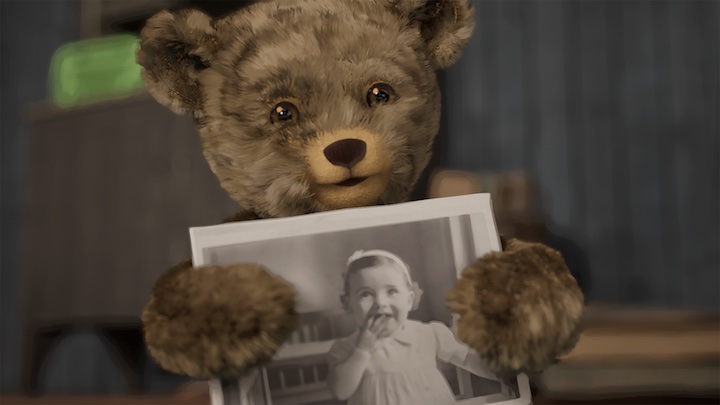
Credit: Remember My Name (M&M Productions)
Remember My Name is based on Sascha Kempinski’s book, The Escape to Sweden. Kempinski teamed with co-director Kirsten Skytte for this Oscar-qualifying animated short told from the perspective of Mo, a teddy bear gifted to a child against a World War II backdrop. The film is just as much about exploring war through a child’s eyes while fleeing from Nazi-occupied Denmark to Sweden. Cartoon Contender spoke with Kempinski and Skytte about adapting the original book, how the story’s historical roots remain relevant today, and more!
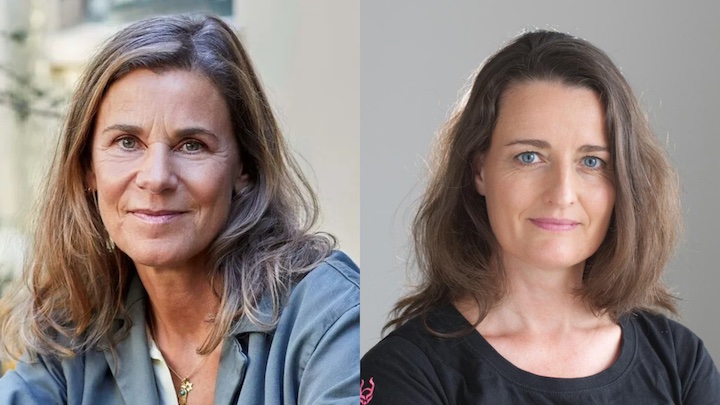
Credit: Sascha Kempinski, Kirsten Skytte
Q: When did you decide to adapt the book into an animated short, and when did Kirsten come onto the project?
SK: The idea of turning the book into a film grew naturally out of the family story and a promise I made to my elderly father. To make sure our family’s history would not be forgotten. I had always felt that this was a story that needed to be shared beyond the pages of the book. Rebecca Pruzan, our producer, was instrumental in bringing the project to life. She saw the film’s potential early on and encouraged me to take the story into animation. As we began developing the film, Kirsten joined as co-director, bringing her extensive experience in animation and visual storytelling. Together, we found a way to translate the book’s universe into a cinematic experience.
Q: How did your family history influence the book and the film?
SK: The story is deeply rooted in my own family history. During the rescue of Danish Jews in October 1943, my grandparents escaped to Sweden, but their eight-week-old daughter - my aunt - was left behind in Denmark. That separation had a profound and lasting impact on our family, and its consequences were felt across generations. Making the film was a way of revisiting this history and exploring the emotional experience behind it. It is not only a story about the rescue itself, but also about separation, loss, love, and the complicated bonds between parents and children. When Rebecca became involved as producer, she immediately understood the emotional power of the story and its potential to reach audiences beyond those familiar with the historical events. That was important to us: to make a film that could connect with people through its human story.
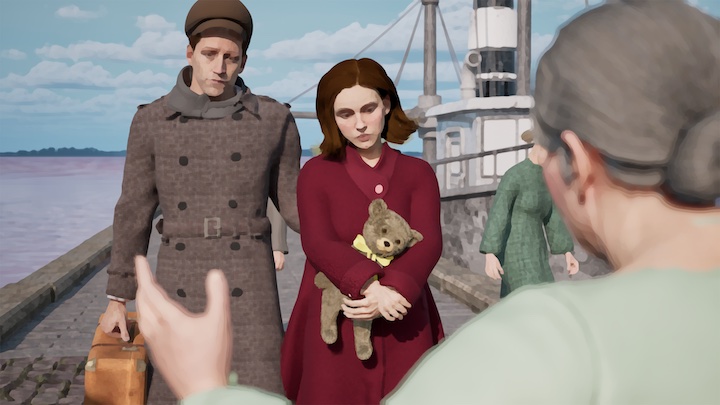
Credit: Remember My Name (M&M Productions)
Q: The book has a very distinctive visual style. How did you translate it into animation?
KS: The illustrations by Sascha’s mother, Jeanne Kempinski, were an important starting point. We wanted to preserve their distinctive visual universe, colors, and atmosphere, while allowing the images to come alive through movement, rhythm, and cinematic storytelling. The film has a slightly displaced quality, as if we are seeing the world through the eyes of a teddy bear. We wanted the animation to feel expressive and emotional without becoming overly realistic. Throughout the process, the three of us, we worked closely as a team to find the right balance between remaining faithful to the book and creating a cinematic experience in its own right.
Q: What animation techniques did you use to bring the story to life?
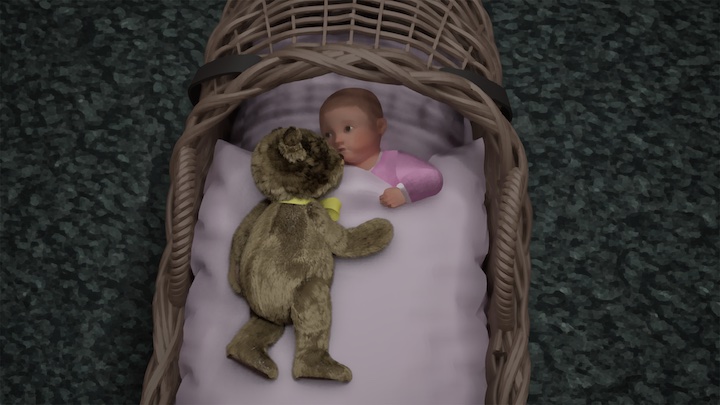
KS: The visual world was created using Unreal Engine, MetaHuman, and Maya. The human characters are stylized MetaHuman characters animated in Unreal Engine, while Mo is keyframe-animated in Maya. We deliberately chose different visual approaches for the human characters and Mo. While the humans and environments are rendered in a subtle, semi-realistic style, Mo is more expressive and present. He serves as the audience’s emotional mirror – an observer, companion, and friend who experiences the world with open, loving eyes. This contrast helps us tell the story through Mo’s perspective and makes his emotional journey central to the film.
Q: Is Mo based on a teddy bear from your own childhood or family?
SK: Mo represents something very universal: the comfort and security a beloved toy can offer a child. A teddy bear can become a confidant, a companion, and a source of comfort when everything else feels uncertain. We wanted Mo to be more than a witness to the events. He is emotionally connected to the child, and his journey allows us to experience the story from a very intimate perspective.
KS: From an animation perspective, Mo was also an exciting character to develop. He has no dialogue, so his eyes, posture, and movements had to communicate his feelings and reactions.
Credit: Remember My Name (M&M Productions)
Q: How did the film expand on the original book?
KS: Animation allowed us to introduce time, movement, and rhythm into the illustrations. We could explore the characters’ emotions through gestures, expressions and small physical details. The film also uses silence and music as important storytelling elements.
SK: The film stays close to the heart of the book, but the cinematic format gives the story another dimension. We wanted the audience to feel close to Mo and the child, and to experience the emotional journey rather than simply follow the historical events. Rebecca was also very conscious of making sure the film could stand on its own, even for audiences who had never read the book. We wanted to create an accessible and emotionally engaging film without simplifying the history or the complexity of the family story.
Q: Sascha, you have also worked as an intimacy coordinator. Did that experience influence your approach to directing?
SK: Working as an intimacy coordinator has taught me a great deal about vulnerability, trust, boundaries, and communication. It has made me very aware of how important it is to create a safe and respectful environment for people to express difficult emotions. Although this is an animated film, those same principles were important in the way we approached the characters and their relationships. So much of the story is told through gestures, looks, and silence rather than words.
Q: The film deals with war, displacement, and children being separated from their parents. Do you see parallels with the world today, and what do you hope audiences take away?
SK: Sadly, the story feels very relevant today. Children are still being separated from their parents, families are still forced to flee their homes, and ordinary people are still faced with choices about whether to help others. I hope audiences leave the film with a sense that history is shaped not only by political leaders, but also by ordinary people making extraordinary choices. And that even in the darkest times, compassion can travel surprisingly far. We also hope the film encourages empathy across generations and backgrounds. Both Rebecca and I were very keen from the beginning that the film should not be seen only as a story about the Holocaust, but also as a universal story about family, separation, compassion, and the choices people make when others are in need.

Nick Spake is the Author of Bright & Shiny: A History of Animation at Award Shows Volumes 1, 2, and 3. Available Now!