A website dedicated to animation, awards, and everything in between.
Dog Alone Director Marta Reis Andrade Interview | Oscar-Eligible Animated Short

Credit: Dog Alone (BAP - Animation Studios)
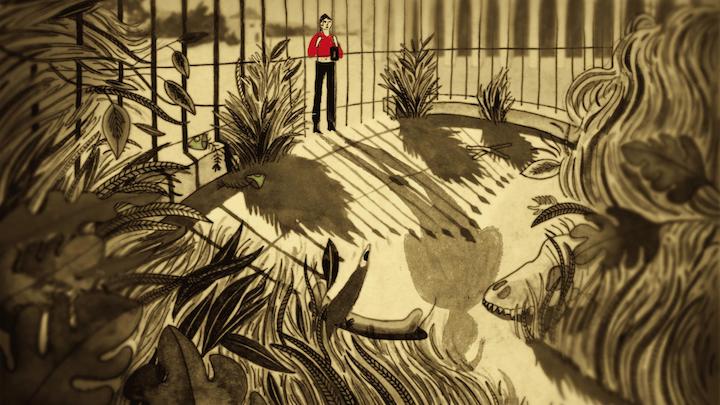
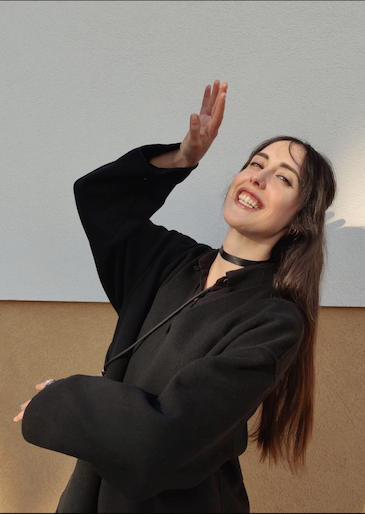
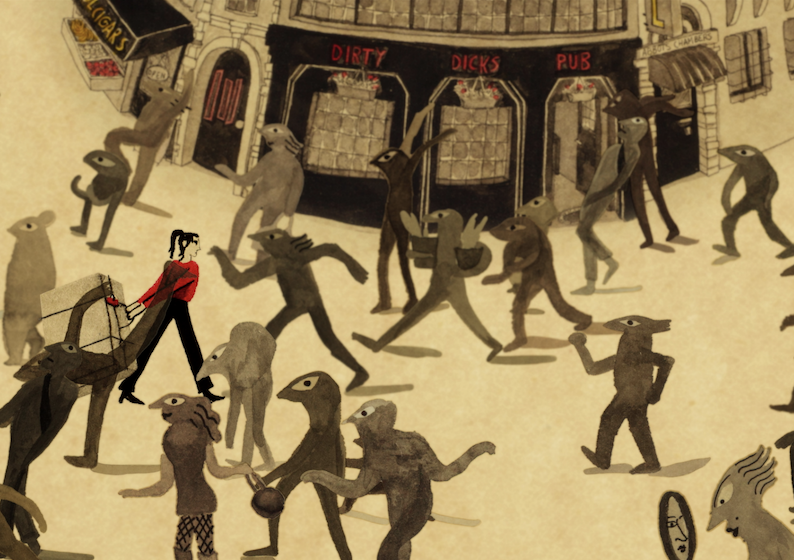
Loneliness is at the center of Marta Reis Andrade’s animated short Dog Alone. The film’s protagonist, also named Marta, returns home from London after a period of isolation. She not only identifies with her grandfather, who feels alone in the last stage of his life, but also with a lone dog howling across the neighborhood. Dog Alone won the City of Espinho Award at Cinanima - International Animated Film Festival of Espinho, and Best Short Animation at the In the Palace International Short Film Festival, qualifying for Oscar consideration. Cartoon Contender spoke with Andrade about her film’s autobiographical nature, the deeper meanings behind the imagery, and more!
Credit: Marta Reis Andrade
Q: The film was inspired by an actual exchange with your grandfather when you overheard a howling dog, and he said, “It’s either longing or hunger. But I think it’s longing.” How long did that memory stay with you before you decided to make a film about it?
MA: Between that conversation and the idea of making a film was almost instantaneous. I left the balcony of my grandparents' house and went to find the dog. It was in that moment I went to find him that I knew that I had a story that I wanted to tell. However, I had always been touched by loneliness. I love to spend time alone, but I hate to not have the choice of meeting friends, or friends who don't want to see me. In London, I felt extremely lonely, but at that time I didn't feel like doing a film about it. It was when I had other perspectives of other beings being lonely that I could have the distance to tell a story about this.
Q: Did you ever see the dog up close, as we do in the film?
MA: I knew the dog was always from across the fence. I would go see him many times. My great aunt had many dogs, and she used to feed them raw meat so they would be violent towards trespassers. I grew up fearing these dogs and admiring them from a distance. When I would visit her, I would take a stick so they wouldn't approach and bite me. My favorite was called Pilot, and he was white with long hair. Once, mean people through poison to these Dogs. From my grandfather's balcony, I watched Pilot die in agony from the poison. I always admired these dogs, but I was really scared to touch them. The thing I regret most about this dog is to not have touched him. I was too scared. We called animal protection to help the dog, and the lady that came touched him and gave him a bath. He was happy for a moment. Soon after, he disappeared. I think from the neighbors, nobody would touch him either, but we all felt his pain of being so alone.
Q: The film is largely made up of greys and browns, while the main character’s red sweater and her grandfather’s blue one stand out. What makes those colors significant to you?
MA: The colors help guide the viewer’s attention and tell us something about the characters. The granddaughter wears red; she has enough life and warmth in her to reach out to her grandfather. He wears blue, and he is the one who needs that warmth. I wanted the colors to help express their relationship without having to explain it in words. Also, in real life, I love to wear red, and my grandfather used to wear blue, so it came naturally.
Credit: Dog Alone (BAP - Animation Studios)
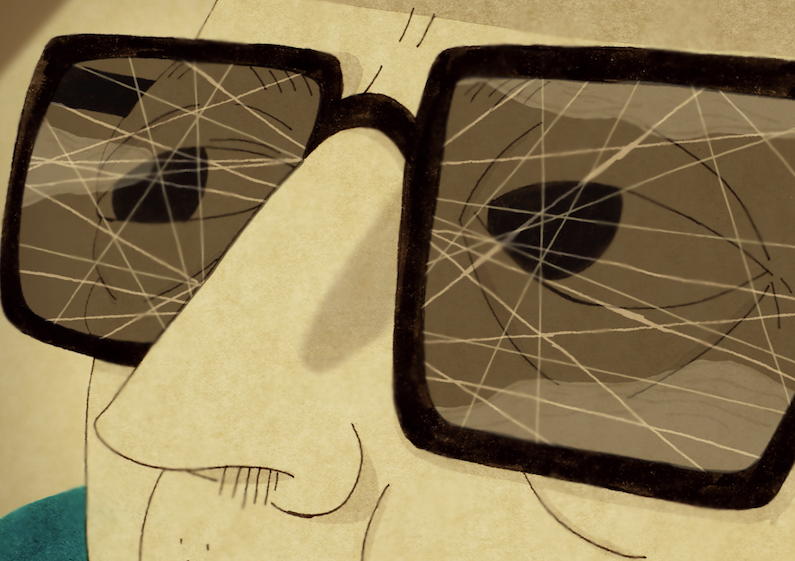
Q: Your grandfather’s glasses have several scratches, which he made himself with pins. Was that detail taken from real life?
MA: My grandfather used to count the planes passing by from the balcony. He enjoyed it. He never actually scratched the planes’ trajectory on his glasses. I wanted to make that habit visual and not exactly literal, so this idea seemed to make it. It was Vasco Sá (producer) that suggested it to me, and I thought it was brilliant. I wanted to convey the idea that he was waiting for my return from London. As I took a while to return, when I did, his glasses would be so scratched that he couldn't see very well through them.
Q: The animation flows like a dog’s hair in the wind. What inspired the film’s aesthetic?
MA: The visual approach grew out of a drawing habit. I often sketch loosely and then use a lightbox to redraw the image on a new sheet of paper. While drawing the dog in the field, I tried putting parts of the background on separate sheets. I loved the transparency and the way the layers seemed to move, and it felt in tune with the dreamlike quality of the story. The technique came from an in-between process of something I already enjoyed doing.
Also, more specifically about the hair, I wanted the glass and the hair to be one and the same, as the dog was kind of a spirit of this house’s surroundings. I wanted to convey this visually. It was a lot of hard work on compositing done by Alberto Remelhe and Inês Munhoz, but I think it worked on the poetry of the film.
Q: Have you ever owned a dog? If so, did that influence your approach to the film?
MA: I have a dog now, and I always had dogs. I already had four dogs of my own, and they are all mentioned and thanked in the end credits of the film. I always loved animals, and since I was a child, I have had a dream of building a shelter. As I was a shy child, they were the best company of my loneliness.
Q: Dog Alone has won two Oscar-qualifying prizes. What has it been like experiencing the film with festival audiences?
MA: It has been very moving. The film came from a personal place, but audiences bring their own experiences to it. Some connect with the dog, while others think about their own families, ageing or loneliness. It’s so special to see a quiet and intimate story travel so far and echo with people in all parts of the world. My hope is when people see something that identifies and resonates, they feel they are not alone, at least for a moment.
Credit: Dog Alone (BAP - Animation Studios)
Q: The film’s central theme is loneliness. Did you experience that feeling while making Dog Alone, or was it the opposite, with several others working on the film with you?
MA: The film was connected to my own experience of loneliness, especially the distance I felt while living in London. When making the film, people made sure I never felt lonely. They were the best people I could have wished to accompany me on this adventure. Besides being very good professionals, they were fantastic friends.

Nick Spake is the Author of Bright & Shiny: A History of Animation at Award Shows Volumes 1, 2, and 3. Available Now!