A website dedicated to animation, awards, and everything in between.
2026 Oscar-Eligible Animated Short The Puppet and the Whale Director Roberto Catani Interview

Credit: The Puppet and the Whale (Roberto Catani)
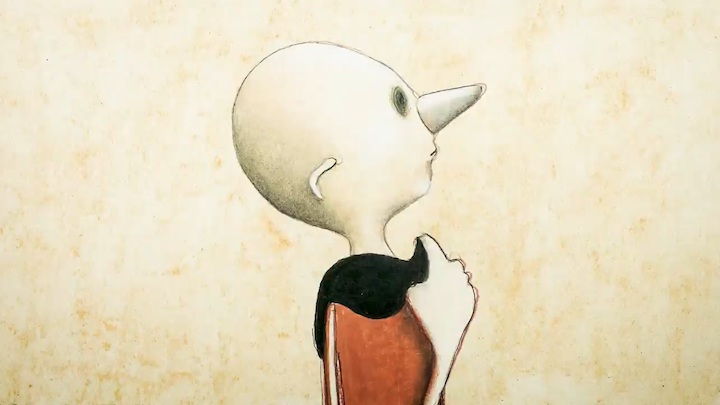
Pinocchio is a tale that we all know, although some versions are radically different than others. Director Roberto Catani’s animated short, The Puppet and the Whale, asserts upfront that this is one version of the story where the puppet doesn’t become a real boy. Given the society that the puppet is born/carved into, it becomes apparent why. The Puppet and the Whale has qualified for consideration at the 98th Academy Awards thanks to its win at the Ottawa International Animation Festival. Cartoon Contender spoke with Catani about crafting the film, its deeper meaning, and making a classic story his own.
Credit: Roberto Catani
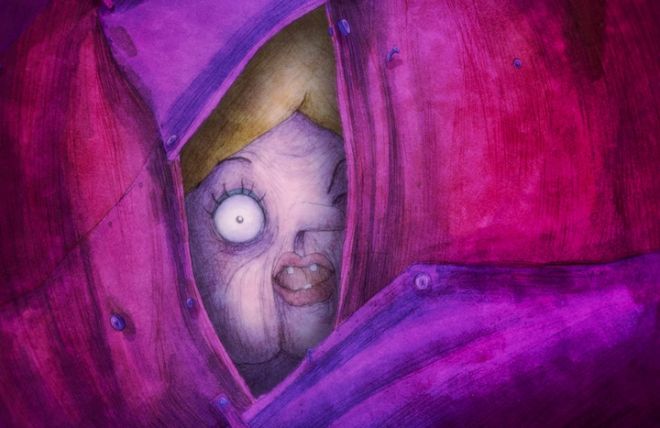
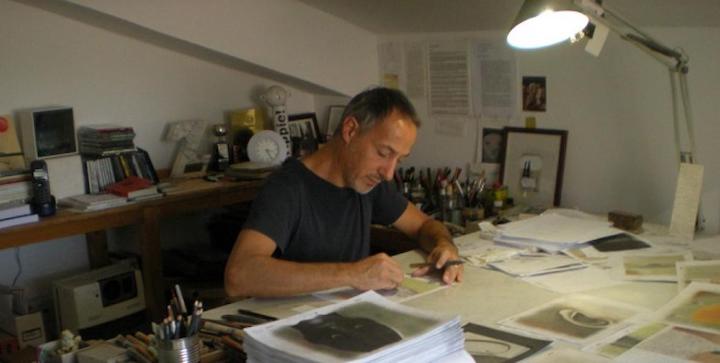
Q: The film was animated on white paper with a mix of oilbar, chalk, pastel, and drypoint. What inspired this distinct style?
A: The film's graphic and formal style is the result of research that began many years ago. It stems from a curiosity to experiment with techniques, to understand the formal, graphic, and expressive possibilities of these techniques, but above all, to explore their potential in animated film. Naturally, this research and experimentation draw on the many stylistic and expressive influences that come from the world of artistic language. Numerous artists, both male and female, and their works have stimulated the research and development of my work.
Q: It’s safe to say that Pinocchio was an inspiration here. What drove you to tell a version of the story where the puppet doesn’t become a child?
A: My work stems from the desire to narrate an act of rebellion against the dominant social and political model today. The idea was, and is, to tell the story of a character who rejects this model. Collodi's story of Pinocchio lends itself perfectly to the tale I set out to develop. The anarchic, rebellious, and disobedient puppet slowly but surely adapts to the imposed model, which requires strict obedience to the rules dictated by adults.
Q: Pinocchio doesn’t become a real boy, although it seems like he isn’t the only one in the short who’s deprived of a childhood. Aside from being made of wood, what do you think separates the puppet from the human children in the film?
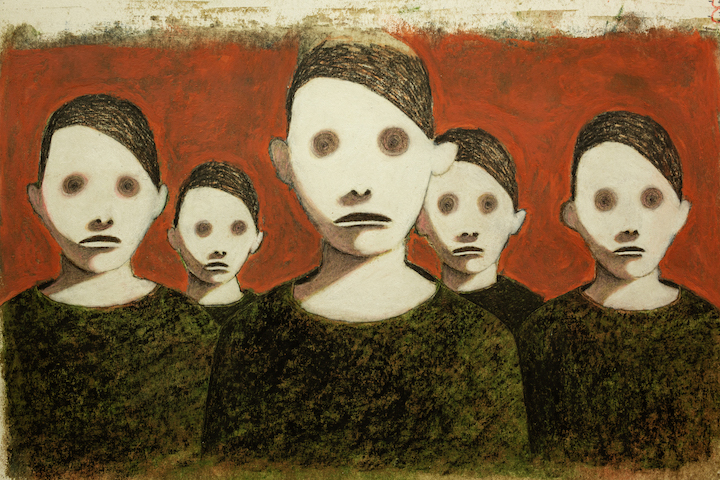
A: As mentioned in the previous answer, Pinocchio stands out from other children because of his instinctive and libertarian attitude. From the moment he is introduced to the other children, Pinocchio refuses to follow the gestures and movements that the others submit to (bowing and referring to the one who dictates the pace of the children's actions). Through his attitude, Pinocchio immediately distinguishes himself from the other children.
Q: What does the whale in the film’s title represent to you?
A: The whale is society itself. It is a cynical, arrogant, and overbearing world. Those swallowed by the whale are forced to live submissively, unable to see beyond the social body that encompasses them.
Credit: The Puppet and the Whale (Roberto Catani)
Q: The Puppet and the Whale is eligible for Oscar consideration through its win at the Ottawa International Animation Festival. What have been some other standout moments from its festival run?
A: It's difficult to answer this question. I rarely attend festivals and don't follow their developments due to my absence. The victory in Ottawa, even though I experienced it from afar, was deeply moving for what this festival represents in the world and in my history as an artist. Ottawa was the first festival I discovered as a teenager, an animation student, through the beautiful films it awarded.
However, I believe that every festival represents a moment of growth for a film. Every festival is an opportunity to interact with the audience attending the screening. What excites me most is discovering that there is an audience that not only appreciates the film but also shares its ideas and content. Starting with the Venice Film Festival, and then also at other festivals I was able to attend, I always met young people, and very young at heart, who fully shared the film's vision, and this is invaluable to me.
Q: The film touches upon conformity and the loss of innocence. What message do you hope audiences take away from it?
A: I hope that the public will appreciate and share the message about the need to disobey the social, political, and economic model that is oppressing us. I hope that each one of us will decide to remove the cloak that conforms us and impedes the self-determination of the individual as a free and autonomous being.
Nick Spake is the Author of Bright & Shiny: A History of Animation at Award Shows Volumes 1 and 2. Available Now!