A website dedicated to animation, awards, and everything in between.
2026 Oscar-Eligible Animated Short Playing God Director Matteo Burani Interview

Credit: Playing God (Matteo Burani)
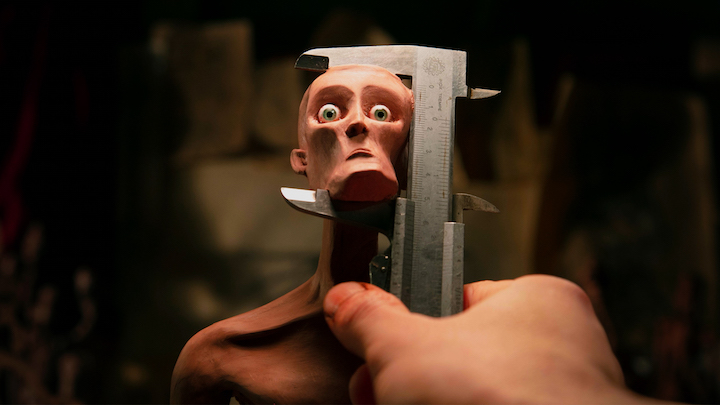
The stop-motion animated short Playing God opens with a clay sculpture being molded by his creator. He stands out from the others surrounding sculptures, all with imperfections. When you’re the odd one out on a shelf of misshapen figures, though, what does perfection even mean? That’s one of the questions at the center of director Matteo Burani’s film, which Arianna Gheller animated. Playing God has won numerous awards, including Oscar-qualifying prizes at the Tribeca Film Festival and Animayo Gran Canaria. Cartoon Contender spoke with Burani about the film’s seven-year production, horror influences, and finding perfection in imperfection.

Credit: Matteo Burani
Q: Stop-motion and body horror go together so naturally that it’s a wonder why more filmmakers haven’t thought to combine them. When did you put two and two together?
A: I never consciously decided to combine stop-motion and body horror: looking back, it was a natural, almost inevitable outcome. Working with this medium, I experimented with many materials, but clay always gave me a unique sensory connection. Shaping it means feeling every imperfection, every deformation. It sometimes feels like the material itself is breathing. At some point, I realized that this material, combined with stop-motion, possessed something deeply human and visceral. Stop-motion forces you to sculpt life frame by frame, and that process is already body horror: a body being born, breaking down, transforming. With Playing God, I simply followed what the material itself suggested.
Q: Artists like Alberto Giacometti and Niccolò dell'Arca were among Playing God’s influences, along with stories like Frankenstein. Your film also reminded me of David Cronenberg, albeit with a clay twist. Was he an inspiration?
A: Absolutely, Cronenberg was an important reference, especially for his exploration of flesh as a site of transformation. In Playing God, I tried to translate that sensibility into clay, remembering that even the fragility of clay flesh can become a poetic gesture. Alberto Giacometti’s influence is also deeply present in the film. His obsession with imperfection, like in that famous interview where he says he could “never make a proper head,” was fundamental: in that frustration, I recognized the heart of my Sculptor character. And of course, Frankenstein remains the foundational myth, the eternal question of the bond between creator and creature.
Q: To an extent, the film also reminded me of the Twilight Zone episode "Eye of the Beholder," which challenges society’s beauty standards. Was this theme present in Playing God from its early genesis?
A: I had never connected Playing God to the “Eye of the Beholder” episode of The Twilight Zone, but in retrospect, it’s a surprisingly fitting parallel. The film was not explicitly intended to address beauty standards or social judgment, but this theme naturally emerged during development. While exploring “creation,” I inevitably confronted its opposite: rejection. A society made of clay deciding who is acceptable and who is not. Fragility, imperfection, and the fear of not being “enough” became organic parts of the film. At its core, Playing God is a story about identity: about who shapes and who is shaped.
Credit: Arianna Gheller
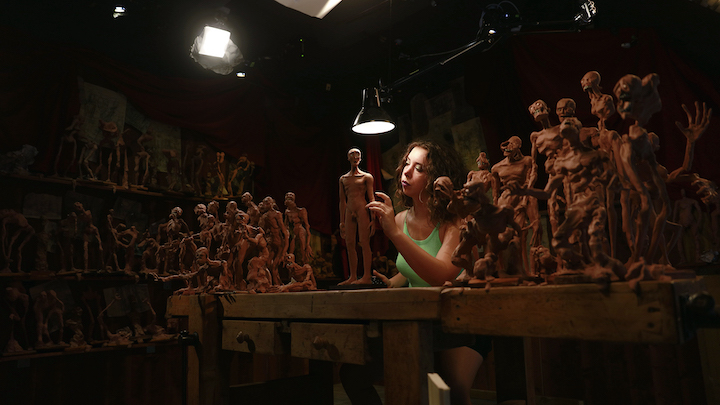
Q: How would you describe your collaboration with Arianna Gheller, the project’s sole animator and producer? Also, are those her hands in the film?
A: Working with Arianna was simply extraordinary. She was the film’s sole animator and also its producer, a rare combination, but in a small independent animation studio like ours, we often cover five or six roles across productions. She brought total dedication and meticulous attention to every frame, animating the film for nearly two years and creating a unique expressiveness for the characters. The hands you see on screen, however, are mine: as the director and pixilation actor, I lent my body to the set, becoming a living part of the clay sculpture while Arianna animated everything around me. Working this way was a true act of trust and harmony: every movement was born from an ongoing dialogue between her artistic vision and my physical performance.
Q: In addition to the film’s central puppet, over sixty were used. How did the team conceive their beautifully grotesque designs?
A: The goal was to create a micro ecosystem populated by creatures with their own stories and personalities, which we called “the others.” Each figure was conceived as a living being, with a name, deformations that tell a story, and distinctive traits reflecting its character and the time spent waiting in that dark workshop. The result is a collection of grotesque yet empathetic creatures: a balance of beauty and strangeness that makes the world of the film believable, alienating, and alive to the audience.
Q: Were real tears and saliva used in Playing God… if so, how exactly was the fluid acquired?
A: Actually, no real tears or saliva were used in the film. That would have been insane. Conceptually, though, the idea conveys the immense effort and intensity of the animation process! To represent fluids, we created a mix of materials like clear glue, petroleum jelly, and makeup remover gel. The challenge was to achieve something transparent, fluid, and animatable frame by frame. Real fluids would have been impossible to manipulate so slowly and precisely, so this solution allowed us to suggest realistic liquids without compromising control over the animation.
Q: The sound design is sure to make any viewer’s skin (or clay) crawl. What can you tell me about that process?
A: The sound design of Playing God was extremely careful, creative, and meticulous. Every sound was designed to support and enhance the world, emphasizing physicality and materiality, making the film immersive and almost tactile. The sound is visceral and descriptive: every element tells a story, aiming to make the audience feel present and savor every moment. Composer Pier Danio Forni created the music by sampling the Ocarina di Budrio, a traditional terracotta wind instrument known for its sweet, distinctive sound, here transformed into a new musical language. The music becomes a second skin for the film, giving soul and intensity to each scene without dialogue, which was a major challenge for us.
Q: Playing God won Best Animated Short at the Tribeca Film Festival and the Grand Jury Award at Animayo Gran Canaria, qualifying it for Oscar consideration. What’ve been some highlights from the film festival run?
A: Playing God’s festival journey has been extraordinary and far beyond our expectations: over 180 international screenings and more than ninety awards worldwide confirmed the film’s impact on audiences. At first, I worried it would be perceived merely as a horror or shock piece, but seeing people grasp the emotional and tragic aspects of the story, connecting with the characters, not just the monsters on screen, was incredibly rewarding. This global success confirms that even a small independent studio can tell powerful, universal stories using unconventional aesthetics that remain true to our artistic identity.
Q: What did this production teach you about perfectionism and learning to embrace imperfections?
A: Playing God was a seven-year project, consisting of over 12,000 frames, with nearly two years of nonstop on-set animation by a small team of six people. Working on such an intense endeavor taught us that the real challenge isn’t technical perfection, but perseverance, dedication, and trust in the creative process. Every difficulty, every imperfection in the film becomes part of the emotional language and authenticity of the story. I realized that believing in your ideas, even against impossible odds, and relying on collaboration and shared passion is what transforms a dream into reality.
Nick Spake is the Author of Bright & Shiny: A History of Animation at Award Shows Volumes 1 and 2. Available Now!