A website dedicated to animation, awards, and everything in between.
2026 Oscar-Eligible Animated Short My Brother, My Brother Director Abdelrahman Dnewar Interview


Credit: My Brother, My Brother (Abdelrahman and Saad Dnewar)
The animated short My Brother, My Brother started with a trip down memory lane between real-life twin brothers Abdelrahman and Saad Dnewar. The two had recently lost their mother, inspiring them to make this film. While loss was always at its core, the project changed significantly after Saad suddenly passed away. Abdelrahman would see the film to the end, keeping his connection to his brother alive. Winning the Golden Gate Award at the San Francisco International Film Festival, My Brother, My Brother is eligible for Best Animated Short consideration at the 98th Academy Awards. Cartoon Contender spoke with Abdelrahman Dnewar about memory, loss, and the brother bond behind the film.
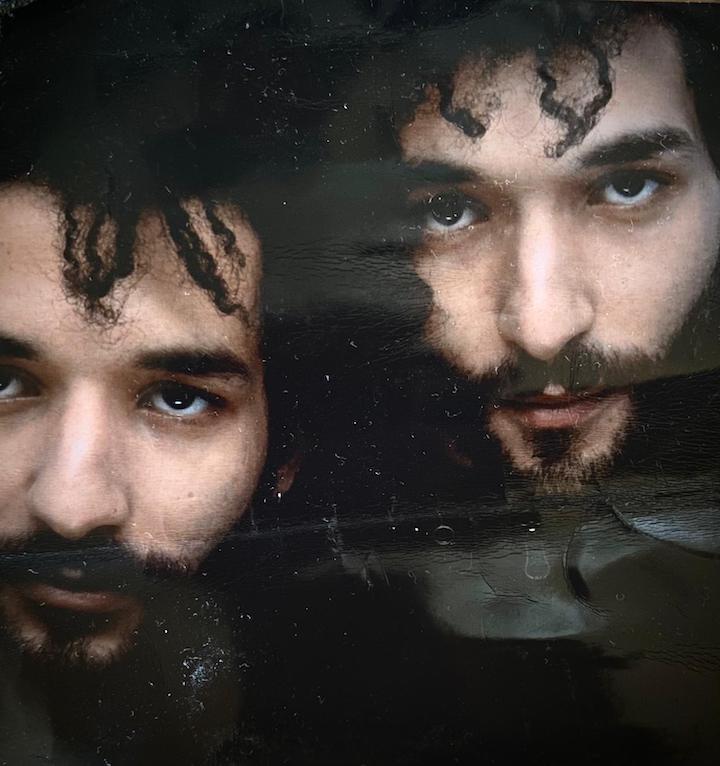
Credit: Abdelrahman and Saad Dnewar
Q: You describe My Brother, My Brother as an “autofiction animation film.” Which parts are autobiographical and which are fiction?
A: This question goes directly to the genesis of the film. My brother Saad and I began developing it after laughing about moments from our childhood, only to realize we remembered them differently. When we searched for an archive, we found almost nothing. There was only a single photograph from a zoo visit: Saad and I with our backs to the camera, staring into an animal enclosure. For years, we believed we were looking at monkeys. When we returned to the zoo to find the location, we discovered it was actually the hippo cage. That kind of shift became central to the film. We wanted the audience to experience memory’s instability by revisiting certain locations twice, just as we did. Once something enters memory, it begins transforming endlessly. Because of that, we treated every moment as autobiographical, even when it was not literally true. The divide between fact and fiction matters less than the emotional truth of remembering. The same applies to the film’s form: live-action blends into animation, my voice blends into Saad’s, and our identities often overlap. We found beauty in that confusion and allowed it to shape the effect of the film.
Q: Memory is a major theme of film, with one going all the way back to the twins’ birth. What’s the earliest memory that influenced you as a filmmaker?
A: One of my earliest memories is drawing from a medical book beside Saad in a quiet corner of our house that felt much bigger then. We grew up in a strict environment, so imagination became our escape. The images in those medical books, like MRIs and X-rays, felt more mystical than technical, almost like portals into the soul. That early mix of the scientific and the spiritual shaped how I see images and how memory seeps into them.
Q: What inspired the film’s style, which includes traditional animation, rotoscoping, real backgrounds, and family photos?
A: There is very little rotoscoping, and only in moments where we wanted movement to feel extremely realistic, to create the confusion that the animation might be real. Most of the characters are traditionally animated in a more stylized way. The hybrid form came from the absence of an archive. Live action grounds the story, while animation reflects how memory distorts the world. We wanted the act of filling the gaps to follow a childlike logic, because we were returning to the moment when drawing was our main form of expression. We blended 2D animation with live action so animated figures would cast real shadows. We also used MRI and ultrasound imagery drawn from growing up in a religious yet medical household.
Q: You started writing this film with your brother, Saad, following the loss of your mother. I was sorry to hear that Saad also died before the film’s completion. How did these two losses shape the film’s narrative in different ways?
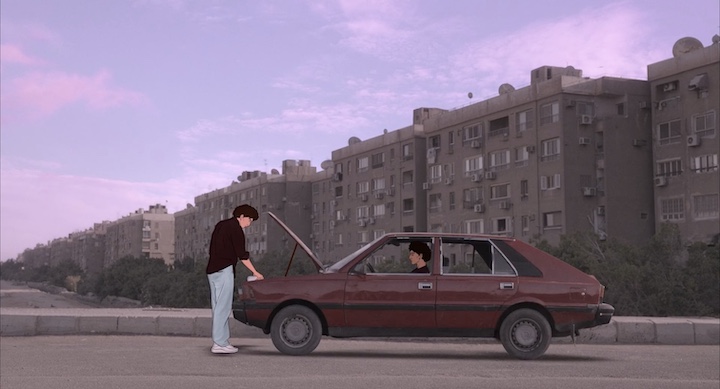
Credit: My Brother, My Brother (Abdelrahman and Saad Dnewar)
A: Losing our mother pushed us to look back at our childhood and examine how we became who we are. It opened the door to exploring memory itself. Saad’s passing reshaped the entire film. After he died, I entered the project differently, constantly moving between remembering and reconstructing. Even the structure reflects that. When one narrator disappears, it mirrors how his death arrived. Twins are shaped by each other throughout their entire life. We learned life by reflection, by seeing how each of us would react to the same situation. When one of us discovers a function, the other takes it on. When Saad died, I didn’t know how to grieve him because I could no longer see how he would grieve me. We often played each other in life, switching roles to help one another, and I wanted to continue that play through the film. This is what compelled me to finish it. It became a way to keep the conversation with him alive. Each act of remembering reshaped our shared past, and the animation became a space where his presence and absence could be felt.
Q: What was the creative process like between you and Saad?
A: Our creative process began long before this film. As kids, we isolated ourselves from our surroundings and daydreamed in our own world. We copied anatomy books, watched films in secret, and reflected everything through each other. Working together as adults felt like returning to that world of drawing, imagining, and redefining reality. We took long walks discussing scenes, then wrote them together. Sometimes Saad started a sketch that I finished; sometimes I added something he transformed. It was always fluid, with identities mixing and ideas merging, just like the memories that inspired the film.
Q: My Brother, My Brother has qualified for Oscar consideration with its Golden Gate Award win at the San Francisco International Film Festival. What’s it been like taking the film on the festival circuit?
A: It has been incredibly rewarding. After Saad’s passing, I truly doubted the film would ever be completed. He was a remarkable artist, and trying to animate in his style felt impossible. But I worked through it, studying his notes and voice, and learning to animate from scratch. Seeing audiences respond to the film, Egyptian audiences finding it deeply authentic and very raw and honest, and international audiences connecting to its universal themes, has meant a great deal. The memory-focused structure, the shifts, the loops, and the complex family dynamics all seemed to resonate with people. It is a delicate balance, and I am grateful it reached them. And that they continue to transform those memories through their different interpretations of what the story means.
Q: How do you think Saad would react to the film’s success?
A: It is very hard to imagine. Throughout the process, I kept asking myself how he would have animated a shot, voiced a line, or finished a sequence. I tried my best, but I will never know if it matches his vision. Not knowing is part of losing him. And for the same reason, I do not know how he would react to the film’s success. I can only hope he would recognize himself in it and feel that his voice continues to live through the differences that remain.
Nick Spake is the Author of Bright & Shiny: A History of Animation at Award Shows Volumes 1 and 2. Available Now!