A website dedicated to animation, awards, and everything in between.
2026 Oscar-Eligible Animated Short Devil's Beacon Filmmakers Interview


Credit: Devil's Beacon/Luz Diabla (Gervasio Canda, Paula Boffo, Patricio Plaza)
Gervasio Canda, Paula Boffo, and Patricio Plaza are the filmmaking team behind Devil’s Beacon (Luz Diabla), the story of a flamboyant urban raver named Martín who makes a surreal pitstop following a car accident, his next destination unclear. A collaboration between Ojo Raro and Lakeside Animation, Devil’s Beacon is eligible for consideration at the 98th Academy Awards thanks to its win at the Guadalajara International Film Festival. Cartoon Contender spoke with the directing trio about the myth of Luz Mala, drawing artistic inspiration from Liquid Television, and what each brought to the table.
Q: Can each of you tell me about your background in animation and how you formed Ojo Raro?
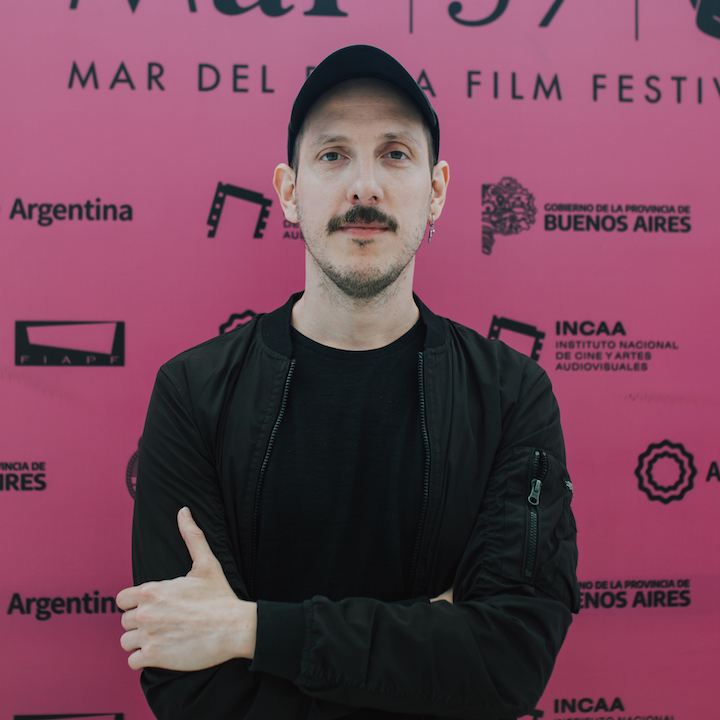
Credit: Patricio Plaza
Patricio: I started working in animation more than 20 years ago. I was very young and obsessed with the medium since I was a kid. I studied cinema and visual arts, but since there weren’t many options in Argentina to study animation back then, I took a few workshops and quickly began working in animation studios. I learned by working on commercials and films. Most of the projects I had to work on were kind of lame, so I decided to work with people I could relate to and began developing my own shorts to express some thoughts and ideas.
The first one was El Empleo in 2008. Working on that film gave me an overall understanding of independent filmmaking, from storyboards to distribution. I had to learn about production, sound design, independent funding, and everything else involved. The film did very well in festivals, and after that, I kept going, changing teams and alliances throughout the years.
As I grew older, I felt the need to work in animation as a medium capable of dealing with difficult topics and diverse genres, with a political and South American twist that I could relate to as a queer person from the global South. That is when I started thinking about Ojo Raro as a platform for this kind of work. I invited Paula and Gerva to be part of it after collaborating with them on different projects and seeing their passion and commitment to both the vision and the hard work required to make this type of animation.
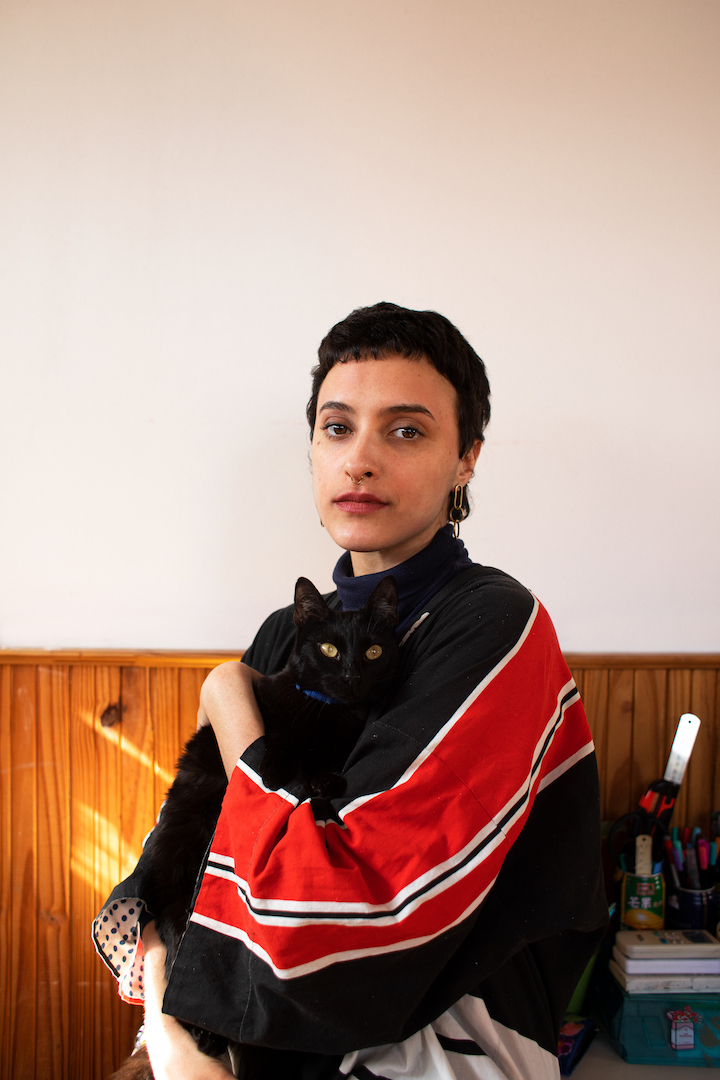
Credit: Paula Boffo
Paula: I’ve been drawing since I was born. No, really! At two years old, I grabbed a pencil and could not let go since then. I process the world around me through the images I create. I studied in a language school as a kid, but went to art workshops on my afternoons, and then I went to an art high school where I learned a lot of technical stuff. I started making comics at 9, and have wanted to work in animation since I was fourteen. Telling stories through visual sequences was my passion, and when I discovered cinema and animation, I fell in love with the possibilities of movement, sound,d and acting. While studying experimental animation in a small school, I took many script workshops for comics and started publishing my stuff independently. So both languages were happening at the same time in my life: I graduated and started working in a TV channel as an audiovisual designer, and at the same time, I was making my own personal comics and some freelance animation work on pre-production areas. Through comics, I developed my own visual identity and language (I published three books and lots of collaborations on different anthologies), and since it has less limitations than animation, I was able to experiment a lot and take more risks regarding politics, gender, and lgbtq+ topics. That’s how I met Patricio: We were both making very intense-social compromised projects on our own, and we shared a very strong political vision about what we do as a whole. Then, I met Gerva, who was working with Pat on Carne De Dios, and it all made sense: I wanted to join them and make a team to do the kind of stories we are telling right now.
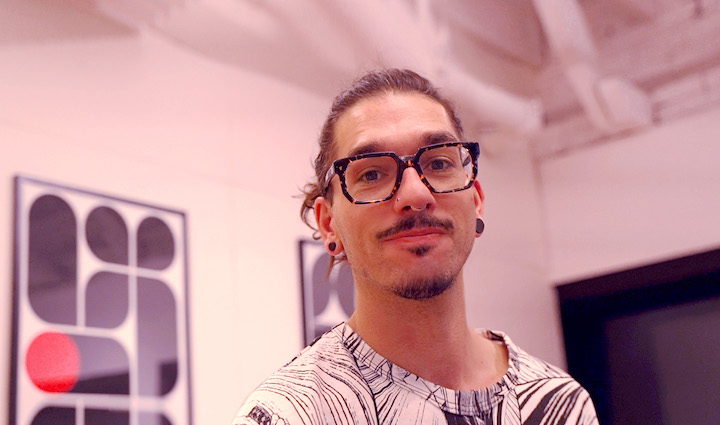
Credit: Gervasio Canda
Gerva: I came to animation from a slightly oblique path. My background is in architecture, which shaped the way I think about space, composition, and how bodies move inside a world. I always drew, but it was through architecture that I understood narrative as something spatial, how design can carry emotion, symbolism, and tension. After graduating, I shifted toward animation and video games, first as a concept artist and later working in more experimental and immersive formats.
A big turning point for me was joining projects that demanded not only visual design but worldbuilding, thinking about a universe’s logic that eventually led me to work at Epic Games as a Senior Concept Artist for Fortnite, where I learned a lot about large-scale pipelines, fast iteration, and designing spaces meant for interaction. Parallel to that, I kept working on independent short films and collaborating with artists from Argentina. When I met Patricio and later Paula, something clicked. We shared a hunger for animation that wasn’t afraid to be messy, intense, South American, and deeply handmade, animation that speaks from our region without trying to imitate the mainstream industry. We collaborated on several projects, and over time, the idea of Ojo Raro became a natural extension of that shared philosophy: a studio where we could build worlds collectively, where the craft is as important as the ideas, and where animation is treated as a form capable of addressing complexity, politics, and have a social impact somehow.
Q: How did the idea for Devil’s Beacon come about?
A: We had the chance to work with Lakeside Animation in a horror short, so we proposed to develop a film based in argentine's folk and local myths, but with a contemporary twist. Gerva proposed to do a film about the Luz Mala, an ancient countryside belief about a light entity that dwells in the Pampas grasslands.
So we added the Ojo Raro "formula": South American, supernatural, queer. We came up with this folk horror trope about an urban huy who goes to a rural place and finds himself dealing with an ancient supernatural entity, which comes to express the conflict between city and countryside, modern and ancient, culture and nature. So Paula and I proposed to create this queer raver character who meets these local Gauchos, also to make some fun of our lifestyle in a city as Buenos Aires, and to reflect upon the contrasts in forms of living. It was a very fast and fluid process.
Q: All three of you were directors and writers on Devil’s Beacon. What was something unique each of you brought to the equation?
A: We try to contribute from our individual experience, but also to nurture a collective path, one that grows through trust, dialogue, and experimentation. But to put into words, Gerva brought the theme, Patricio brought the general plot, and Paula the specificity of the characters. So it was a very organic thing.
For us, creating from Latin America means embracing complexity: the beauty and the chaos, the wounds and the imagination. It’s about transforming contradiction into language, and power into creation. That’s where our strength lies as a studio, but also as a community that believes in art as a way of resistance and reinvention.
Q: How did Lakeside Animation become involved in the project?
A: We met them in 2022 in Annecy, since Gerva is also living in Canada, we wanted to meet with Canadian studios. We immediately felt the alignment with them in terms of interests, and they told us about their series Red Iron Road, a horror shorts anthology.
We were thinking about working on the development of a feature film together but we decided to work on a short that was going to be much smaller at the beginning, just to see how our teams matched. Finally, we pitched the idea for Luz Diabla, and the Lakeside team was totally into it, so we started working very fast on the film with their full support.
Q: How did the protagonist of Martin develop between his conception and bringing him to the screen?
A: After deciding we wanted to make a film inspired by the local myth of La Luz Mala, the three of us began shaping the story together. We started with the idea of a queer character traveling into the countryside and experiencing this supernatural encounter, and from there, each of us added layers to the world. Patricio outlined an initial narrative plot after an erotic dream he had, Paula wrote the script, pushing the characters' development towards a more exaggerated, over-the-top city raver, and Gervasio expanded the gaucho universe and the film’s visual atmosphere, drawing directly from his years living in the Pampas, where he actually witnessed the phenomenon of the light. All those perspectives helped anchor the myth in something both personal and contemporary.
Q: Devil's Beacon almost has an anime-esque aesthetic. The designs also reminded me of Peter Chung’s work on Æon Flux. Was that at all an inspiration?
A: Yes, we draw from all the influences of the different animation styles that we watched when we were younger, and try to process all of that and give something back from our South American, global South perspective. So, of course, MTV's Liquid Television was a huge influence on us, and anime in general. We like to think we can appropriate these animation languages and styles that we were fed and rethink them to bring them closer to our experiences in South America. It is, in a way, a political stand and a response toward animation as a cultural expansionist medium. But we do love the work of independent animators such as Peter Chung, who used the platform of TV in those years to do their own thing. That is so rarer to see nowadays, and in some way we wanted to homage that fierce narrative, thematic, and aesthetic freedom.
Q: The ending leaves us on an ambitious note. Do each of you have a different interpretation of the ending?
Q: We all like to think that it is somehow a happy ending, we wanted to move away from some stereotypes related to queer representation on the screen.
A: What we share is the sense that the characters leave the frame transformed, and maybe more connected than before. There’s a spark of something new being born, a renegotiation of power, identity, and community. And who knows… maybe you’ll get to see where that thread leads when we move forward with a full Luz Diabla series. Let’s see what the future brings.
Nick Spake is the Author of Bright & Shiny: A History of Animation at Award Shows Volumes 1 and 2. Available Now!