A website dedicated to animation, awards, and everything in between.
2026 Oscar-Eligible Animated Short Como si la tierra se las hubiera tragado Director Natalia León Interview

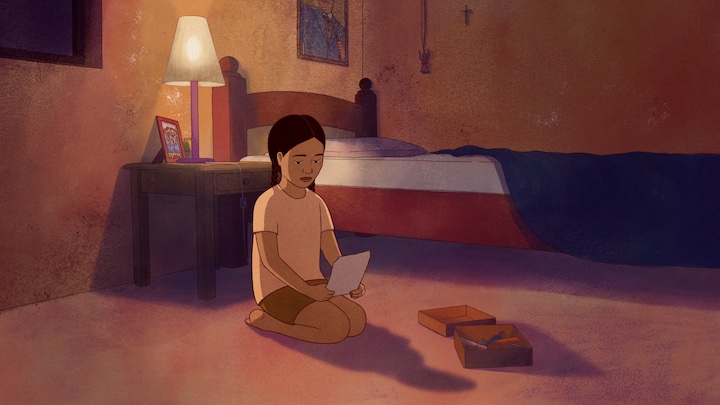
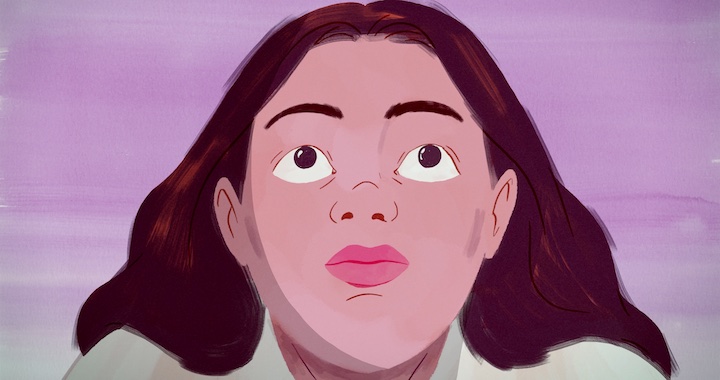
Credit: Como si la tierra se las hubiera tragado, As If the Earth Had Swallowed Them Up (Natalia León).
Natalia León left her home country of Mexico at seventeen. Living abroad, León began to see her upbringing and childhood environment in a different light. Her animated short film, Como si la tierra se las hubiera tragado (As If the Earth Had Swallowed Them Up), provides two perspectives, one nostalgic and the other more knowledgeable. Winning the Jury Award at Sundance, Como si la tierra se las hubiera tragado has qualified for consideration at the 98th Academy Awards. Cartoon Contender spoke with León about making her first animated short, future projects, and seeing her homeland in different shades.
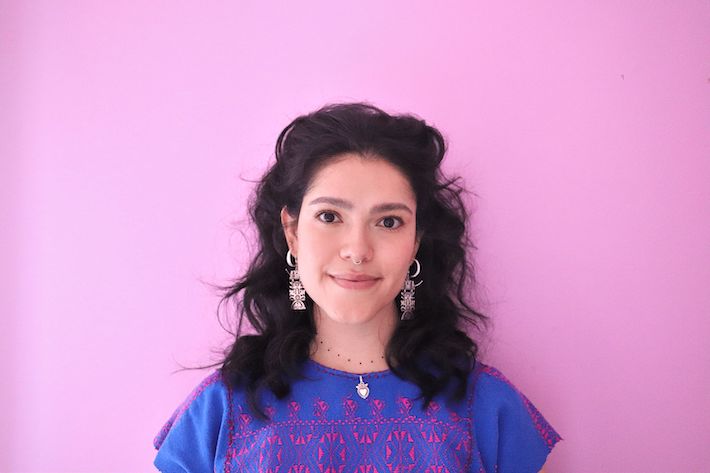
Credit: Natalia León.
Q: You were born in Mexico City. At age seventeen, you went to study in Paris and later in New York. How did leaving your home help you to see it in a different light?
A: I think leaving Mexico was essential to the shift in my perspective. As a child, I was protected by my parents and unaware of the extent of the violence that surrounds daily life in my country. It was only once I began living abroad that I realized how deeply our environment shapes our sense of what is “ordinary”. Living in different cultural contexts forced me to question things that had always felt normal to me. I realized that I had been complicit in that normalization, and that was a painful discovery.
Q: Is the film’s protagonist, Olivia, a reflection of yourself, or do you think she’s a reflection of every young woman and girl who has grown up in Mexico?
A: Olivia is certainly a reflection of myself. She was born from my own feelings, memories, and fears. I wouldn’t say she represents every young woman who has grown up in Mexico. I think in many ways, she is actually fortunate. There are other women and girls whose experiences are closer to those of the other main character in the film. But I think Olivia embodies what it means to grow up surrounded by stories of violence. She represents the countless women who live with this constant threat, even if, like me, they never personally knew the victims whose stories continue to haunt them.
Q: When did you first return to Mexico after studying abroad?
A: I’ve been able to go back a few times to spend time with my family. But the hardest return was the one that happened after I started doing all the research about this topic. For months and months, I had immersed myself in these stories, each one more painful than the last. So that year, when I went back to Mexico, everything felt different.
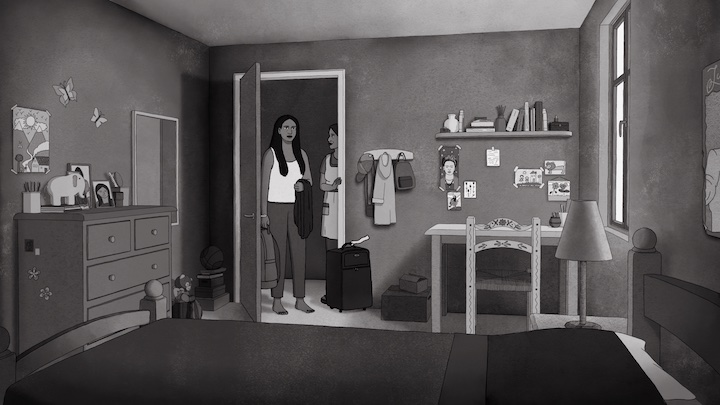
Credit: Como si la tierra se las hubiera tragado, As If the Earth Had Swallowed Them Up (Natalia León).
Q: The older Olivia’s world is draped in black and white. Her younger self lives in a vibrant world of color, although it’s sucked out by the end. Revisiting your home country, do you see it in black and white, color, or a little bit of both?
A: A little bit of both. Mexico, for me, will always exist in vibrant, warm colors. It’s a place filled with joy, love, and tenderness, but those colors now coexist with a shadow of fear. The black-and-white world in the film represents that loss of innocence, that melancholic awareness that danger is always present. When I return, I still see the beauty, but it’s tinted with worry. Both visions overlap, just as they do in the film.
Q: You’ve worked in animation and live-action. Is there a reason why you chose animation to tell this personal story?
A: For me, the story I wanted to tell was always the most important part. While writing the script, I set aside questions of aesthetics and focused entirely on the narrative. Once the script was finished, I realized that I had imagined certain scenes with very delicate, precise movements, gestures, glances, that animation can express with incredible subtlety. 2D animation also allowed me to blend realism with more dreamlike and symbolic imagery, especially in surreal or metaphorical moments like the dream and nightmare sequences. Animation gave me the freedom to represent internal emotions and sensations in a poetic way, and I feel that live action wouldn’t have captured the emotional texture I was looking for.
Q: What’s the most valuable lesson you learned from making your first animated short?
A: I think the most valuable lesson I learned is that perfectionism is my biggest enemy. There were several moments during the production when I felt completely overwhelmed because I didn’t have the time to obsess over all the tiny details. In the end, the most important thing is that the film exists. Even though it isn’t perfect, I’m truly proud that we made it to the finish line, and everything I learned, as an animator, as a director, and as a human, is priceless. I’m still a recovering perfectionist, but I’ve definitely made progress thanks to this film!
Q: You hit the ground running, as the film went on to win the Jury Award at Sundance. Can you take me through that experience?
A: It was overwhelming in the best possible way. As a young filmmaker, I honestly couldn’t have asked for a better world premiere or a better introduction to the chaos and excitement of showing your film for the first time at a festival. The Sundance team, and the friends I made during that week, made the experience very special. When the film won the Jury Award, it was such a surprise that I think I blacked out for a second, haha. Once I came back into my body, I felt an immense sense of honor. Knowing that such a personal and painful film resonated with both the jury and the audience made me feel a little less alone.
Q: The Sundance win qualified the film for Oscar consideration. If it goes the distance, you’ll be the first Mexican person to be nominated in the Best Animated Short category. Rita Basulto’s Humo was the first from a Mexican filmmaker to get shortlisted in 2023, although it ultimately wasn’t nominated. What would an Oscar nomination mean to you?
A: It would be incredibly meaningful, not only on a personal level, but also for the visibility of stories about women in Mexico. An Oscar nomination would help amplify the voices of women who are too often erased, ignored, or reduced to statistics. If the film were to reach that stage, I would hope it helps keep their stories alive and contributes to meaningful change. On a personal level, it would be a reminder that the stories I carry in my head are worth telling, that the silence I speak about can be broken, and that people around the world are willing to listen.
Q: Now that you’ve finished one animated film, what do you have in mind for your second?
A: I’m currently writing several stories that I plan to develop into my next short film and my first feature. Both projects continue to explore themes such as identity, memory, and fear, and they’re mostly inspired by things I don’t fully understand, the things that I’m struggling with in some way. The short film I’m working on is very personal, which makes it a bit challenging. I wrote Como si la tierra se las hubiera tragado convinced that no one would ever really see or read it. Now I’m trying to recreate that same sense of privacy, to trick myself into believing I’m writing only for me, because that’s when I think I do my best work. I’m not sure yet whether my upcoming films will be animated or live action. Probably a little bit of both. For now, while I’m still writing, I’m allowing myself to just have fun with it, and I’ll define the visual universe later.
Watch Como si la tierra se las hubiera tragado temporarily online here.
Nick Spake is the Author of Bright & Shiny: A History of Animation at Award Shows Volumes 1 and 2. Available Now!