A website dedicated to animation, awards, and everything in between.
With Tapes and Toasts in the Car Director Kiana Naghshineh Interview | Oscar-Eligible Animated Short

Credit: With Tapes and Toasts in the Car (ManicMonday, Laïdak Films, Miyu Distribution)
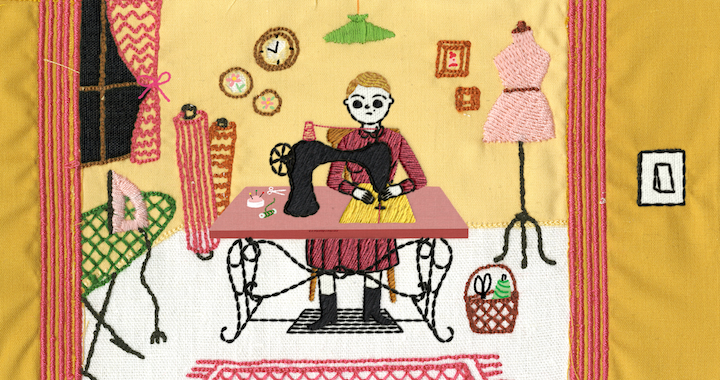
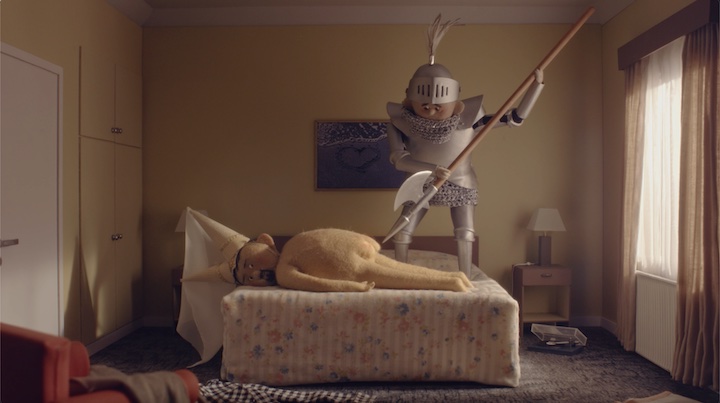
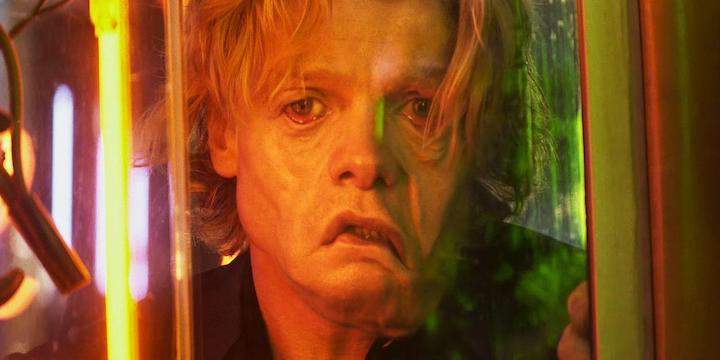
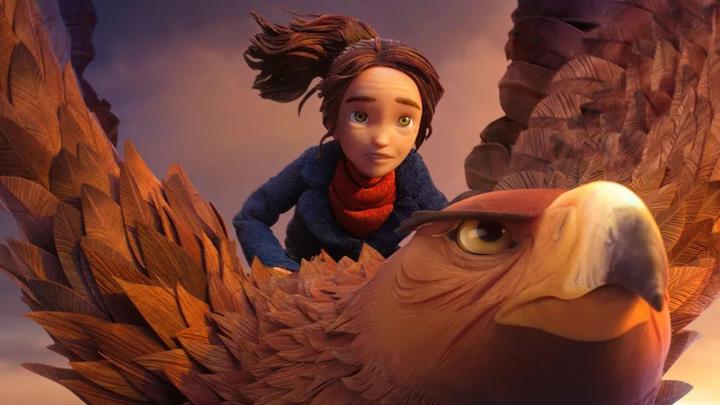
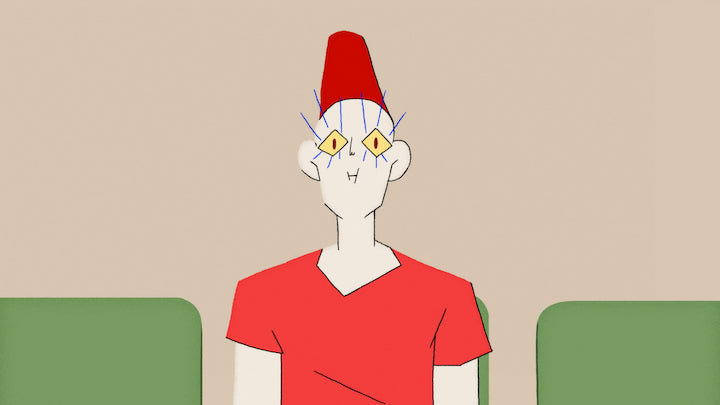
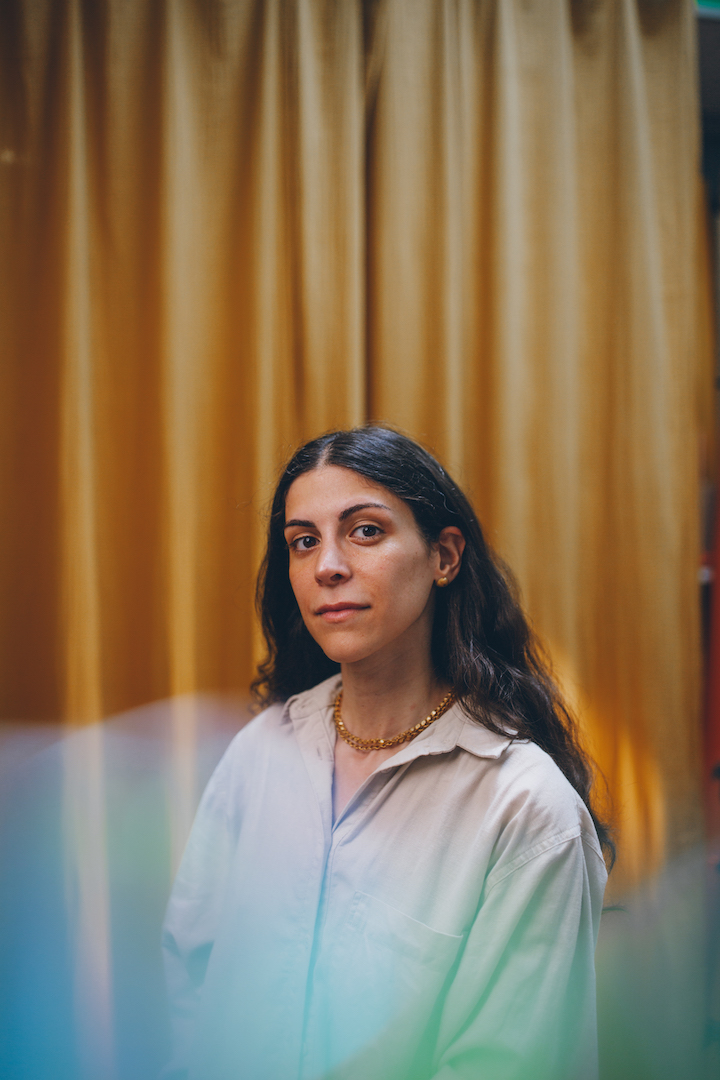
With Tapes and Toasts in the Car, it’s a distinct title, with director Kiana Naghshineh bringing an even more distinct look to the film. Drawing from Naghshineh’s own family, the film centers on Shari, a terminally ill woman who escapes reality with a cosmic flight of fantasy alongside Laika – the Soviet space dog. With Tapes and Toasts in the Car has won at least five Oscar-qualifying prizes: 1) The International Animated Short Film Competition at Chilemonos International Animation Festival, 2) the Grand Jury Prize for Animated Short Film at Seattle International Film Festival, 3) Best Animation Short Film at HollyShorts Film Festival, 4) Best Short - Animation at Short Shorts Film Festival, and 5) the Grand Prix International Competition at Stuttgart Festival of Animated Film. Cartoon Contender spoke with Naghshineh about food, music, and blue eyelashes.
Credit: Kiana Naghshineh
Q: What drove you to explore themes such as terminal illness, mortality, and making the most of our limited time on Earth?
KN: We had cases of terminal illness in my family. It was difficult for everyone to accept. Even though we saw the illness taking over and the body weakening, we still wanted to believe they would be healthy again. One striking experience was meeting my aunt a few months before she passed away. She started talking about the time when she and my mom were in their early twenties, sharing stories only the two of them knew, as if she wanted to make sure those memories wouldn't get lost. When I think of my aunt, I don't think of the sick person, but of the funny woman she and my mom were together. She made sure herself that this is what I think about! This inspired me so much to make this film.
Q: Are Shari and her family based on anyone in particular from your life?
KN: Yes, all the characters are loosely based on people in my life, even the dog Laika. I have a close bond with my family, whom I love, though they can be rude and not very sensitive to each other's feelings. They are the way they are, annoying flaws and all, but lovable. I think that's quite relatable. Many people have told me that the mom or grandmother remind them of their own. I think I was able to nail their characters because I know people like them in real life.
Credit: With Tapes and Toasts in the Car (ManicMonday, Laïdak Films, Miyu Distribution)
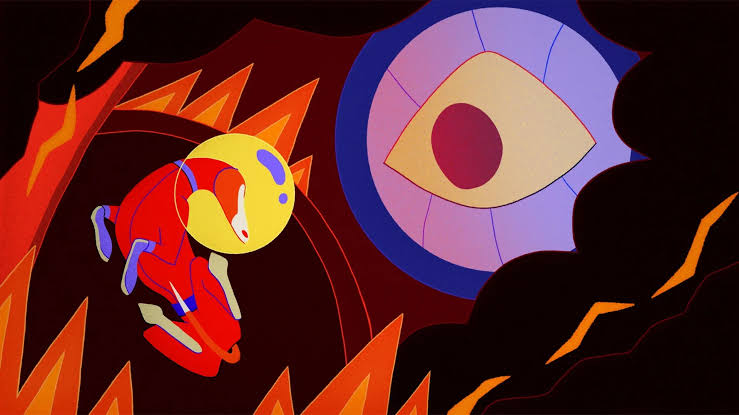
Q: Every visual in the film pops out, from the character designs, to the backgrounds, to the color scheme. What were your inspirations behind the film’s aesthetic?
KN: I wanted to create a sense of nostalgia, since this reflects the feeling of something lost from the past that we can't recreate anymore. So I used objects like mixtapes or a Game Boy from the 90s that make me nostalgic. Another significant inspiration was those old Soviet propaganda posters and stamps featuring Laika and space exploration from the 50s. The colors were beautifully bold and saturated, the shapes clear and graphic. All this inspired the visuals of my film.
Q: Perhaps Shari’s most distinct physical feature is her blue eyelashes, which keep falling off. I haven’t seen a lot of characters with blue eyelashes (even fake ones). Is there a deeper symbolism to the color?
KN: Shari lost her real eyelashes due to her illness. Wearing a cap and fake eyelashes is her way of trying to hide it. I wanted them to look unnatural, as if they don't belong on her face. The blue color looks synthetic against her skin.
Q: Most people these days associate the name Laika with the stop-motion studio, unaware that the name was borrowed from the dog whom the Soviet Union sent into space. What inspired you to make Laika a central figure here?
KN: I've always been interested in astrophysics, and of course in Laika's story. I once read an article about one of the scientists who, decades later, said he felt guilty and regretted sending her into space. They knew she would die and never come back. In a way, Laika was in the same situation as Shari: both faced their own death with a countdown running. So I wanted Shari to have Laika as a companion who guides her through that process.
I'm aware that younger people in particular might not know Laika's story, so I made sure the film still works without that background, though I think it still is stronger if you know her.
Q: Music - not to mention mixtapes - plays a key role in the film. What was it like collaborating with composer Ziggy Has Ardeur - whose name I believe appears on a boombox?
KN: I've been a fan of Ziggy's music since I was a teenager, when he played in a glam rock band in my hometown. Once I started making films, I figured a local network would be nice, so I approached him years ago, before I even had a project. His work is wonderfully versatile. I love how he sneaks little experimental sounds into his beautiful melodies, just to break them apart. That fragility was perfect for Shari's story. He sent me the meditation track for Shari and Laika's journey early on, and it helped me find the film's rhythm. And he's got range: he also produced the hip hop tracks the brother listens to. I added his name on the boombox as a little Easter Egg.
Credit: With Tapes and Toasts in the Car (ManicMonday, Laïdak Films, Miyu Distribution)
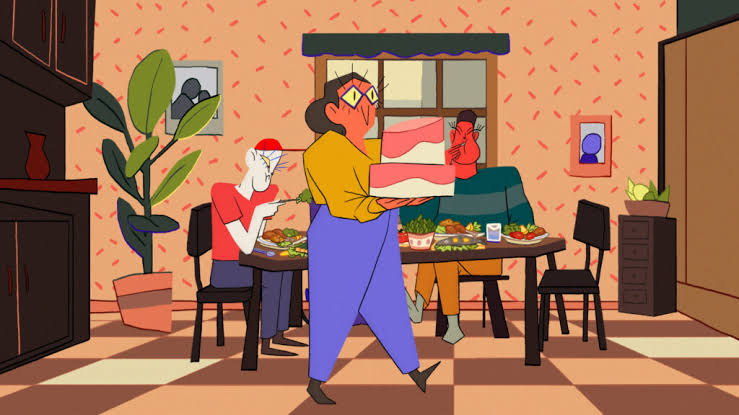
Q: Food is another important face of the film, and not just toast. As someone who’s dealt with serious illness myself, I know what it’s like being surrounded by delicious-looking food that your stomach just can’t handle. How has food impacted you on a personal level and as a storyteller?
KN: Then you know exactly how Shari feels. Food is the mother's love language, and my real mom's too. She even gets offended when I'm too full to eat. Shari's mom wants to show her love through all the food, but Shari only feels the pressure to eat it. It's a moment where both struggle to meet each other's needs. It's something they both need to reflect on and do better at by the end of the film.
Q: One of your previous films, A Blink of an Eye, got nominated for an Annie Award. It was a finalist for the Student Academy Awards and BAFTA Student Film Awards. I wouldn’t be surprised if With Tapes and Toasts in the Car made it to the Oscar shortlist next. What has the journey between these two films been like?
KN: I had to learn how the industry works. A Blink of an Eye was my last student film. At film school, you live in a safe environment where your only "job" is to make the film. Of course, I had side jobs to make a living, but no further responsibilities.
Out in the real world, it's different. You need staying power to put the funding together. Producers and broadcasters come on board and want you to change details in the story. I had to learn where to compromise and where to stand firm.
Overall, I had to adjust to these new circumstances and responsibilities "as an adult." But I had great support along the way, from family and friends, but also from many directors who had been through similar experiences and could give me advice. I met most of them during the festival tour of my previous film or at residencies I attended.
Q: When someone has an illness they know they’re not going to overcome, it’s easy to feel isolated, almost as if you’re stranded on the moon. Of course, losing a loved one can be just as emotionally draining, which your film also exemplifies. While the characters find they aren’t alone, it’s still like they’re drifting through space. How did this metaphor come to you?
KN: A cancer cell can be tiny inside our bodies, but in the end it can grow bigger than us and end our lives. The sun is just a small yellow dot in the sky, but it's actually brutally huge, and it burns your skin even though it's so far away. As humans, we are tiny, irrelevant specks of dust in the universe, but to our loved ones, we are big and important. After all, we are all made of the same chemical reactions, atoms, and molecules. Somehow, everything is connected. The family will be too, even if they are apart in space.
Thanks for the great questions, and all the best, good health and good appetite to everyone!

Nick Spake is the Author of Bright & Shiny: A History of Animation at Award Shows Volumes 1, 2, and 3. Available Now!