A website dedicated to animation, awards, and everything in between.
Minecraft & Mufasa | When Oscar Darlings Become Directors For Hire

Credit: Warner Bros./Walt Disney Studios Motion Pictures
Along with his wife Jerusha Hess, Jared Hess received an Oscar nomination for the animated short Ninety-Five Senses. This independent piece told the poignant story of a death row inmate (Tim Blake Nelson) about to receive his last meal. In just over ten minutes, the narrator’s life flashes before our eyes. His recollections range from pivotal life moments to the little things we often take for granted. Unpacking his memories with six animation styles, the short proved stimulating in more ways than one. Although it lost the Oscar to War Is Over!, Ninety-Five Senses emerged as the clear favorite on Film Twitter, leaving cinephiles eager to see what came next.
Then the teaser for A Minecraft Movie was released…
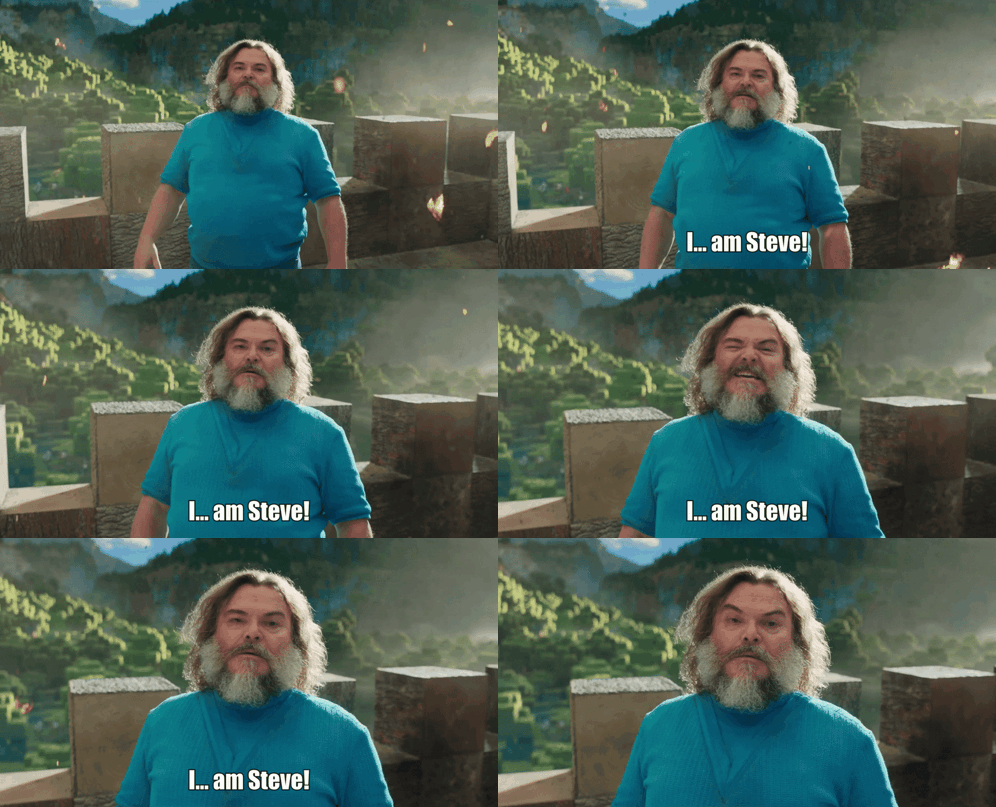
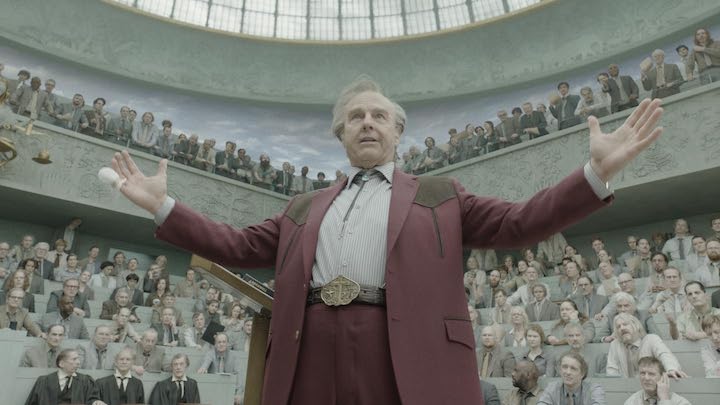
In all fairness, Jared Hess is a welcome choice to direct A Minecraft Movie. Hess broke out with Napoleon Dynamite, a film light on plot, but heavy on quirky charm. The same can be said about the Minecraft video game. A Minecraft Movie opens in a typical Jared Hess small town where landlords own llamas, a kid builds a jet pack on a whim, and a giant potato chip mascot looms over the commoners below. For its first act, A Minecraft Movie is a fun time. Ironically, the film gradually loses much of that appeal once we arrive in the Minecraft world. This is where it starts to feel like a corporate product made by committee.
One can easily see executives giving notes. Jack Black is in every other video game movie. Cast him as Steve and have him sing a song that’ll hopefully be the next “Peaches.” Warner Bros. needs to keep Jason Momoa busy until we get around to doing that Lobo movie. Make him this film’s comedic relief (even though Black should already have that covered). We need two kid characters because that’s our target demographic… and also throw Danielle Brooks in there for some reason. While few likely expected A Minecraft Movie to be a masterpiece, there was potential for something more.
A Minecraft Movie sets up an emotional arc for siblings Henry (Sebastian Hansen) and Natalie (Emma Myers), who have recently lost their mother. The film could’ve explored how video games are sometimes used as an outlet to cope with grief. Escaping to a fantasy world is one way to combat loss, but eventually, we need to confront reality. Considering how Hess tackled death in Ninety-Five Senses, he could’ve pulled this storyline off. Rather than take that route, the mother is immediately forgotten as our characters embark on a standard quest involving MacGuffins, Easter Eggs, and boss fights with few laughs along the way. By the time we get to the overblown action climax, A Minecraft Movie no longer feels like a Jared Hess movie. The studio is steering the ship with Hess going along for the ride.
Hess isn’t the first indie filmmaker to go from the Oscars to director for hire. J. C. Chandor went from scoring a Best Original Screenplay nomination for Margin Call to directing Kraven the Hunter, the final nail in the coffin for Sony's Spider-Man Universe (fingers crossed). Robert Zemeckis went from Oscar winners like Back to the Future, Who Framed Roger Rabbit, and Forrest Gump to Razzie magnets like The Witches and Disney’s Pinocchio remake. Months after winning an Oscar for writing Women Talking, news broke that Sarah Polley would be directing a photorealistic remake of Bambi, which has thankfully been shelved (for now). Then there’s Barry Jenkins, who went from winning Best Picture for Moonlight to directing Mufasa: The Lion King, a prequel nobody asked for, but would inevitably make bank thanks to brand recognition.
Whenever one of these IP-driven projects is announced, we cringe, but the optimist in us always says the same thing. “Well, maybe the director will elevate it.” Studios aren’t pursuing these directors because they want them to leave a unique signature, however. They just want their names attached for marquee value and something resembling credibility. The director may have input on some elements, but they’re essentially cogs in a machine. If the studio wants a certain star based on their large social media following, the visual aesthetic to match other entries in a cinematic universe, or the script to just recycle dialogue from its animated predecessor, the director doesn’t have much veto power.
When you make an independent film, it’s like your child and you’re going to do everything in your power to ensure it grows up as you see fit. When you make a big-budget studio picture, you’re like a teacher and the project is a student. That’s not to say teachers don’t go to bat for their students, but they know if the parents or school board don’t agree with your teaching methods, there are two options: get replaced with someone else or fall in line while still trying to get your student on the right path. Sometimes, the student lives up to their potential despite others standing in their way. Other times, that potential is wasted, and the teacher can’t help but feel at least partially responsible.
Not every studio picture succumbs to executive meddling. Warner Bros. and Mattel uncharacteristically gave Greta Gerwig a fair deal of creative freedom on Barbie. Unlike superhero movies or live-action Disney remakes, though, Barbie didn’t have a proven formula to copy and paste. None of the suits at the top knew how to make Barbie a surefire hit that would bring in every demographic. So, we’ll let a trendy director figure it out.
Barbie was an experiment that paid off, but it’s given Hollywood another formula they’ll surely try to replicate. If the industry learns anything from Barbie, it probably won’t be that we need more auteur-driven blockbusters. It’s that we need to make a dozen other toy movies exactly like Barbie. Gerwig isn’t immune to the soulless studio system either. Let’s not forget Gerwig has an off-screen “additional literary material” credit for the live-action Snow White remake. Hopefully that doesn’t make her eligible for Razzie consideration.
Whether or not the director has creative control, Minecraft and The Lion King are billion-dollar franchises. You can’t blame Hess and Jenkins for wanting a piece of those pies. Some might call this “selling out.” In reality, it’s survival. Just because your independent movie got nominated for or won an Oscar doesn’t mean it left a huge dent at the box office. Even if it made a respectable profit on a low budget, chances are the director won’t walk away with enough money to pay off their mortgage or put their kids through college.
Anora and The Brutalist were this year’s big Oscar darlings. If you listen to anything Sean Baker and Brady Corbet said on the awards trail, you know that awards don’t put food on the table. You can’t eat those awards either. Corbet has claimed he made “zero dollars” from The Brutalist and his previous film, thus directing three commercials in Portugal to make ends meet. The Oscar sadly doesn’t come with a cash prize, although attendees can always sell their swag bag, which was estimated at around $200,000 in 2025. Regardless, it seems like only a matter of time until Corbet finds himself directing an Animal Crossing movie while Baker gets roped into making a live-action remake of Oliver & Company. Funny to think that Anora is on Disney+ now.
Some might assume that an Oscar will grant an artist unmitigated freedom and the funds to go with it. In some cases, though, studios assume an artist is too expensive now that they have a shiny gold man, crossing them off the call list. John and Faith Hubley notably struggled to find commercial work after Moonbird won the Best Animated Short Oscar in 1960. At the same time, awards can make it easier to get a director’s next movie off the ground. Flow took almost five years to complete largely due to financing and assembling a crew. Thanks to its Oscar win and the other accolades it picked up along the way, Gints Zilbalodis believes his follow-up feature will be out sooner.
If an artist is lucky, awards buzz will pave the way for a blank check to produce an ambitious passion project. Paul Thomas Anderson’s blank check was Magnolia, Damien Chazelle’s was Babylon, and Michael Cimino’s was Heaven’s Gate. Of course, those films all varied in quality with none being box office successes. The latter has even been blamed for destroying United Artists, showing the downside of giving an auteur full creative control. The Underground Railroad could be seen as Barry Jenkins’ blank check. An alternative history miniseries centered on slavery was never going to be a cash cow, however. When a studio calls with a franchise picture, it’s hard (perhaps financially irresponsible) to say no.
Mufasa was Jenkins’ ticket to the big bucks. It might’ve cost him four years of his life, but if Jenkins walks away financially stable enough to pursue more projects like Moonlight, so be it. One can only hope Hess will put some of his Minecraft paycheck toward more personal projects like Ninety-Five Senses. Sometimes, an artist needs to direct a live-action Alice in Wonderland and Dumbo so they can produce Frankenweenie in the middle. It’s a balancing act between making great art and making a living, which don’t always coincide.
Hollywood won’t stop producing IP-driven blockbusters anytime soon. If they’re going to hire Oscar nominees like Hess and Oscar winners like Jenkins, though, don’t box them in like so many other directors for hire. As Jack Black’s Steve says in A Minecraft Movie, “Anything you can dream about here, you can make.” So, don’t just make the same thing we’ve seen before or what the algorithm says will be profitable. Give these directors the blocks and let them build.