A website dedicated to animation, awards, and everything in between.
Award-Winning Animated Short Film Samaa Director Ehsan Gharib Interview


Credit: Samaa (National Film Board of Canada)
In Iranian culture, samaa is considered a spiritual experience, awakening through rhythm and movement. Director Ehsan Gharib applied this practice to his short film Samaa, which centers on a caged bird. The bird’s captivity is conveyed through hand-painted artistry and a heart-pounding score. Released through the National Film Board of Canada, Samaa has played at several festivals, winning the Dada National Award at Montreal New Cinema Festival. Cartoon Contender spoke with Gharib about returning to the festival circuit, the meaning behind the film’s title, and the labor that goes into even the shortest of shorts.
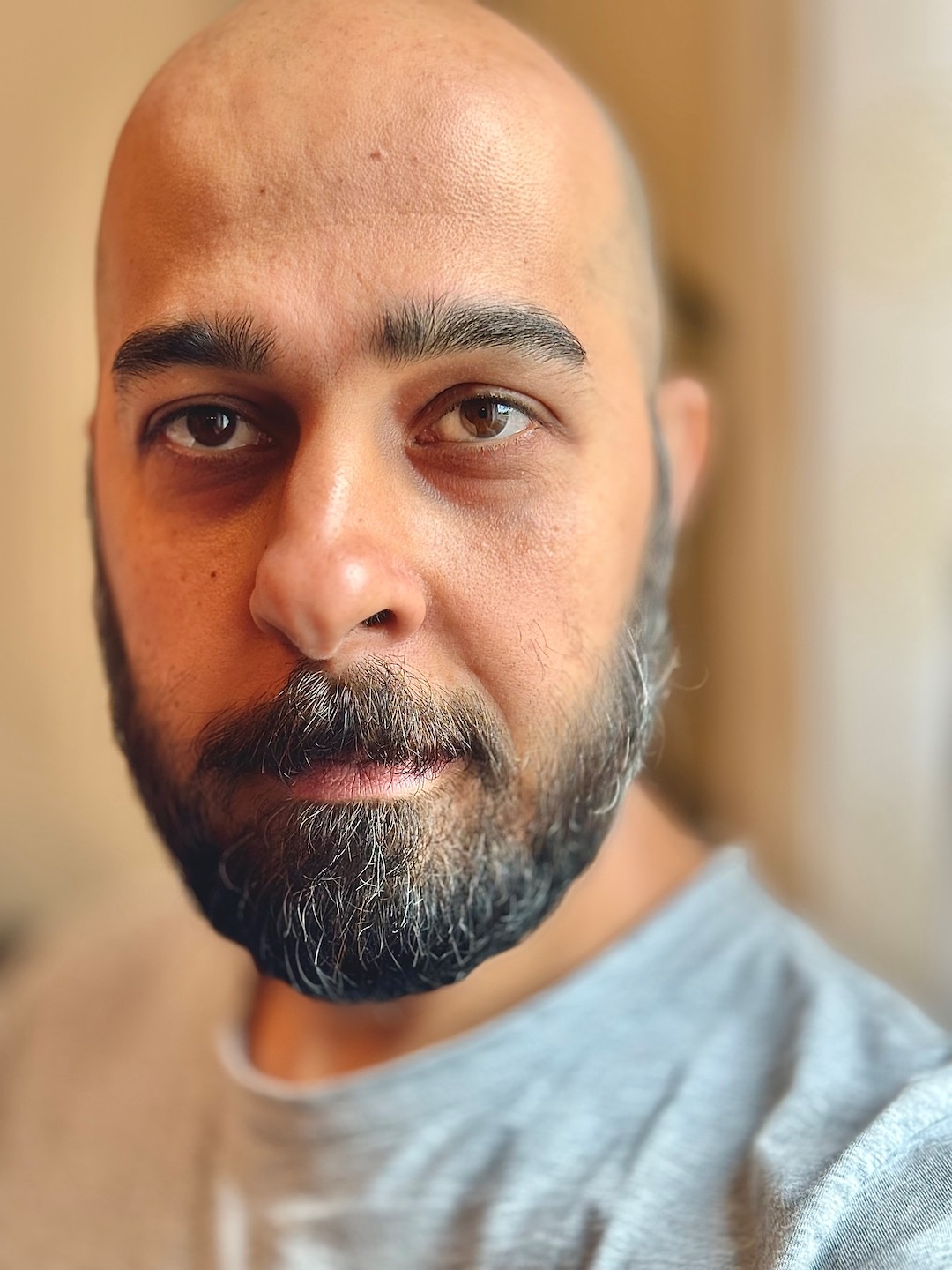
Ehsan Gharib
Q: Samaa is a very meditative film, which is fitting since the title also refers to a practice of achieving a spiritual awakening through rhythm and movement. What inspired you to make the connection between a samaa and a caged bird trying to break free?
EG: Throughout most of the production, we actually called the project The Bird, because I couldn’t find the right title for it. “Samaa” was suggested by a friend at the very last stage of production. The moment I heard it, I felt it was the right fit.
In the film, the bird finds freedom from within, and it happens through movement and rhythm rather than through physically escaping the cage. That inner liberation felt very close to the practice of samaa — a spiritual awakening achieved through repetition, rhythm, and motion. The connection wasn’t intellectual at first; it was intuitive. The title simply revealed what the film had already become.
Q: Samaa was animated using ink and paint. Did you animate the entire film by yourself? If so, what was that process like?
EG: My process was very instinctive. I would focus on a small visual phrase — almost like a sentence in a poem — and animate that section in a fast, spontaneous workflow. Working quickly helped me stay in a creative state and avoid overthinking.
Because the technique was ink and paint, there’s a tactile unpredictability to it. I tried to embrace that. Instead of forcing control over every frame, I allowed the material to participate in the process.
I did all the animation myself, and I worked with my editor, Xi Feng, who helped with the overall structure and pacing.
Q: Samaa clocks in at just two-and-a-half minutes. Of course, just animating one minute can be a drawn-out process. How long did it take you to complete?
EG: I developed the concept over four or five months while I was working other jobs. Testing designs and different animation styles, like chalk and various painting techniques. The actual production was done over a period of a year with some breaks. But the most time-consuming part wasn’t the animation itself — it was making decisions.
Since I was experimenting with both animation and illustration, the project could easily wander off course. Finding the right visual language and staying faithful to it required a lot of reflection, and I made many more sequences than what we actually used in the final film. Once the direction was clear, the actual execution moved much faster.
Q: Despite the brief run-time, Samaa is full of imagery that sticks with the audience. Which shot stands out the most to you?
EG: I’m very fond of the opening shot. It reminds me of extreme long shots in western films — there’s a sense of scale and solitude that sets the tone immediately.
I also love the more abstract sequence where we dive into the bird’s eye. That moment feels like crossing from the external world into the internal one.
Something I’m particularly happy about is that if you pause on any frame of the film, the bird is never literally shown inside the cage. The entrapment exists, but it’s never fully visualized in a literal way. In that sense, the confinement becomes psychological — almost an illusion.
Q: How would you describe the connection between the film’s imagery and music, as well as its sound design?
EG: Music is central to how I tell stories. For Samaa, we recorded the music before beginning the animation. Our percussionist, Ziya Tabassian, improvised musical phrases inspired by my visual phrases. I edited the music carefully, and throughout production, I would often listen to the audio without looking at the image. That helped me make sure the sonic journey was emotionally coherent on its own.
The animation was then built around that rhythm. Of course, music alone cannot carry everything. The sound design was essential. Olivier Calver brought incredible precision and power to the project, making sure that certain moments hit with real impact — sometimes subtly, sometimes like a punch to the forehead.
Q: Samaa has been selected for several festivals and already won a few awards, including the Grand Prix for Best Short Film at the Festival of New Cinema in Montreal. What has it been like taking the film on the festival circuit?
EG: There was almost a seven-year gap between this film and the last time I attended festivals as a filmmaker, so returning to that space felt very meaningful.
For me, the cinema theatre is almost sacred. There’s something about watching short films and animation in a dark room with an audience that cannot be replaced. Festivals are also where you meet like-minded artists and film lovers.
Taking Samaa on the festival circuit has brought me a kind of joy that’s hard to describe — it reminds me why I make films in the first place.
Watch Samaa Below:

Nick Spake is the Author of Bright & Shiny: A History of Animation at Award Shows Volumes 1, 2, and 3. Available Now!