A website dedicated to animation, awards, and everything in between.
APART Director Pola Maneli Interview | Animated Short From Writer Spike Lee

Credit: APART (Pola Maneli)
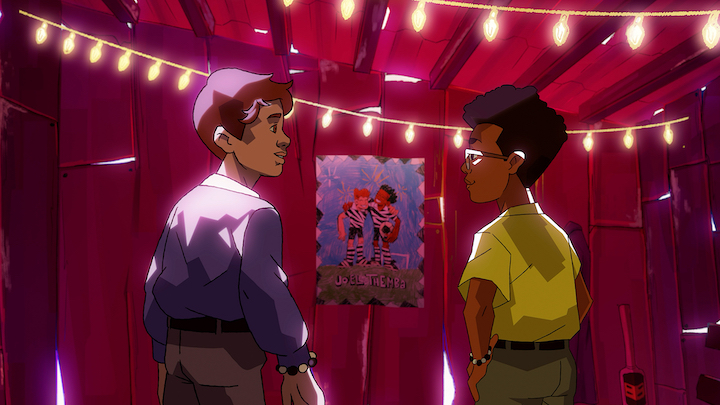
Pola Maneli is an illustrator and the filmmaker behind the animated short APART, which Spike Lee co-wrote. Curator Whoopi Goldberg selected APART to play at this year’s Tribeca Film Festival, taking place between June 3 and 14, 2026. Set in South Africa, the film centers on a forbidden friendship between two boys, who find that prejudice is every bit as hazardous as the health condition one of them is enduring. Cartoon Contender spoke with Maneli about the film’s blending of styles, his own upbringing in South Africa, and working with other names like music supervisor Black Coffee. Minor Spoilers May Follow:
Q: APART opens with live-action footage of a boy named Lunga. It ends with interviews from South African women's rights activist Ellen Kuzwayo and South African Singer Miriam Makeba. What inspired you to bookend the film this way?
A: APART’s narrative is a tightly constructed and intimate one that explores the dynamics between a very small cast of characters. But those dynamics and behaviours can only be understood in the context of the prevailing sentiments and events of that period in South African history. The archival journalistic photographs inform the audience of the material realities, and the interviews provide a glimpse into the emotional landscape at the time.
The Lunga interview at the start of the film, for me, also serves to signal to the audience that they’re about to go into an experience that will be told from the perspective of a child, but afterwards, they’re pulled out of it by an adult - returned to their own lives - and reminded that the onus is on us to determine what the future will be.
Q: How did your background in illustration, working with outlets like The New Yorker, prepare you to direct this animated short?
A: Working in editorial illustration taught me a lot about how to tell an engaging, cohesive story with one or two images. That economy of storytelling is extremely beneficial when working within the constraints of a short film. With that said, I am thrilled with the results of the work of our incredible animation team and the techniques that bring this story to life. Working with art directors over time also taught me that, while my vision and ideas are important, they can always be elevated by contributions from people working towards the same ends.
Q: Spike Lee wrote the script along with Tim Jones, Jeff Leisawitz, and Lubabalo Mtati. Was the script already written when you came on board as the director, or were you with the project from its genesis?
A: I came on board to help build out the world that the writing team had created. The writers reached out to me based on my visual style, and I began working on the art direction and character design. That is when I fell in love with the characters and began putting together a treatment for the film alongside João Machado and Diogo Gameiro from Colossal, who were producing the animation. At the same time, I also began designing the characters and visualizing the world they would inhabit. That hands-on involvement throughout the development of the story from script to screen was invaluable.
Credit: APART (Pola Maneli)
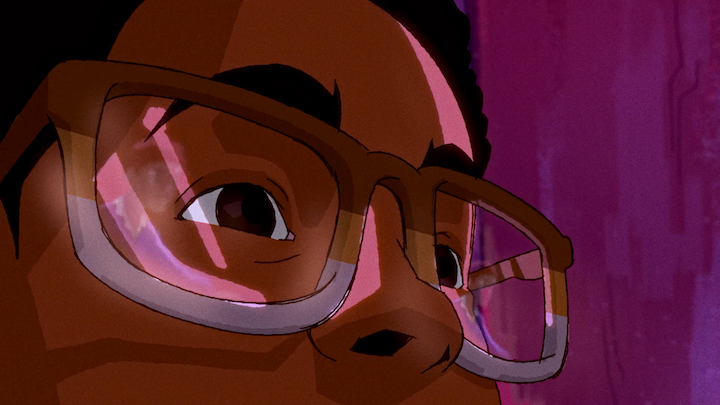
Q: APART combines your signature system with a woodcut print technique. What were the influences behind this aesthetic?
A: One of the earliest inspirations I cited during development was the work of the Medu Arts Ensemble. They were a South African collective composed of some of the cultural workers who produced anti-Apartheid propaganda throughout the 1970s and 1980s before being murdered and effectively disbanded by the South African Defence Forces. They used various printmaking techniques to create searing, provocative posters that became emblematic of the fight to dismantle Apartheid. Pulling from their visual language to tell a story set in this period of history felt fitting.
Q: The story of the two zebras in the film stands out, both visually and narratively. What was the process behind that sequence?
A: The narrative and visual concept for that scene was taken straight from the script. Spike, Tim, Jeff, and Lubabalo worked together to craft a narrative that felt so evocative and authentic that every South African person we’ve spoken to about it immediately assumes that it’s an African folklore tale, when in reality, it’s all a product of the imagination and tonal sensitivity of amazing writers.
The moment I read it, I knew that it didn’t need to be fully animated, because the dialogue was so strong, and if we could do it justice with the voice performance, then that would be more than sufficient to hold people’s interest captive. So I introduced the idea of having a woodcut carving that we could pan ‘the camera’ across. The hope was that we could reinforce the mythological feeling of the passage, somewhat like an archaeologist scanning a gas lamp against a cave painting to rediscover an incontrovertible basic truth seemingly lost to time and history.
Q: What can you tell me about your collaboration with Black Coffee, who served as the film’s music supervisor?
A: Without a doubt, one of the many incredible privileges of working on APART. His music has punctuated formative experiences of my life, perhaps more than any other South African musician. I leaned on my personal connection to his body of work, in addition to his guidance and input, to suggest songs that not only felt appropriate for moments in our story but also complemented the original score being created by Jamute. Trying to curate songs from that period in South African history that also felt like something Black Coffee would sample in his own music was daunting, but it also made it all the more rewarding when I would get his final approval on a selection.
Q: The film is told from a child’s perspective, exploring friendship, loss, and prejudice. Is there a particular scene that speaks the most to your childhood in South Africa?
A: One of the strengths of our story is that I think almost every interaction that Themba has will be relatable to any Black South African who grew up in the 90s, who went to a Model C school, or had some kind of proximity to whiteness.
APART has many such moments, but the one that stands out most for me is this incredibly brief shot that we have right before the main confrontation. It’s the moment where Themba and Thandi (Themba’s mother) are in Joel’s family’s living room speaking to Janine (Joel’s mother), and without saying a word, stand up the moment Pieter (Joel’s father) walks through the front door. There’s no dialogue, and it’s never explained, but every Black South African who grew up working class knows what it is to feel like an intruder in a White space; to feel as though you’ve been caught crossing an implicit boundary. Even people like Thandi and Siya - who work for this family - understand that their presence in that space is only permitted within the bounds of performing acts of labour. When I spoke to Laduma Ngxokolo about the characters’ wardrobe in the scene, I told him that I wanted them to be wearing a variation of their ‘Sunday best,’ to highlight that regardless of how respectable Black people may present, their presence will always be perceived as a stain within the framework of White supremacy. Those small, intimate decisions that reflect a lifetime of survival conditioning within a racist society are often what stay with me the most.
Credit: APART (Pola Maneli)
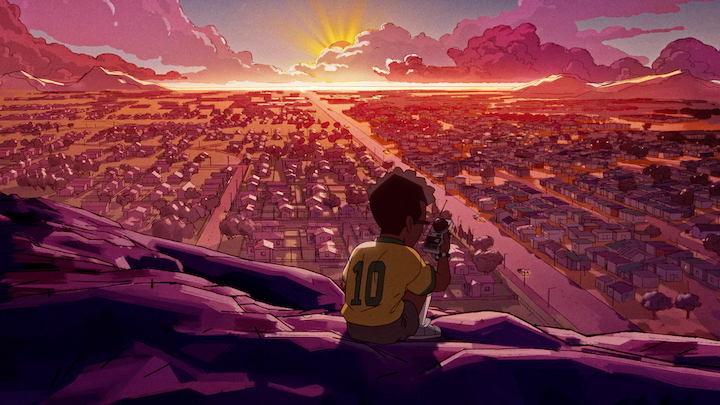
Q: Although the film takes place during a time when kids still used walkie-talkies to communicate, its themes still speak to where we are now, and not just in South Africa. What do you hope audiences take away from APART?
A: The most important thing for me is that the audience has a memorable experience. History has shown us that art has the potential to be a catalyst for important shifts in culture and politics, but movies don’t pierce that realm without resonating with audiences on an emotional level first.
If our movie were to be granted relevance beyond that, my hope would be for people to find elements of themselves, to whatever extent, within all of the characters in the movie, and reflect on the ways that we all often create arbitrary distinctions between ourselves, whether that be in the name of privilege or self-righteousness, and ask ourselves what we lose in the process. What kinds of possibilities do we close ourselves off to by keeping others and elements of ourselves apart instead of integrating them?

Nick Spake is the Author of Bright & Shiny: A History of Animation at Award Shows Volumes 1, 2, and 3. Available Now!