A website dedicated to animation, awards, and everything in between.
2026 Oscar-Eligible Animated Short Whale 52 Filmmakers Interview

Credit: Whale 52 - Suite for Man, Boy, and Whale (Daniel Neiden)
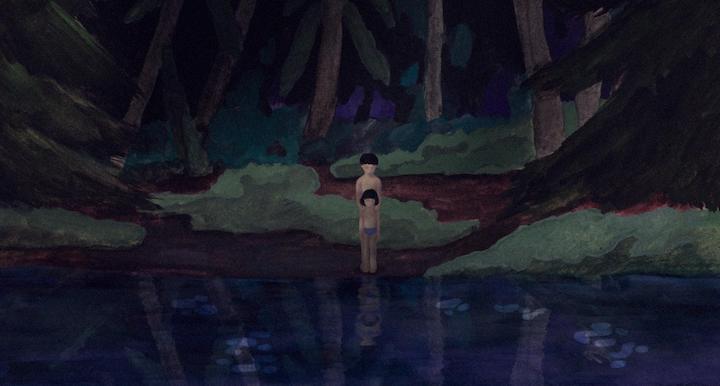
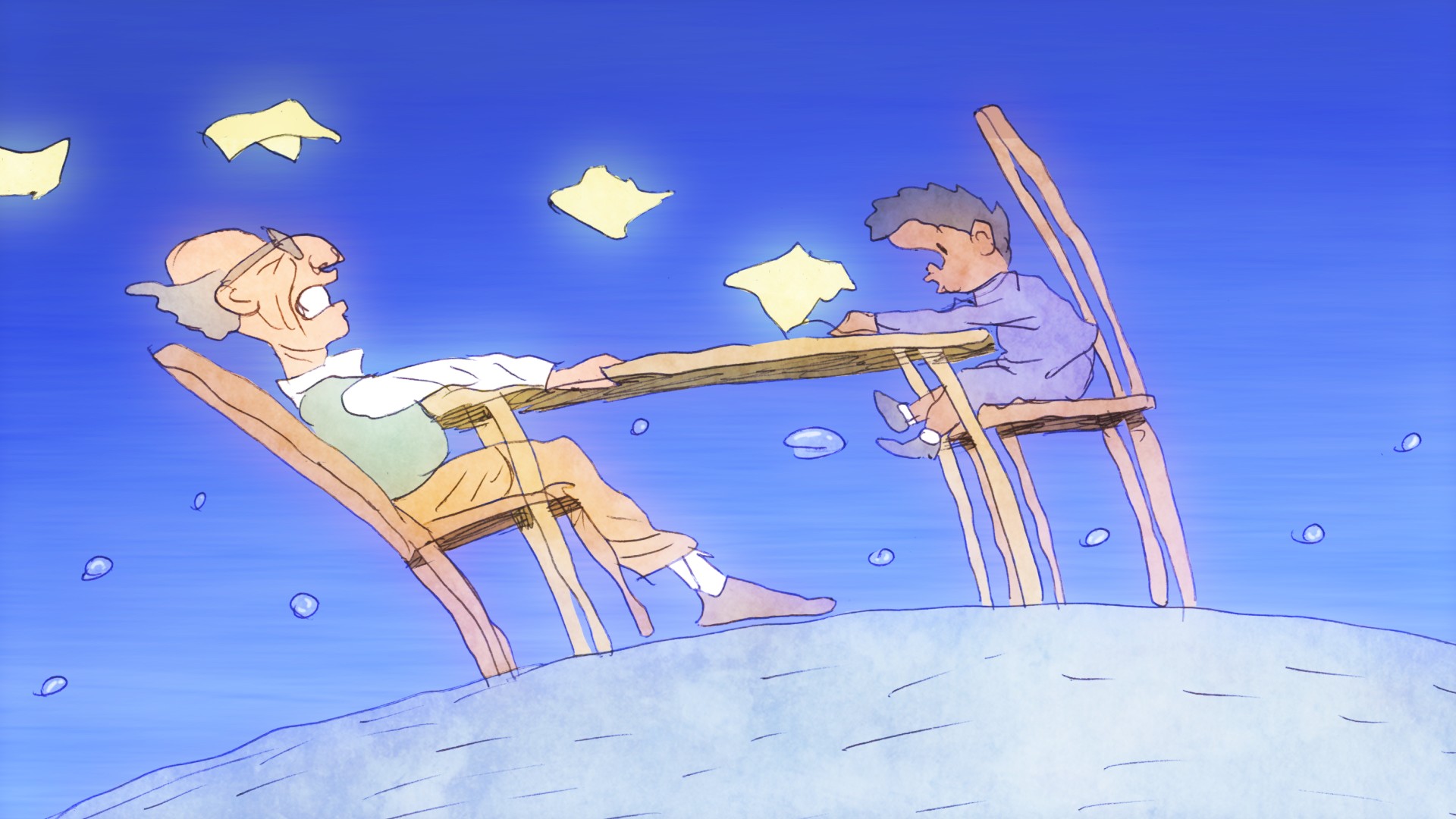
Whale 52 centers on an old man reaching out to a silent boy struggling to express himself. The title refers to the 52-hertz whale, which is said to be the “world's loneliest whale.” Drawing from his own experiences as an educator, Edward Jordon wrote the original draft for Whale 52 several years ago. Despite picking up a few awards, the script went unproduced until Jordon teamed with director Daniel Neiden. They brought in animator/producer Bill Plympton, who has received Oscar nominations for his shorts Your Face and Guard Dog. Cartoon Contender spoke with Neiden, Jordon, Plumpton, and editor/producer Owen Andrejco about Whale 52, which has qualified for consideration at the 98th Academy Awards.
Credit: Whale 52 - Suite for Man, Boy, and Whale (Daniel Neiden)
Q: Whale 52 is based on Edward’s own experience working as a school volunteer. When did you decide to put this story to paper?
Edward Jordon: Things often have a long gestation period, especially when you're trying to make a film. The original draft was maybe eight years ago, and it won several awards. Did what it needed to do as an unproduced screenplay, but the reality is that unproduced screenplays often just end up in the cloud somewhere, and then just dissipate… until Daniel came on board. We formed a company called International Originals, and we decided that maybe our inaugural film should be Whale 52. It originally started as a live-action short, but Daniel really had the brilliant inspiration to explore some other possibilities, and one of those great possibilities was bringing in legendary Bill Plympton to animate. Once I saw the concept drawings, and the magic that Bill and Daniel were bringing to this real story or reality-based inspired story, it was just incredible.
Q: Bill has directed numerous shorts and features. With Whale 52, he was the animator, but Daniel was the director. How would you describe this collaboration?
Bill Plympton: I think Daniel was really the chief creative aspect of this project, because he would tell me exactly what to do. I really wanted to use his ideas and his style. So I wasn't that creatively involved. However, I did do every drawing in the film, and that's very abnormal, because, usually an animated film, you have the layout artists and the director, and the animator, and the in-betweener, and the in-between-in-betweener, and… you know, there's, like, ten, twelve animators. But we just did it - the three of us - in my studio here with Owen, and Daniel, and myself. You were talking earlier, Daniel, about the system we had where you would mimic the way the characters should look, and we take a picture of it, and I then I would animate it and try to copy your facial expressions. You know, we should copyright that. I think we should make a fortune on that. That's the newest way to make films, instead of AI. We take a little photo of someone and draw that.
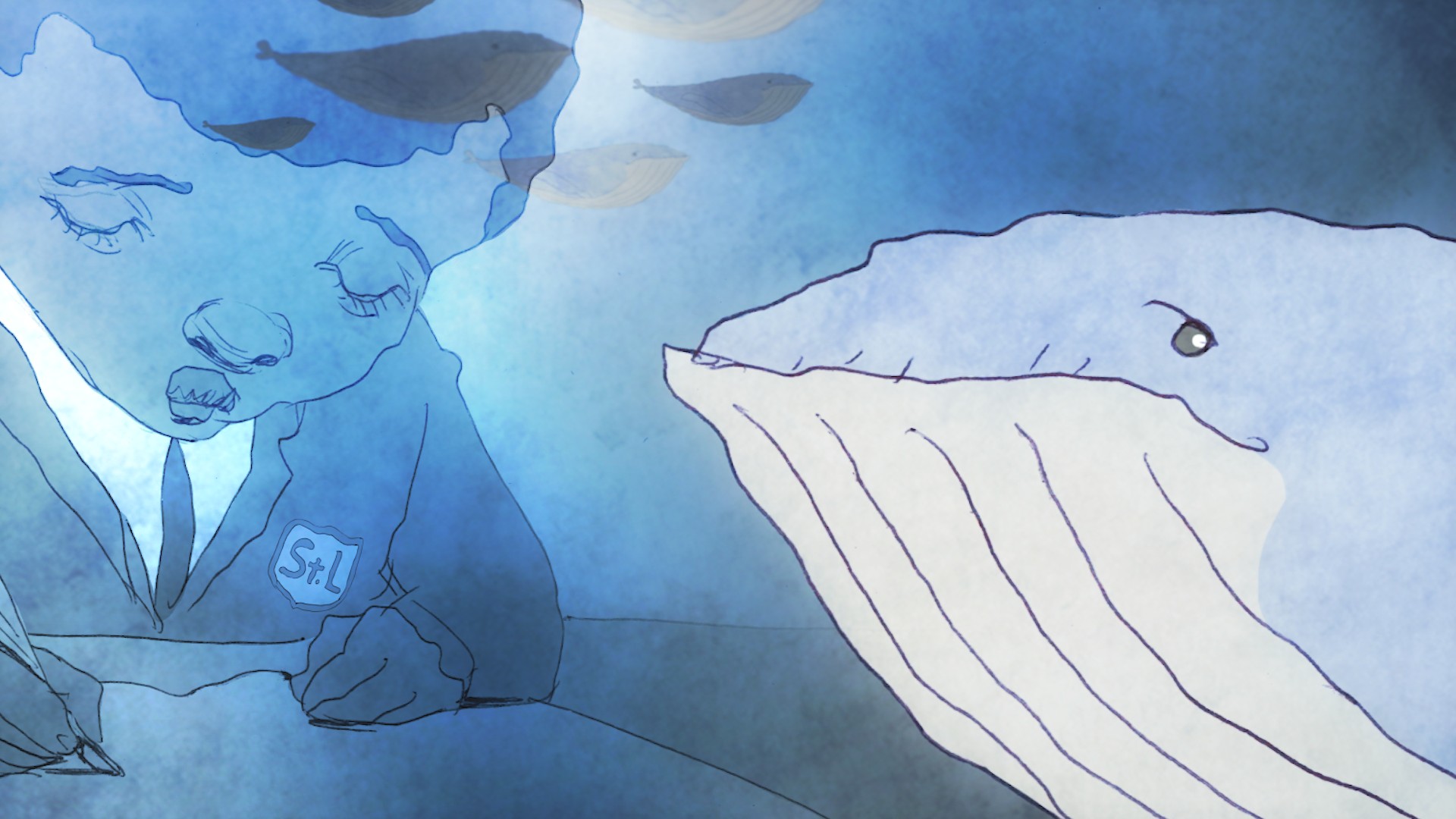
Daniel Neiden: Have you ever cried, and then at the end of a big, big cry, there's that little spasm? That's in the movie, when he's sitting there in total isolation after his cry. To even try to do it on camera would be hard. There's so much silence, you're inhibited about silence. And then, to memorialize that with a drawing… Owen and I knew that there was a moment we wanted to do that, to really give it some rare silence. We told Bill, and he listened. He's like, “Tell me how, tell me where,” and everything. Then he said, “Get your camera, make a movie of it.” And I did that little sob that, you know, that racking thing that people have. The next morning, we had it. That was the best part of the process, just sitting next to Owen, Bill's about six feet back there on his couch, where he draws everything. We had a process, and that's what any artist just wants to be part of: A process that works. Then the crowning part of it was when I'd get the drawings, we'd animate them, I'd send it off to Edward, who was over the moon. It was like he and I both knew that it was well beyond what the script asked for, but it was right because it covered with the magical realism of animation, and good writing on Edward's part. It matched it beautifully.
Edward Jordon: There's a wonderful line from Stephen Sondheim's musical play about Georges Seurat, the pointillist artist… a blank canvas so many possibilities… as a writer, you constantly are confronted with a white screen, a laptop screen, white, blank, but hearkening on what Sondheim said about so many possibilities, it never really dawned on me that animation would be a possibility. Once that world opened up to me, because I'm brand new to animation, I just saw so many possibilities. Daniel and Bill brought all those possibilities back to me to look at, and repeatedly, my jaw just dropped to the ground… I can't see this film as any other way. We started as live-action, but I can’t see it as any other way now.
Owen Andrejco: The way normal days would go is, Bill's doing the drawing, and our team is doing some coloring and some editing, and Daniel would come by the studio. Most of the time, at least before we brought on the sound and the music, everything was really happening in just a few feet of one another. That made things easier if you wanted to change a drawing real quick or Daniel had some particular direction. There was a lot of improvisation and new ideas that were sort of allowed to happen just because we're all working so closely together.
Credit: Whale 52 - Suite for Man, Boy, and Whale (Daniel Neiden)
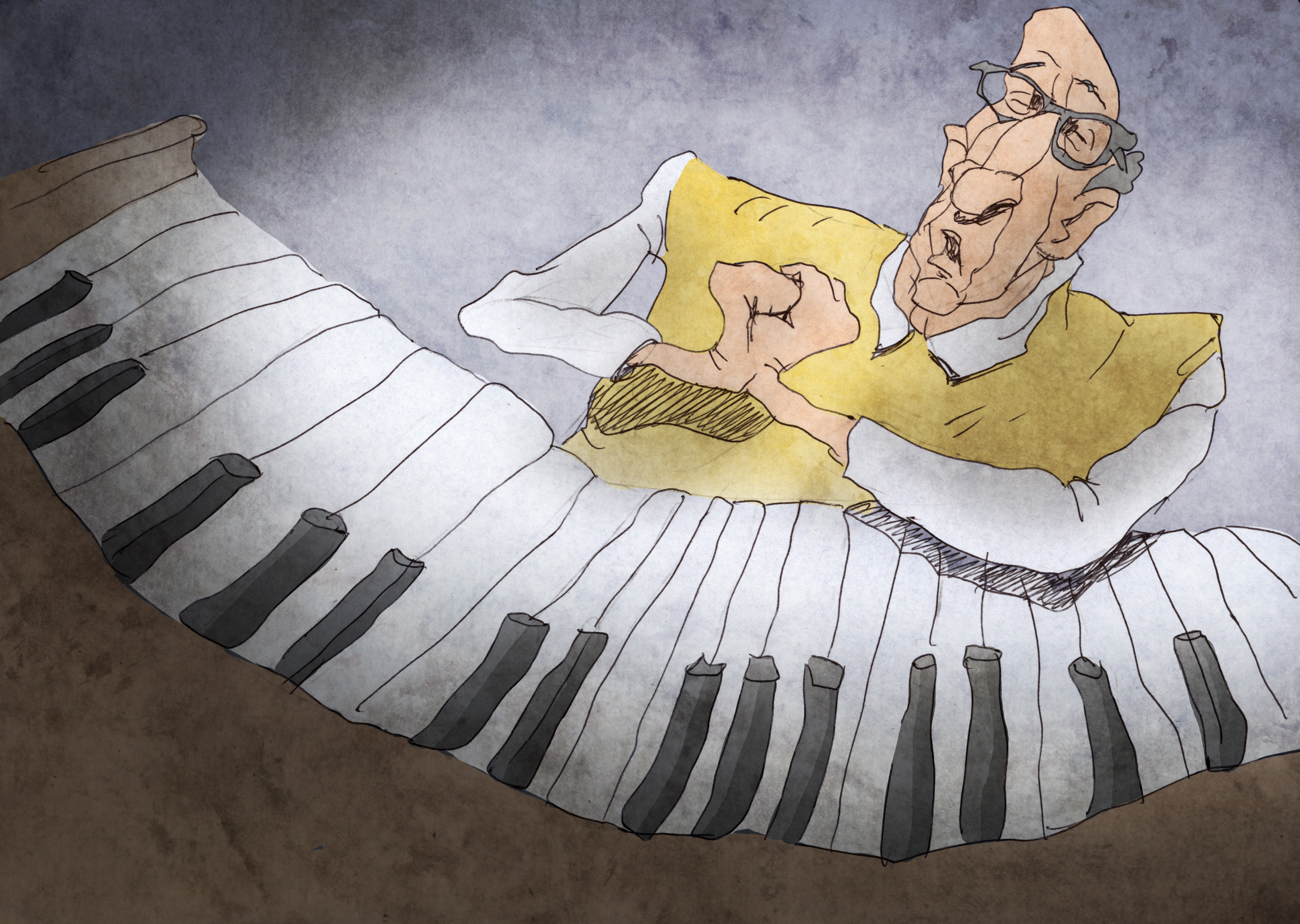
Q: Bruce Vilanch voices Kaufman. People often think of Vilanch as a comedic writer and performer, but he brings real depth to his role here. It’s not the most dialogue-heavy film, but there’s genuine warmth and sincerity to every line that Vilanch delivers. How did you go about casting him?
Daniel Neiden: Just yesterday, Bill and I screened this for some other people... We don't have Bruce's name at the beginning, and at the end, they're like, “That Bruce Vilanch?” They just thought we got a real teacher… but his voice was so moving, that deep timbre. I've seen him on stage when he did Hairspray, and he really digs down deep. He's had a lot of loss, just like Kaufman... There’s an agent that Edward and I have dealt with, and Bruce was available. Originally, I was hoping Everett Quinton, who the film is dedicated to, would do this. And he passed away. So, in looking, we found the right person. Bruce was flattered, but he didn't have any moments of feeling like an imposter. He knows Kaufman very well, this man who has had lots of loss, and is a born teacher.
Edward Jordon: The music so greatly moved Bruce. And Bruce, as Daniel was saying, does understand grief, and I don't think I'm divulging too much because he's done it publicly, but you're right, Nick. Bruce is definitely known as the funny man, but I've seen him break down on stage when he talks about all the people that he has lost over the years, and that becomes very moving. So, Bruce understands grief, and while we're on this subject of grief, which I certainly do understand also, because I guess you could say I am Kaufman, to a certain extent… There are often no words to describe grief, not really, because it's so deep inside our musicians, the wonderful Scott Lee and Levi Liu, understood that notion that there are no words, no lyrics, and sometimes the only way that grief can be expressed is via music. I think that they so beautifully nailed grief. As a matter of fact, they've even called it “grief music.” I think it speaks to everyone, anyone who's lost somebody, even a pet, anything. We all have loss, and we all grieve. I think the music just so beautifully enhances the film, and also deeply influenced Bruce's performance.
Owen Andrejco: Once we got the music, that was so exciting to me, and, really, I thought, set the tone for how to approach a lot of the elements, and complemented Bill's style and work and the story so well. One of my favorite things was listening to the music for the first time. Hearing the music and being familiar enough with the edit where I knew what was happening, even when I was just listening to the music, I knew it. Scott and Levi just nailed it, and that was so wonderful to me.
Daniel Neiden: When you hear the movie start, there's just that cello music… That cello, when Zul got there that day, he carries it in a backpack so he can ride his bike or do whatever, and he's riding around with the cello, which aren't… they're not cheap to begin with, even if you buy one for your kid or something, like a study cello. And he took off his thing and took it out, and he handed the actual cello to me. And I'm there, and he says, “Oh, by the way, that cello was made in the year 1700.” And I'm like, “Take the thing back! I don't want to drop it.” And when he started playing it, we couldn't believe the resonance in the studio, and even the head of the studio came and looked in the window and came in because the whole studio was kind of vibrating. When that real music came in, Owen was all electric about it. It moved the needle big time.
Q: When I think of Bill Plympton, outrageous comedy usually comes to mind. While Whale 52 certainly has your signature, it felt different from anything you’ve done before. Did you learn something new about yourself as an artist making this film?
Bill Plympton: I didn't think I could ever make a sad film. A film that people really felt emotional about and cried. But Daniel showed me that I can do it if I really worked at it and study the structure and the dialogue, and the script and everything. So, I think it is possible. I don't know if I'm going to do one next film, but I would like to do another emotional, tragic film…
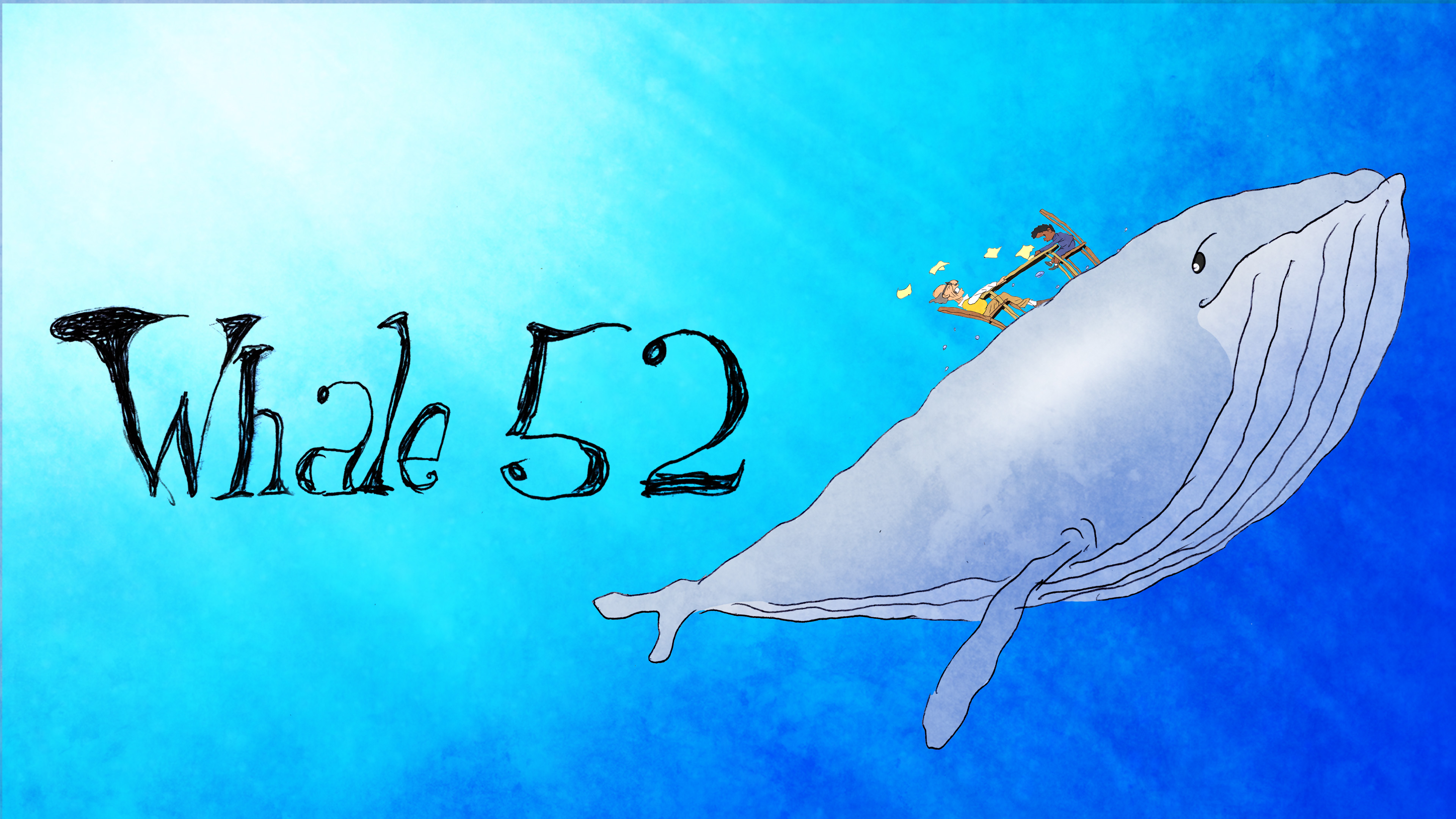
When I got excited about the project, was this thing here… (Showing Poster)
Credit: Whale 52 - Suite for Man, Boy, and Whale (Daniel Neiden)
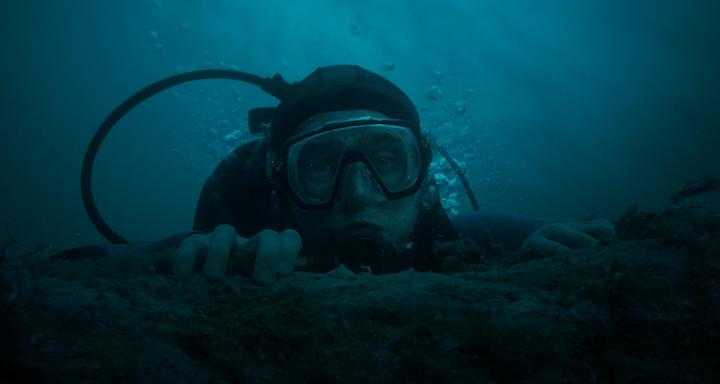
When I did this scene, all the limits were off. I could do whatever I wanted to, as long as I had the core concept in mind, and putting these two people, trying to do a meeting on the back of a whale underwater, is totally absurd. I mean, it doesn't make sense at all, but that's the kind of fun that I wanted to put into this film, imaginary fun. Of them, these people trying to deal with each other's personalities.
Edward Jordon: We classify this film as the genre of magical realism, and Bill certainly brought that magic. When I saw that drawing, I said, “Okay, Bill understands the heart of this piece. Daniel understands the heart of this piece, the heartbeat of it.” I think most people would agree that the poster is just majestic, and certainly not career-defining Bill, but certainly career enhancing, because you have such a wonderful collection of posters and whatever, but. But, you know, selfishly, this is my favorite.
Q: Whale 52 has received widespread praise, with Sir Ian McKellen calling it “a thrillingly original creation to watch, and to listen and respond to. Its final revelation took my breath away.” Were any of you in the room when McKellen watched the film?
Daniel Neiden: I was searching around, seeing if he would be interested in voicing the film, which would have taken it in a whole other direction, but he had just had an accident. I don't know if you remember in the news that he took a tumble off of a stage, and so he wasn't really doing anything. He was just kind of going through an inventory of getting himself back. So, when I saw that there was no way he was gonna do anything, much less our movie, I did ask if he would view it and give us a quote. We were at the IFC screening it along with eleven of Bill's other shorts that Weird Al presented. I nudged Edward, who was sitting next to me, just kind of like, you know, showed him my phone in the dark. And he just… it was too much to bear that this quote came in. So, we read it out loud, and there was great rejoicing.
Edward Jordon: At the Q&A afterwards, I couldn't even speak. I was watching my life flash before my eyes in eleven minutes and fourteen seconds. So, that was emotional enough, but you put on the quote from Sir Ian McKellen, and I go up for the Q&A, and all I could basically do is cry, you know, because this was just such a moving moment. We always thought that Sir Ian McKellen would. would respond to the film very positively, but this exceeded our wildest dreams.
Q: Part of the film’s proceeds are going to The Trevor Project, a leading suicide prevention and crisis intervention organization for LGBTQIA+ young people. Did you reach out to the Trevor Project first, or was it the other way around?
Daniel Neiden: Other way around… Because of their work. They keep the numbers down of kids that are just confused at a certain age, or cast from their homes. Or, you know, for being different, and I fully believe in what they do. They are there for us, and we're there for them, and this isn't some small way. Any organization that has phones set up all the time and live people at the end of them to have a kind word and a listening heart when a human needs that, is… right now, we're in a place where those things are being shut down. And so we're happy to affiliate with an organization that won't be shut down. It's very nice.
Edward Jordon: And as an educator, I, without really divulging too much… I have had students take their lives. The fact that Trevor is involved in the way that they are is just very, very wonderful. For me, and as Daniel said, with funding just drying up everywhere, it's nice that we can maybe help in just even the smallest way…
Daniel Neiden: In anyone's life, they are Whale 52. When they're yearning for a connection, yearning to be heard, or to be able to speak and be heard. So that's the universality.
Edward Jordon: I have a dear friend who's an MSW social worker, often working with kids. When she works with kids, she doesn't call herself a “therapist.” She doesn't call herself a social worker. She calls herself a safe adult. And that's really what is at the core of this film: a young person, a little person, finding a safe adult. And maybe after this experience, kids could seek out and find other safe adults, and as they get older and older, maybe they can become a safe adult themselves to people who are crying out in one way, shape, or form. And they may be crying out silently. At this holiday time that's coming up, wouldn't it be nice if we all gave each other the gift of a listening heart? Wouldn't that be lovely?
Q: The 52-hertz whale is said to live in solitude, using a different frequency than other whales. It’s a perfect metaphor for the film’s silent character. When did you first make the connection between the loneliest whale and a lonely child trying to express who they are?
Edward Jordon: What's written in the journal is literal. Literal transcript of something that occurred. Of course, because we're filmmakers, things go from the real, to the magical, to the fictional, to the real life. So things certainly morphed, but those words were written, and at the time, I knew nothing about whale 52. Then, of course, time goes by and you think about things, and you say, “You know, what? Huh, there's a real solid story in this.”
Q: Whale 52 has qualified for Oscar consideration. Bill has been nominated twice. If Whale 52 gets the nomination, will this be the first time going to the Oscars, Daniel, Edward, and Owen?
Daniel Neiden: Definitely. It would be something bigger than we can possibly imagine, and Bill's been there. So we'd be asking him to pinch us and make sure that it's real.
Edward Jordon: We're also hoping to screen at Sundance, and I've been trying for forty years to get to Sundance. That would be a nice thing to happen too.
Bill Plympton: But if you do get nominated, you guys better have some scripts on your suitcase, because that's all I'm gonna say. What do you want to do now? Do you want to make it a series? Do you want to make it a feature film? What do you want to do with it? Because it's, um, it's a great property.
Daniel Neiden: I didn't know how connected Bill was. I went to Sundance when The Tune was out there because I was the voice of the guy, Dell. It was remarkable. [Bill] was sitting in this extra little projection room watching another movie come out. And there was Matt Groening from The Simpsons, there's the woman that voices Bart. Roger Ebert came out of one of the theaters and was waving at Bill, and it's like… Wow. You know, you're not just a guy on the couch with colored pencils, are you? That's great. It was great. So, yeah, Edward's right about that. It would just be quite the journey.
Q: Any last remarks?
Daniel Neiden: People are Whale 52 in their own way, that's what the connectivity is, that's what people are connecting with.
Nick Spake is the Author of Bright & Shiny: A History of Animation at Award Shows Volumes 1 and 2. Available Now!