A website dedicated to animation, awards, and everything in between.
2026 Oscar-Eligible Animated Short Two Ships Director McKinley Benson Interview


Credit: Two Ships (McKinley Benson)
Two Ships tells the story of a couple living together, yet living apart due to their conflicting schedules. Director McKinley Benson’s short makes the audience feel the distance between these two, but also the bond that ties them together, even when apart. McKinley co-wrote the script with his wife, Mackenzie Benson, drawing from a personal place. Among the film’s executive producers is McKinley’s mother, Jodi Benson, who you might recognize as the voice of Ariel from The Little Mermaid. Two Ships has qualified for consideration at the 98th Academy Awards through theatrical exhibition. Cartoon Contender spoke with McKinley Benson about real-life inspirations, the key to telling a dialogue-free story, and getting his feet wet in animation.
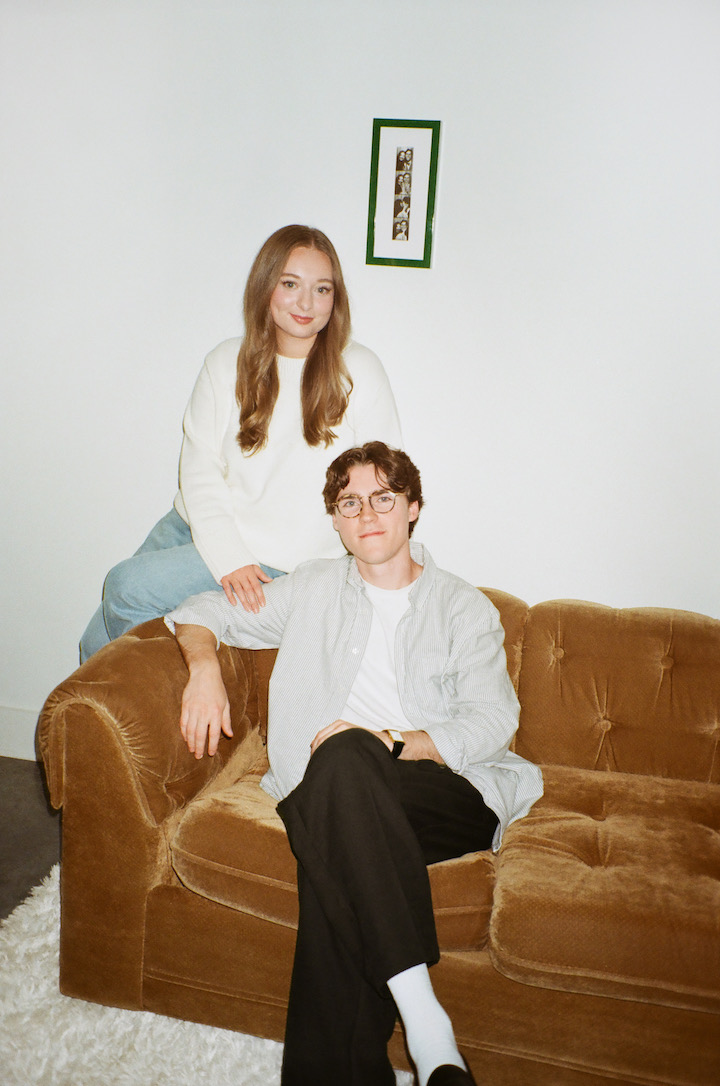
Credit: (Mackenzie & McKinley Benson)
Q: How much of the film was inspired by personal experience?
A: The entire film is inspired by my wife/producer, Mackenzie, and my own experience of working opposite schedules, so the story is deeply personal to us. We had just moved in together after many years of long-distance, and then I began working overnights while Mackenzie worked 9-to-5. The film was born out of a desire to maintain what little connection we had during the work week, at one of the busiest and most stressful points in our lives together. Two Ships became an escape for us, and working on this project together was really cathartic.
Q: You’ve mainly worked in live-action before this. What drew you to tell this story in animation?
A: When we started writing the script, I could only envision this film as being animated. Part of what excited me most about this concept from the beginning was seeing two characters at two different times of day existing in the same frame. I loved the idea of how that could be rendered through animation. And with the script being dialogue-free, animation felt like the perfect medium for silent, poetic, visually driven storytelling.
Q: You and your wife, Mackenzie, co-wrote this dialogue-free film. What did each of you bring to the script?
A: When I first shared the concept with Mackenzie, I acted out the entire kitchen scene in our own kitchen, and she immediately understood what I was visualizing. During the writing process, it truly felt like we were sharing a brain. We both brought in ideas and quickly sifted out the weakest ones without any ego. Mackenzie’s photography background was amazing because she’s extremely visual and precise, which is crucial in animation, where every frame counts. With my live-action directing experience, I was able to determine camera placement, movement, blocking, and lighting early on, incorporating that visual language onto the page.
Q: The separation between the couple is cleverly conveyed with several visual touches. What stood out to me the most was the lighting, with the man working nights and the woman working in the day. Was there a lightbulb moment when you decided to tell the story this way?
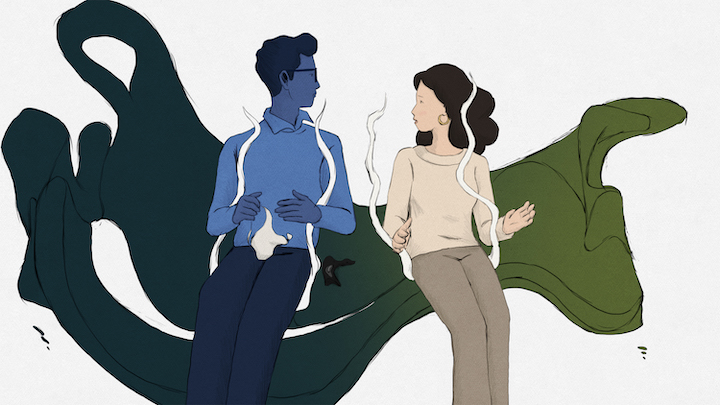
A: The lighting separation was baked into the concept from the very beginning. We wanted to show two characters existing in the same space but at separate times of day — one in cool, blue nighttime lighting and the other in a warm, yellow daytime lighting. In Two Ships, the lighting and the narrative really go hand in hand, so that relationship was important to us even early in development. Our very first style frame of the two characters sitting “together” at the kitchen table already featured that lighting separation, and it became our north star.
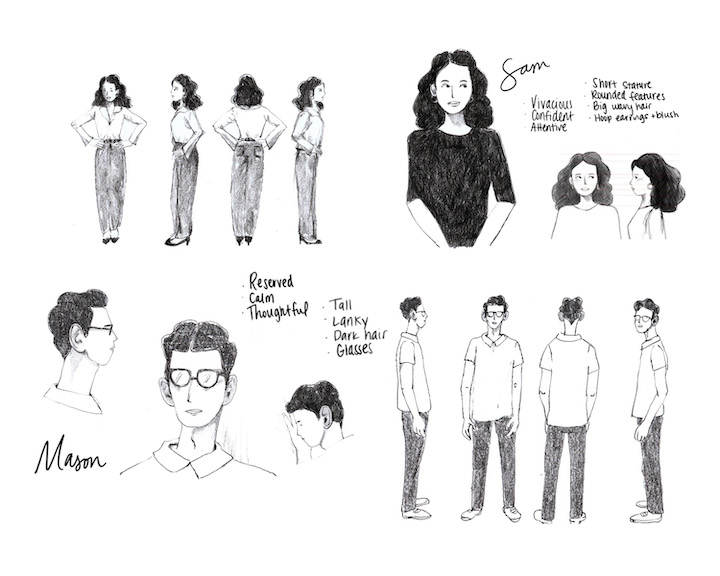
Credit: Two Ships (McKinley Benson)
Q: Jérémy Ben Ammar's sound design struck a chord with me, emphasizing how quiet the house is and how both individuals long for someone to speak with. What do you think is the key to leaving an impact with even the subtlest of sounds?
A: The film is all about the little things and the quiet moments, because often they end up meaning the most. We really wanted to emphasize that through the sound design, and Jérémy did an incredible job. Without dialogue, the story relies on texture and tactility in the sound, working in harmony with the music, which becomes the film’s language. By the time the characters’ hands finally touch at the end, that small, subtle sound does leave an impact, both thematically and emotionally.
Q: Two Ships was co-produced with Room 330 and COLA Animation, the latter of which previously worked on the Oscar-nominated Ice Merchants. In what ways did they influence the film's style?
A: We feel incredibly lucky to have worked with Bruno Caetano and Ala Nunu from COLA Animation. Bruno was pivotal to the success of the film. He’s truly an incredible producer and was so helpful with navigating the animation process. Ala was our animation director on Two Ships, and one of the two animators on Ice Merchants, where she animated a lot of the intense camera movements in the sequences where characters dive and parachute through the sky. In Two Ships, we have a scene where we step out of reality into a surreal, metaphorical space, and the characters fall off swings into a “void.” We knew Ala would be perfect for creating dynamic camera movements, following the characters as they fall and spinning around them. We had some storyboards drawn for that sequence, but Ala truly made it her own, adding so much energy and emotion. She basically animated that entire 40-second shot herself in about a week.
Q: Your mother and one of the film's executive producers is Jodi Benson. Ironic that the Little Mermaid herself would be involved in a film called Two Ships. Did growing up with an actress who's voiced multiple animated characters inspire you to explore this medium?
A: Definitely. My parents collected original cels over the years, and I had a Looney Tunes cel hanging on the wall of my childhood bedroom, so I grew up literally surrounded by animation. The Little Mermaid was the first movie my parents showed me as soon as I could open my eyes, so being exposed to animation, especially 2D hand-drawn animation, at such a young age definitely left a lasting impact on me. After graduating from film school and completing a dozen or so live-action shorts, my appreciation of animation had only grown, and my desire to create an animated project of my own grew too. And when the idea for Two Ships came along, I knew this would be the perfect first project for the medium.
Q: Two Ships is eligible for Best Animated Short consideration at the 98th Academy Awards. Can you take me through how the film achieved its Oscar-qualifying run?
We started our festival run back in April, and since then, the film has screened at more than sixty festivals worldwide, including nine Oscar-qualifying fests. We were honored to win Best Story at Animayo and the Director’s Choice Award at the Thomas Edison Film Festival, and in September, we were selected for the First Looks program at the Roxie Theater in San Francisco, which gave us a seven-day Oscar-qualifying theatrical run. We’ve been so grateful to be on this journey with this film, and we’re excited to see where it goes from here.
Credit: Two Ships (McKinley Benson)
Q: Would you say that making this film has strengthened your home life and brought you closer to your loved ones?
A: As we’ve been a couple for over a decade now, Mackenzie and I are very close, but making Two Ships was our first real opportunity to collaborate on a creative project together, and it brought our closeness to another level. But we were so invested in the project that, at times, it was difficult to find a work-life balance. We’d intentionally step away from work and go on walks outside, only to end up talking about the notes we needed to give on a certain shot. But our goal in telling this story was to highlight the small everyday moments we often take for granted, or don’t even notice, and remind audiences that these little bits of connection are meaningful – something we continue to remind ourselves of every day.
A: Is Gil based on a real fish by any chance?
Q: Yes! While it wasn’t a goldfish like Gil in the film, I did have a betta fish named Gilbert while I was in college. We figured the characters in the film would maybe be too busy and their schedules too hectic to keep up with a dog or cat, so a fish felt right. But after a screening, someone alerted me that Gil’s fishbowl in the movie is way too small for a goldfish… so fish experts, please don’t come for me. I promise no animals were harmed in the making of this film.
Nick Spake is the Author of Bright & Shiny: A History of Animation at Award Shows Volumes 1 and 2. Available Now!